
Rescue Dog Fights Sleep Afraid Her New Life Could Disappear
Guest Contributor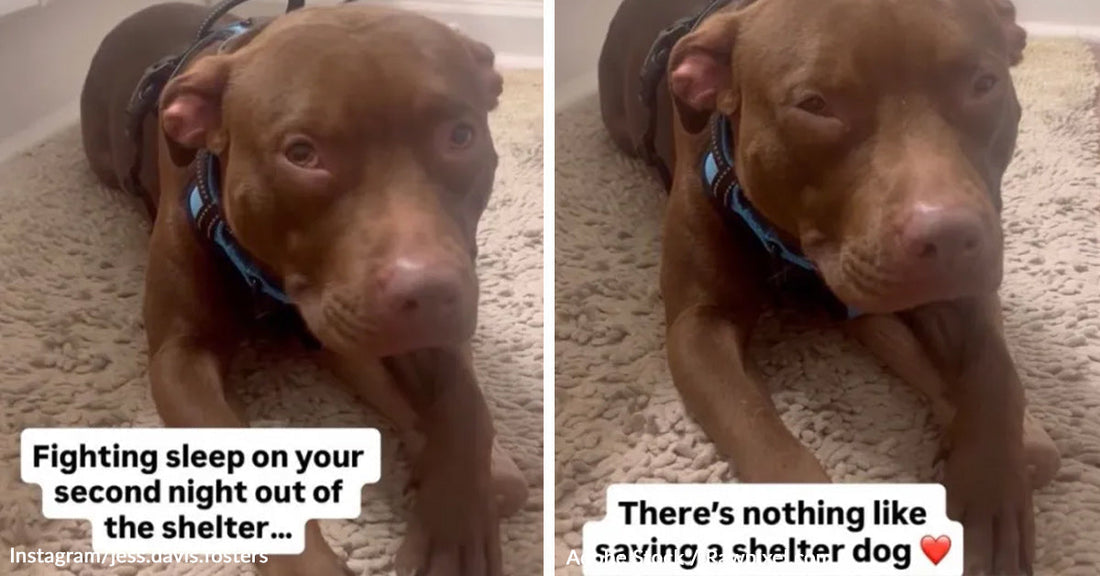
For many rescue dogs, the journey from a crowded shelter kennel to a safe home is not an instant fairytale. The body may be warm, fed, and secure, yet the mind still waits for the next loss. That emotional tension is captured powerfully in a recent Instagram video of Maye, a Pit Bull who had just escaped a dire fate. Her story shows how long it can take for a shelter dog to truly believe that the nightmare is over, and why patient adopters are such quiet heroes in the world of animal rescue.
In the video, shared by @jess.davis.fosters, Maye has already made it out of the shelter. She is lying down, clearly exhausted, her eyelids heavy. Yet she keeps fighting sleep. To viewers, it looks as if she is afraid to close her eyes, as if rest might somehow cause this new comfort to disappear. The image of a shelter dog fighting sleep after getting out is as moving as it is heartbreaking. It captures the invisible scars many animals carry long after they are technically “safe.”

According to the account shared with the video, Maye’s rescue came at the very last moment. She needed to be out of the shelter by 7 p.m. on a Thursday or she would be euthanized. That looming deadline is the quiet reality behind countless social media posts about “urgent” dogs. In Maye’s case, a woman visiting the shelter originally intended to meet a different dog. Instead, she met Maye, felt a connection, and made the spontaneous yet life-saving decision to bring her home.
What followed was not a simple happily ever after. The adopter already shared her home with a senior dog who was both deaf and blind. For that vulnerable animal, the sudden presence of another dog created confusion and stress. The adopter reportedly cared about both dogs, yet she was confronted with an almost impossible choice. Keeping Maye meant risking the comfort and stability of her longtime companion, who had already depended on her for years.
Ultimately, she chose to prioritize the senior dog’s well-being. It was not a decision rooted in rejection or a lack of commitment. Rather, it reflected a serious understanding of what responsible pet ownership requires. Aging, disabled animals are often especially sensitive to changes in their environment. Protecting that dog’s emotional and physical safety had to come first. I found this detail striking, because it highlights a truth that is easy to overlook: loving animals sometimes means acknowledging limits, even when the heart wants to do more.
Even after realizing that her home was not the right long-term fit, this adopter did not abandon Maye’s cause. Instead, she stayed involved and worked with rescuers, advocates, and a supportive community to find another option. The priority was clear. They were determined that Maye would not have to go back to the shelter environment she had just escaped, especially after coming so close to euthanasia. That kind of community response is an often unseen but vital part of dog adoption stories.
With their combined efforts, a new adopter stepped forward in time. According to the account, Maye never had to return to the shelter. This new person was described as a “perfect match.” They work from home and can provide the kind of constant companionship that many rescue dogs, especially those coming from high-stress shelter conditions, find deeply reassuring. For a dog who is so tired that she can barely keep her eyes open yet still afraid to sleep, having a calm, consistent human presence is a meaningful gift.
The emotional weight of Maye’s story deepens when considering the new adopter’s personal history. This person had recently lost two beloved dogs, a Labrador and a shelter Pit Bull, both to old age. Grief often leaves a space that feels impossible to fill, and for many people it takes time before they feel ready to open their home again. When this adopter saw Maye, they reportedly felt that she was a kind of “combination” of those two departed companions. That impression made the decision to bring her home feel almost “meant to be.” It is a reminder of how often dog adoption stories weave together past loss and new beginnings.
There is a particular resonance in the idea that Maye, herself a shelter Pit Bull, might echo the memory of another shelter dog who had already lived a full life. Older rescue dogs and Pit Bulls in general often face higher barriers to adoption, whether due to misconceptions, breed stereotypes, or simple lack of visibility. In this case, the new adopter’s positive experience with a previous shelter Pit Bull likely played a part in seeing Maye not as a risk, but as a potential source of the same deep bond.
Maye’s video has struck a chord online in part because it captures so many layers of the shelter dog experience. There is the urgency of the initial deadline, the relief of the first adoption, the hard reality of an imperfect fit, and finally the almost serendipitous arrival of a second adopter who is uniquely prepared to give her what she needs. Throughout all of it, Maye’s drowsy, determined effort to stay awake becomes a powerful symbol of how trauma and uncertainty can linger even after circumstances improve.
Her story also quietly underscores how much thought goes into responsible adoption. The first adopter’s choice to prioritize her blind and deaf senior dog, while still helping Maye find a new home, reflects a deep respect for both animals. The rescuers and advocates who stayed engaged until a new family stepped forward exemplify the often unseen labor that turns near tragedies into second chances. And the final adopter, grieving the loss of two longtime companions yet willing to open their heart to a new dog, shows how love for animals can be renewed, not replaced.
For anyone considering adopting a rescue dog, Maye’s journey offers a realistic but hopeful picture. A dog stepping out of a shelter for the first time may not immediately relax, sleep soundly, or trust that the good things will last. Patience, routine, and gentle reassurance can help bridge that gap. With time, many dogs like Maye learn that their new home is not temporary, that the food and affection will still be there tomorrow, even if they finally let themselves drift off to sleep.
Stories like Maye’s travel quickly across social media, but behind each share and comment is a living animal whose future hinges on human choices. In this case, those choices aligned at just the right moments: a spontaneous decision in a shelter hallway, a difficult yet responsible recognition of an imperfect fit, and finally a connection that resonated with both memory and hope. By the time Maye curled up in her new home on that second night, fighting to keep her eyes open, her life had already been transformed by a chain of people who refused to let her slip through the cracks.