
Two Young Sisters Bring Piano Music and Moments of Joy to People With Dementia
Guest Contributor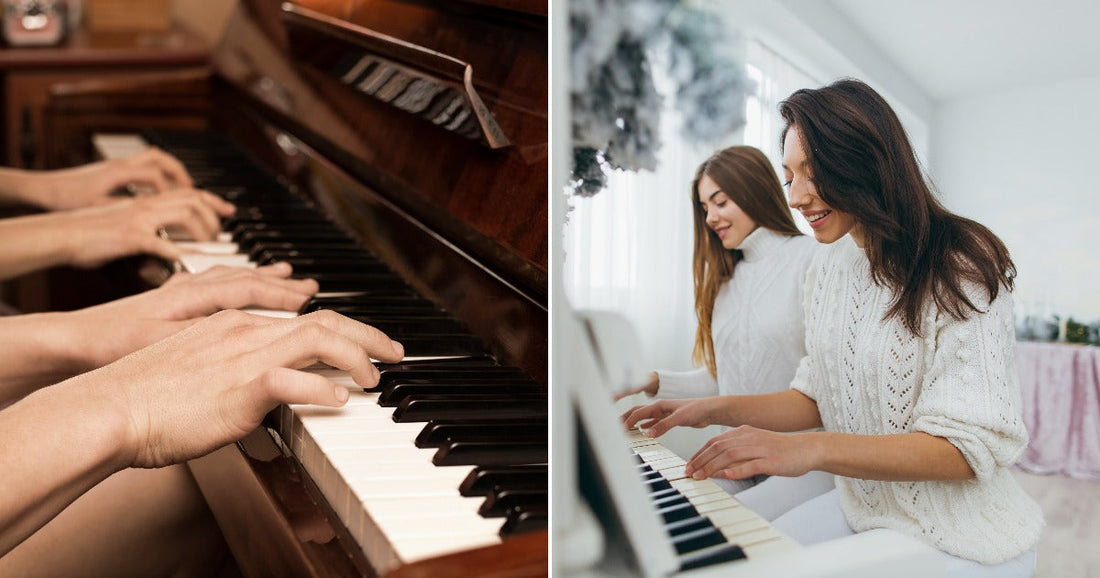
At a dementia village in Hobart, two young sisters sit side by side at a piano, their hands moving in harmony as residents quietly tap their feet or hum along. The setting is gentle and everyday, yet what unfolds hints at something remarkable about musical memory and dementia care. In a world where Alzheimer’s disease and other forms of dementia can slowly take away words, independence, and familiar routines, the ability to recognize music often remains. This resilience of musical memory, and the emotional lift that comes with it, is at the heart of the sisters’ story and shows how music for dementia patients can be far more than entertainment.
The story of Min Luo, aged 12, and her nine-year-old sister, Fei Shan, began not with a research paper or a formal program, but with a family visit. They were playing piano for a family friend who lives with dementia. During previous visits they had seen him appear stressed and unsettled. On this occasion, something shifted. As they played, he sat down, his body relaxing into the sound. Sometimes he would tap his hand in time with the rhythm, other times he would hum along, clearly recognizing familiar tunes. For Min, those moments felt deeply meaningful, and she treasured the way his tension seemed to melt away in the presence of music.

That experience sparked a decision. If a simple piano performance could soothe one person living with dementia, perhaps it could reach others as well. The sisters decided to take their music to aged care facilities and share the calm, connection, and joy they had witnessed. Fei captured their motivation in a simple but powerful idea. She described music as a language that almost everyone can understand. In the context of dementia, where spoken language and memory may falter, that idea carries particular weight.
At the Korongee Dementia Village in Hobart’s northern suburbs, this idea comes to life. During an afternoon concert, Min and Fei play to a room of residents, the notes filling the space with familiar melodies. The responses vary in subtle but telling ways. Some people tap their feet lightly, others nod their heads in time. A few hum along, joining the music even if they rarely speak in other moments. These reactions are small on the surface, yet they suggest the presence of recognition and emotional engagement that can be difficult to access through conversation alone.

One resident, 75-year-old Nick Dickens, speaks openly about what the music means to him. He lives with frontotemporal and vascular dementia, which has primarily affected his mood and mobility rather than his memory. Once a guitarist in a rock ’n’ roll band, he describes music as everything to him. Hearing Min and Fei play, he talks about stress drifting away and a sense of feeling alive returning. For him, the sound of the piano brings back memories and good feelings, evoking a life filled with performance, rhythm, and shared moments on stage.
Dickens also observes the effect on others at the village. He notes that many residents living with Alzheimer’s appear to be in their own world much of the time. Yet the moment the music begins, they respond. They tap, sway, or react in ways that suggest a bridge has been built between their inner experience and the environment around them. In that shared space of sound and rhythm, isolation seems to loosen its hold, if only for a while.
The sisters’ efforts extend beyond informal concerts. Inspired by what they have seen, they plan to hold a larger performance to raise money for dementia research. This choice reflects a growing awareness that personal acts of kindness can intersect with broader scientific work. Their concerts not only offer comfort in the present but also support the search for better understanding and treatment in the future.

Researchers are increasingly interested in why musical memory endures in many people with Alzheimer’s disease even when other forms of memory fade. Associate Professor Alison Canty, from the Wicking Dementia Research and Education Centre, offers insight into this question. She explains that the part of the brain responsible for musical memory seems comparatively resilient as dementia progresses. While other regions show shrinkage or deterioration of neural circuits, the areas linked to music do not exhibit the same degree of change. The reason for this resilience is not yet fully understood, but its effects are visible in real-life situations like the concerts at Korongee.
According to Associate Professor Canty, even people who have not spoken for a long time can respond when they hear a piece of music they recognize. A familiar song may spark singing, humming, or emotional expression that seems unreachable through direct conversation. In this way, music becomes another way in, a different path for communication and connection with someone living with dementia. It can help families and carers see glimpses of the person they know, not only the condition they manage.
The benefits of music therapy for dementia do not appear to be solely emotional or psychological. Associate Professor Canty points out that music can stimulate the release of dopamine, a neurotransmitter involved in the brain’s reward system. This release can enhance mood and help reduce anxiety and stress. In settings like aged care facilities and dementia villages, where residents may struggle with uncertainty, confusion, or agitation, that kind of natural mood lift is significant. A short concert or a few familiar songs might not cure a disease, but they can improve quality of life in ways that feel immediate and tangible.
This matters all the more given the broader context. Dementia was named the leading cause of death in Australia in 2025. Projections suggest that by 2065, almost 1.1 million people in the country may be living with dementia. These numbers underscore the need for a wide range of supportive approaches, from clinical treatments to everyday practices that promote comfort, dignity, and connection. Stories like Min and Fei’s highlight how community members, including children, can contribute to dementia-friendly environments in ways that complement formal care.
What stands out in this story is not just the science of musical memory, but the quiet, human details: two sisters practicing their instrument, a family friend relaxing into a melody, a former rock musician regaining a sense of aliveness, and residents who seem far away suddenly tapping to the beat. These moments suggest that even when words fall away, people living with dementia may still experience joy, recognition, and relationship through sound. Music for dementia patients, whether in a village, a care home, or a family living room, can become a gentle thread that ties past to present and person to person. Read more at https://www.abc.net.au/news/2026-10-17/musical-sisters-play-for-dementia-patients/107273816