
Captain Sully Finds Purpose and Strength While Living With Alzheimer’s
Guest Contributor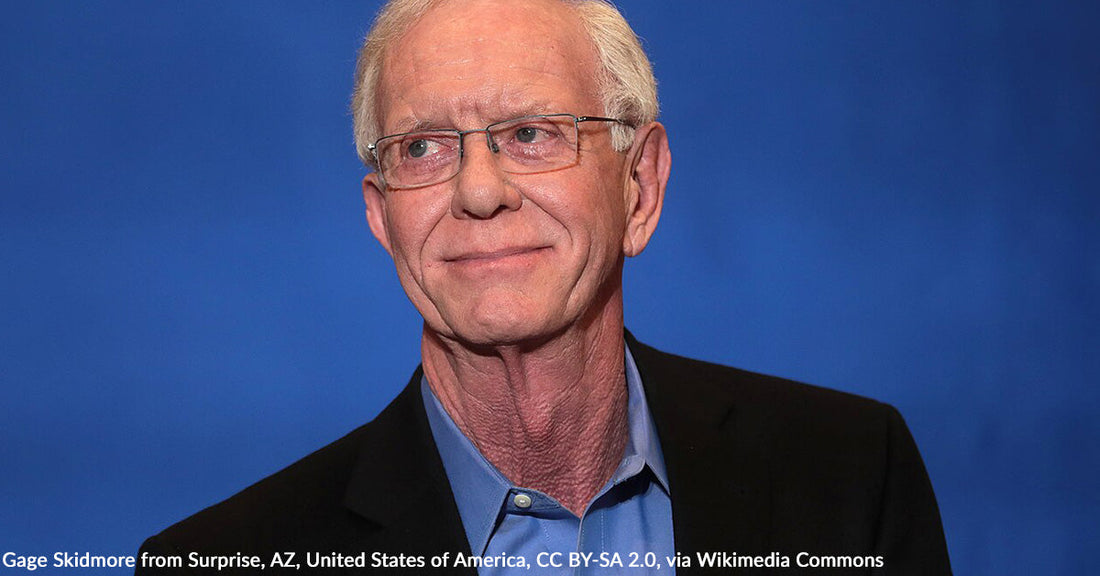
When Capt. Chesley “Sully” Sullenberger announced over the summer that he had been diagnosed with early-stage Alzheimer’s disease, the news landed heavily for many people who still remember “The Miracle on the Hudson.” Now, speaking publicly about his experience for the first time since that announcement, Sullenberger is approaching this new chapter with the same focus and resolve that helped him land a disabled airliner on the Hudson River and save everyone on board. His story offers a deeply human look at living with an Alzheimer’s diagnosis, and it also quietly reshapes how we talk about this disease.
In a conversation with Robin Roberts on “Good Morning America,” the retired pilot reflected on his diagnosis and the journey he has already begun. He did not minimize the seriousness of Alzheimer’s, yet he framed it within the context of challenges he has faced before. “I’ve done harder things than this before,” he told Roberts, recalling the 2009 emergency landing that turned him into a household name. The phrase lands with particular weight given his history. Sullenberger has been widely celebrated for guiding a powerless aircraft to a safe water landing in a matter of minutes, an event that Clint Eastwood later dramatized in the movie “Sully” with Tom Hanks in the title role.
On his personal website in July, Sullenberger shared that the disease is in its early stage. At this point it affects him in ways that might sound deceptively small to an outsider, such as struggling to recall a name that once came easily or realizing he has repeated a story he recently told. His sleep has also been affected. He described this moment as the beginning of a long journey rather than an abrupt change. That framing helps ground the notion of early-stage Alzheimer’s in everyday experience. It is not always marked by dramatic, visible decline; sometimes it starts as a nagging sense that something is slightly off.
When Roberts asked him to compare his diagnosis to the day he landed the plane on the Hudson, Sullenberger drew a striking parallel. He remembered those critical 208 seconds in which he and his crew had to “devise a plan, execute that plan flawlessly for the first time, never having done it before, and save every life.” He added that if even one person had not survived, he would have considered it a tragic failure. That mindset of total responsibility has long defined how the public views him. Now, he is applying a similar logic to his health: focus on what matters most, ignore what is nonessential, and commit fully to the plan in front of him.
Regarding his treatment, Sullenberger shared that he is receiving monthly therapies intended to slow the progression of Alzheimer’s. The details of his medical regimen were not the focus of the conversation, but the intention behind them was clear. He and his wife, Lorrie Sullenberger, are approaching this diagnosis as something to confront directly rather than quietly endure. Initially, they had planned to keep the information private. Over time, they decided that sharing his condition might help reduce stigma and encourage others to seek answers earlier.
Lorrie’s words captured that motivation succinctly. “This is a disease, not a character flaw,” she said, underscoring a message many advocates emphasize: Alzheimer’s is a medical condition, not a sign of weakness or personal failure. She expressed the hope that by talking about their experience more openly, others might feel empowered to do the same. I found this detail striking because it reframes disclosure as an act of service. They are not only navigating their own reality but also consciously opening a door for others who may be afraid to talk about memory loss.
As Sullenberger processed his diagnosis, he admitted that his first response was the question many people ask: “Why me?” That instinctive reaction quickly gave way to a broader sense of connection. He noted that he and his family are “not by any means alone” and that they now feel part of a larger community of people “trying to make the best of a bad situation.” That shift, from isolation to inclusion, appears to be one of the quiet lessons of his story. The heroic pilot known for a singular act of leadership now sees himself among millions of others confronting a complex condition.
The early signs of Alzheimer’s for Sullenberger began with small memory lapses. Names of people he had known for a long time suddenly slipped his mind. Events became harder to recall accurately. According to Lorrie, these symptoms were easy to dismiss at first because they were so minor. She pointed out a crucial disconnect between public perception and lived reality: most of what people see in the news are examples of late-stage Alzheimer’s disease, when symptoms are dramatically apparent. That visibility can obscure how subtle the earliest changes can be.
From that perspective, Sullenberger used his platform to emphasize one practical message. “If you have doubts, get tested because the sooner you act, the more options there are, the better the outcome is likely to be,” he said. He was not promising cures or miracles. Instead, he stressed timing and information. Early detection of Alzheimer’s symptoms, he suggested, does not only provide emotional clarity. It can open access to treatments, planning, and support that might otherwise come too late.
The diagnosis has also reshaped priorities for the Sullenberger family. One of their daughters, Kelly, told Roberts that her focus since learning the news has been on spending more time together. She described her family as one that likes to be prepared and to have plans in place, something that “runs in our blood.” Yet Alzheimer’s is inherently unpredictable. It defies neat scheduling and forces even the most organized families to adapt. Kelly reflected on how difficult it is to plan around something so uncertain, which may resonate with many families facing similar realities.
Even as he confronts this deeply personal challenge, Sullenberger continues to receive recognition for his aviation legacy. He is scheduled to be inducted into the National Aviation Hall of Fame, a reminder of what he has already contributed. When Roberts asked what worries him most, he answered that his greatest concern is “that this is my last flight.” The metaphor is unmistakable. Flying has defined his identity, his public story, and his proudest professional moments. Wondering whether this illness represents a final chapter brings both emotional weight and clarity.
Yet he closed on a note that combines vulnerability with the courage the public associates with him. “But if this has to be my last flight, I’m going to go out using full afterburner,” he said. The image of “full afterburner” evokes a pilot using every bit of power available for one final push forward. It is not a denial of what lies ahead. Instead, it is an acknowledgment that even within limits, there is room for intention, dignity, and purpose. Sullenberger’s openness about Alzheimer’s does not diminish the heroism of the Hudson River landing. It extends that story into a new context where resilience is less about split-second decisions and more about daily choices, honest conversations, and the courage to be seen in all stages of life.