
💜 Thanksgiving Food Drive for Shelter Pets Help Us Feed 1 Million Shelter Pets!
Responders Freed a Humpback Named Falcon From 100 Feet of Fishing Line Off West Seattle
Guest Contributor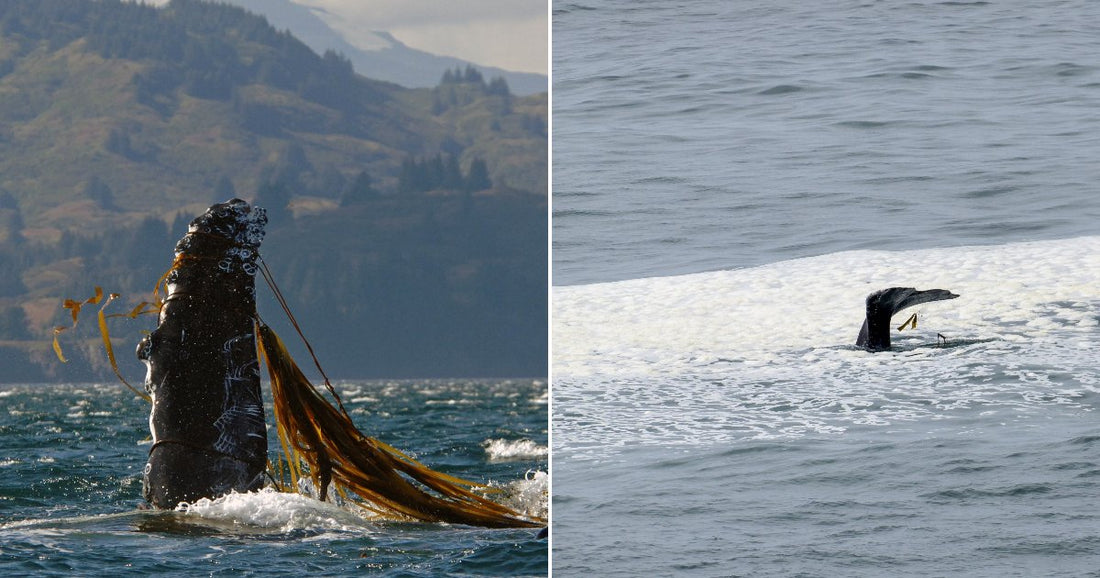
In the fading light off the Seattle coast, marine responders recently raced against time to free a humpback whale tangled in a long line of fishing gear. The dramatic rescue, captured on video, shows how a skilled response team helped a whale known as Falcon escape from about 100 feet of fishing line and return to free swimming. The story highlights both the danger of whale entanglements and the careful, coordinated efforts that go into saving these animals. For anyone who cares about marine life, whale entanglement rescue and prevention are at the heart of this powerful moment.
The incident unfolded as responders from the Cascadia Research Collective and SR3 tracked Falcon, who was trailing a substantial length of fishing line from the tail area. According to Doug Sandilands of the Cascadia Research Collective, reaching the whale before daylight disappeared felt like something out of a blockbuster movie. The sense of urgency was real. With each surfacing, responders had only brief windows to assess Falcon’s condition and plan their next moves.

The team decided to use a grappling hook to catch the fishing line that was dragging behind the whale. This approach allowed them to stay at a safe distance while still working to free the animal. It took several attempts. On the third throw, the grappling hook caught the line and, remarkably, that pull was enough to strip all of the attached gear from Falcon. In a single crucial moment, the humpback whale went from heavily encumbered to free of the visible entanglement.
Even after that apparent success, responders knew the work was not finished. They stayed with Falcon for multiple surfacing cycles to confirm that no other fishing gear remained attached. KC Scofield, SR3’s response program coordinator, explained that the team monitored the whale for another two or three rounds of surfacing just to be sure. Only after those checks did they feel confident that Falcon had truly been freed from the fishing line.

Once they confirmed that Falcon was free swimming and no other lines or gear could be seen, relief set in. The responders had managed to act quickly and effectively in a difficult situation. Back at their facility, Scofield recalled how the team sat together and processed what had just happened, marveling that such a high-stakes rescue had unfolded successfully in such a short window of time. Moments like these underline how responsive and practiced marine mammal rescue teams need to be when dealing with an entangled humpback whale.
As hopeful as Falcon’s story is, the responders emphasized that whale entanglements are often much more complicated. Casey McLean, executive director of SR3 and a veterinary nurse, noted that some disentanglement efforts can take days. The process can be painstaking and dangerous, not only for the whale but also for the humans involved. In many cases, whales may carry fishing gear for years, which can lead to severe injuries, loss of body parts, long term suffering or even death.
This is part of what makes stories like Falcon’s so striking. They represent a best case scenario. The gear came off quickly, the whale appeared to be in condition to swim freely, and the response team was able to verify that no further entanglement remained. Many other whales are not as fortunate. Entanglement in fishing gear remains one of the major human related threats to large whales worldwide, and the lines and nets that cause these incidents may come from several types of fisheries.
McLean and others involved in the response stressed that members of the public can play an important role when they encounter an entangled whale, but they must do so carefully. The guidance is to stay a very safe distance away, avoid any attempt at a direct rescue, yet remain near enough to keep track of the whale until trained responders arrive. That balance is critical. It preserves human safety while giving professionals the best chance to locate and help the animal.
Prevention remains a key focus for groups like Cascadia Research Collective. After a whale entanglement case, they work to understand where the gear came from and how the whale encountered it. In Falcon’s situation, Sandilands reported that the fishing line appears to have come from a recreational fishery. NOAA will attempt to interview the fisher involved in order to learn where the gear was set and where Falcon might have picked it up. When investigators can determine whether an entanglement occurred near the surface, on the seafloor or somewhere in between, that information becomes valuable for improving fishing practices and gear design.
Over time, identifying these patterns can guide modifications that help prevent future entanglements. Ideas can include changing how lines are set, adjusting the vertical profile of gear in the water column or exploring innovations that reduce the risk of whales snagging ropes. While the article does not go into technical detail on specific gear changes, the overall approach is clear. Understanding where and how whales interact with fishing gear informs practical steps that can protect both animals and fisheries.
Another essential piece of the puzzle is knowing individual whales. Rescuers, researchers and whale watchers contribute to catalogs of sightings and identification photos that track specific animals over time. This information can reveal where whales tend to travel, where they overlap with fishing activity and whether a particular whale has survived a past entanglement. Falcon’s case illustrates how valuable it is when an individual whale is recognized and monitored across multiple encounters.
Beyond the science and logistics, there is a human dimension to this story that is hard to ignore. The responders described the experience with words like “blockbuster” and reflected afterward on how extraordinary it felt. I found this detail striking because it underscores how emotionally invested many people are in the fate of these animals. At the same time, their comments stayed grounded in caution and realism. They celebrated Falcon’s freedom yet reminded everyone that many whales still struggle with heavy gear and long lasting injuries that crews may never see.
Ultimately, Falcon’s rescue is a hopeful snapshot in a larger, ongoing effort to reduce whale entanglements and respond effectively when they occur. It showcases quick thinking at sea, coordinated teamwork, rigorous follow up and a growing commitment to prevention. For readers, it offers a rare look behind the scenes at what it takes to free a humpback whale from fishing line and why the work of marine response teams and researchers matters so much for the health of our oceans and the animals that depend on them.