
Officers Throw a Rope Into Rushing Water as Two Dogs Fight to Stay Afloat
Guest Contributor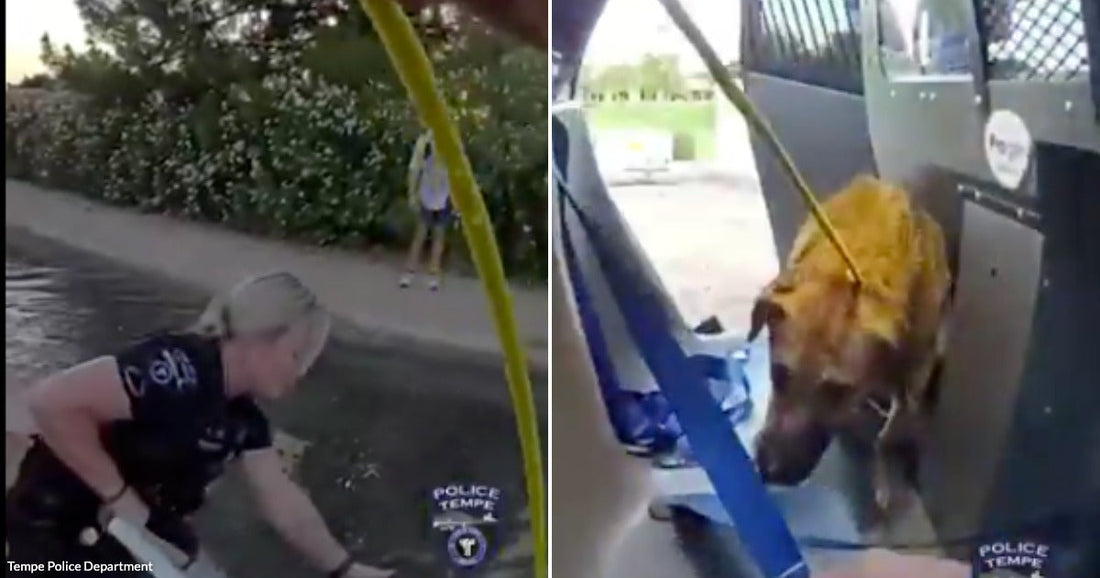
Every so often, a simple local story captures something universally heartening. A recent incident in Tempe, Arizona did exactly that, as two struggling dogs were pulled from a canal and reunited with their family thanks to quick-thinking Tempe police officers and an animal rescue group. In a city that sees its share of intense heat and fast-moving water, a routine day for first responders turned into an uplifting example of community teamwork, responsible pet ownership, and the power of microchipping pets.
According to video shared by the Tempe Police Department and dated August 29, two dogs somehow ended up in a canal and could not get out on their own. The footage shows them in obvious distress in the water. Officers responded to what the department described as a life-threatening situation for the animals. As the video narration explains, the dogs were “struggling for their lives,” and there was no time to waste. The scene reflects the kind of quick decision-making police often need to engage in, even when the call involves four-legged residents rather than people.

In the clip, officers are seen throwing a rope around one of the dogs, carefully maneuvering to guide the animal toward a ladder along the side of the canal. The canal’s steep, slick edges and the moving water created a serious hazard. Without human help, the dogs would have had no easy way to climb out. The officers worked with focus and calm, demonstrating a methodical approach that protected both the animals and the rescuers themselves.
The video emphasizes the urgency. Water rescues, whether involving humans or animals, carry inherent risk because currents and slippery surfaces can complicate even straightforward plans. Here, the officers identified a safe point of exit and used the ladder as a secure path back to dry land. The rope became a lifeline, literally and symbolically, connecting the frightened dog to the officers on shore. Watching this scene unfold, it is difficult not to appreciate how practiced coordination and simple tools can avert a tragedy.

Tempe Police Department
Once the first dog was safely guided to the ladder, attention turned to the second. Though the article’s brief description focuses most closely on the initial rope rescue, the department states that both dogs were brought out of the canal safely. The officers’ actions did not end at the water’s edge. Instead, the rescue transitioned into a search for answers. Who did these dogs belong to? How had they ended up in the canal? While not every question could be answered, the officers and their partners did have a clear next step for reconnecting the animals with their people.
Tempe police partnered with Lost Our Home Pet Rescue, a local organization that supports animals in need. Together, they scanned the dogs for microchips. This small piece of technology often becomes the bridge between a lost pet and a hopeful family. In this case, officials report that both animals had microchips, which allowed the team to quickly identify their owners. Within a relatively short time, the story shifted from one of urgent survival to one of relief and reunion.

Tempe Police Department
The Tempe Police Department highlighted this outcome when sharing the story on social media. The department noted that the two pups “found themselves in a canal and needed a little help getting back on dry land,” and that officers “jumped into action” before teaming up with Lost Our Home Pet Rescue. From there, scanning the microchips allowed them to track down the dogs’ family and get them home. I found this detail striking because it condenses an entire chain of actions into a clear message about preparedness and collaboration: rescue, identify, reunite.
There is a broader lesson here about microchipping pets. While the article does not delve into statistics or extended commentary, the successful reunion in Tempe demonstrates why veterinarians and animal welfare organizations often advocate for microchips. Tags and collars can fall off, especially if a pet is moving quickly through rough terrain or water. A microchip, once registered with current contact information, offers a more permanent way for shelters, rescues, and law enforcement to link a lost animal with its home. In this Tempe canal rescue, that small piece of embedded technology made all the difference in turning an emergency into a happy ending.

Tempe Police Department
The story also illustrates something meaningful about the daily role of local police. Many people associate law enforcement work primarily with crime response, yet officers are frequently called upon to assist in situations involving animals, hazardous weather, medical crises, and more. When Tempe officers responded to these dogs in a canal, they were exercising another dimension of public service. The tone of the department’s video suggests pride not only in saving the dogs, but in collaborating with partners in the animal rescue community.
Another subtle aspect of the story is how quickly it spread. While the initial scene played out locally, the department’s video and brief description allowed people far beyond Tempe to see what happened. Short clips of animal rescues tend to travel widely online because they offer a break from heavier news while still reflecting real work performed by responders. This particular rescue carries that same appeal. Viewers see officers managing a real hazard, a nonprofit group supporting the follow-up care, and a relieved outcome. For many, it may reinforce trust in community institutions and inspire renewed attention to their own pets’ safety.
There is also a reminder about environmental awareness. In desert cities like Tempe, canals are a familiar part of the landscape, channeling precious water through the community. Yet they can be deceptively dangerous for animals that wander too close or stumble in. Steep walls can trap even strong swimmers. While the article does not speculate on how the dogs entered the water, the scenario highlights why pet guardians often keep a close watch near canals, rivers, and pools, particularly when animals are off leash.
From a storytelling standpoint, this rescue includes several elements that readers often find compelling: a problem that unfolds in real time, visible effort to fix it, and a satisfying conclusion marked by the dogs’ safe return home. It shows how officers, rescue workers, technology, and a bit of rope all came together to save two lives. The mood is ultimately light and hopeful, anchored by the knowledge that the dogs are back where they belong. Stories like this one may not dominate headlines, yet they add an important layer to the public understanding of how communities function at their best.
In the end, the Tempe canal rescue of two dogs serves as a concise illustration of modern animal welfare in action. Local officers responded quickly to a dangerous situation, used basic rescue techniques to remove the animals from harm, then relied on a dedicated rescue partner and microchip technology to close the loop and reunite them with their family. It is a small but meaningful reminder that preparation, cooperation, and compassion can transform a frightening moment into a positive outcome, for both people and their pets. Read more at https://www.azfamily.com