
🚨Urgent: Rush Aid to People & Pets in Nepal's Devastating Floods! Help Now!
The Enduring Loyalty of Greyfriars Bobby
Guest Contributor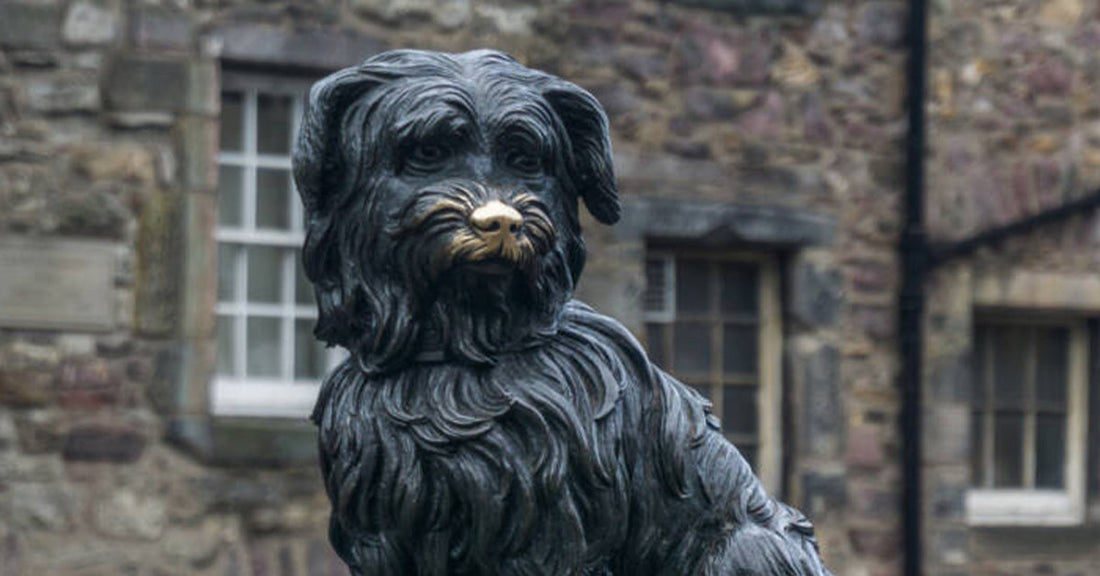
The story of Greyfriars Bobby is one of the most enduring tales of loyalty in Scottish history. This small Skye Terrier became a symbol of unwavering devotion after reportedly spending 14 years guarding the grave of his beloved owner, John Gray, in Edinburgh’s Greyfriars Kirkyard. The legend of Greyfriars Bobby continues to draw visitors from around the world, many inspired by the idea of a dog who never left his master’s side—even in death. For anyone interested in loyal dog stories or Scottish folklore, Greyfriars Bobby remains a poignant example.

According to historical accounts, John Gray was a nightwatchman in mid-19th century Edinburgh who adopted Bobby to accompany him on his rounds. The two became inseparable, patrolling the cobbled streets together and stopping regularly at a local coffee shop. When Gray died of tuberculosis in 1858, he was buried in Greyfriars Kirkyard. From that point forward, Bobby is said to have taken up residence by his master’s grave, leaving only once a day to eat.

The terrier’s daily routine became a familiar sight to locals. Each afternoon, when the one-o-clock gun fired from Edinburgh Castle, Bobby would trot off to Traill’s Temperance Coffee House, where he was fed by the owner, John Traill. The community quickly grew protective of the little dog. Even when a law was passed in 1867 requiring all unlicensed dogs to be destroyed, Bobby was spared. The Lord Provost of Edinburgh, Sir William Chambers, paid for his license and gave him a collar inscribed with his name and the year.
I found this detail striking: the townspeople not only cared for Bobby but also built him a shelter within the kirkyard. Their compassion for the grieving dog, and his steadfast loyalty in return, created a bond that extended beyond one man and his pet—it became a story the whole city embraced. Bobby remained at the grave for 14 years, passing away in 1872. He was buried just inside the gates of the cemetery, not far from John Gray.
In tribute, a granite statue of Greyfriars Bobby was erected across from the kirkyard in 1873 at the request of Baroness Angela Georgina Burdett-Coutts, president of the Ladies Committee of the RSPCA. The statue’s plaque reads: “Greyfriars Bobby – died 14th January 1872 – aged 16 years. Let his loyalty and devotion be a lesson to us all.” Over time, tourists began rubbing the statue’s nose for good luck, a tradition that has worn the finish away, leaving it noticeably shinier than the rest of the sculpture.
Yet, as with many cherished legends, the story of Greyfriars Bobby has not gone without scrutiny. Historians and writers have raised questions about the accuracy of the tale. In 1889, two individuals who claimed to have known Bobby submitted contradictory letters to The Scotsman newspaper, each disputing elements of the story. More recently, Scottish historian Forbes Macgregor and author Jan Bondeson examined the inconsistencies in detail. They noted that the average life expectancy of a Skye Terrier is 10 to 12 years, making Bobby’s alleged 16-year lifespan unusual, though not impossible.
Other discrepancies include the timeline of events. For example, John Traill didn’t take over the coffee house near the kirkyard until four years after John Gray’s death, which complicates the narrative of Bobby’s daily visits there. Additionally, the one-o-clock gun at Edinburgh Castle didn’t begin firing until 1861, three years after Bobby supposedly began his routine. According to Macgregor’s research, a Sergeant Scott stationed at the castle may have been the one to introduce Bobby to the sound of the gun and the nearby restaurant.
Bondeson even suggests the possibility that more than one dog played the role of Greyfriars Bobby, especially as the story gained popularity and began attracting tourists. The economic incentive to maintain the legend may have contributed to the continuation of the tale, even if the original Bobby had passed away. While these theories introduce doubt, they do not necessarily diminish the spirit of the story. Whether one dog or two, the image of a faithful companion keeping vigil at his master’s grave remains powerful.
Similar stories of canine loyalty exist around the world. The tale of Hachikō in Japan, for instance, mirrors that of Greyfriars Bobby in its themes of devotion and loss. These narratives resonate because they speak to a universal longing for enduring connection, even in the face of death. As a spokesman for VisitScotland aptly noted, “Separating fact from legend is always going to be tricky but regardless of how much the story has evolved over the years it has done little to deter visitors paying homage to a true Scottish icon.”
Today, visitors to Edinburgh can still see Bobby’s collar and feeding bowl at the Museum of Edinburgh, and his statue continues to greet admirers just outside the kirkyard. While the finer details of his story may be debated, the legacy of Greyfriars Bobby endures as a symbol of loyalty that transcends generations.