
🚨Urgent: Missile Strikes Shelter in Ukraine! Rush Emergency Aid!
The Fascinating History of Dorothy’s Ruby Slippers from The Wizard of Oz
Guest Contributor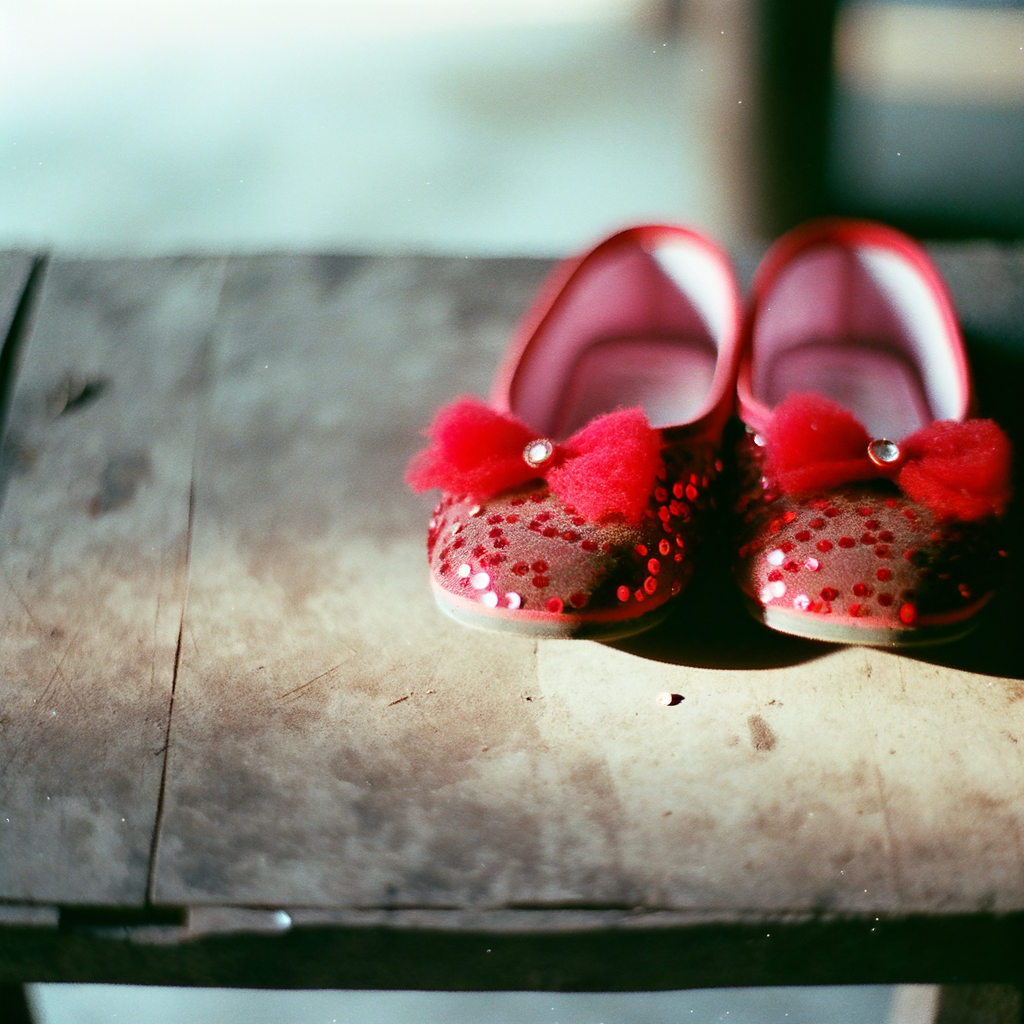
Few pieces of movie memorabilia have captured the public imagination quite like Dorothy’s ruby slippers from The Wizard of Oz. These sparkling red shoes, designed to dazzle in Technicolor, have journeyed far beyond the yellow brick road, becoming symbols of Hollywood history, targets of theft, and record-breaking auction items. Their story is as dramatic and enduring as the film itself, with twists that continue to unfold even decades after the 1939 premiere. For fans and collectors alike, the ruby slippers remain a treasured artifact of cinematic legacy.

Originally, L. Frank Baum’s Oz books described Dorothy’s shoes as silver. But for the MGM adaptation, the studio opted for ruby red to take full advantage of the new Technicolor process. The result was a visual masterpiece. Costume designer Gilbert Adrian crafted several versions of the slippers, ultimately settling on a simpler design adorned with sequins and a bow. Each shoe sparkled with approximately 2,400 crimson sequins, while red rhinestones and beads decorated the bows. The base was a white silk pump, dyed red to achieve the desired on-screen hue. Interestingly, true ruby red sequins would have appeared orange on film, so a darker tone was used to achieve the iconic look.
Judy Garland, who portrayed Dorothy Gale, wore multiple pairs of these shoes during filming. Though the exact number remains uncertain, experts estimate that seven to ten pairs were created. Today, only four film-worn pairs are accounted for. Their paths since production have been anything but ordinary, ranging from museum displays to high-profile thefts.
After the film wrapped, the slippers were stored away by MGM. It wasn’t until 1970 that costumer Kent Warner rediscovered several pairs while preparing items for an MGM auction. Instructed to select one pair and destroy the rest, Warner instead kept the extras. The pair he chose for auction fetched $15,000—a significant sum at the time—and was later donated to the Smithsonian Institution. Today, that mismatched pair is one of the most visited artifacts at the National Museum of American History in Washington, D.C.
Warner also sold another mismatched pair to collector Michael Shaw. Shaw’s pair would later become the most infamous of all. In 2005, while on loan to the Judy Garland Museum in Grand Rapids, Minnesota—Garland’s hometown—the shoes were stolen in a meticulously executed heist. A thief used a bat to smash the display case and left behind only a single sequin. No alarms were triggered, and no fingerprints were found. The case remained unsolved for over a decade.
Meanwhile, Warner had kept what he considered the “best” pair for himself. Diagnosed with HIV in the early 1980s, he sold them to cover medical expenses before passing away in 1984. This pair eventually made its way to the Motion Picture Academy and is occasionally displayed at the Academy Museum in Los Angeles. However, curators are cautious about their condition and limit public access to preserve them.
The final known pair has a more whimsical origin. Roberta Jeffries Bauman won the shoes in a 1940 contest by selecting her favorite films of the previous year. This pair was later sold to Anthony Landini for over $150,000 in 1988 and was once displayed at Disney’s Great Movie Ride. Today, they are held by collector David Elkouby, though they are not currently on public display.
The stolen pair from Minnesota resurfaced in 2018 after a sting operation led by the FBI. The investigation revealed that a Minnesota man named Terry Martin had taken the shoes, reportedly believing they were embedded with real rubies. He eventually pleaded guilty, and a second man, Jerry Hal Saliterman, was also charged. Upon recovery, experts discovered that the stolen shoes were the mates of the Smithsonian’s mismatched pair, and the mix-up likely occurred during production, not after filming.
In a stunning finale to their saga, the recovered slippers were sold at auction in 2024 for a record-breaking $28 million. The anonymous buyer now holds one of the most valuable pieces of movie memorabilia ever sold. I found this detail striking—not just for the price, but for what it says about the enduring power of film history to captivate and inspire.
Despite the recovery of these four pairs, several ruby slippers remain unaccounted for. Whether tucked away in private collections or lost to time, their potential reappearance continues to fuel fascination. The story of Dorothy’s ruby slippers is more than a tale of costume design; it’s a reflection of nostalgia, artistry, and the timeless magic of the movies.