
The Inspiring Legacy of the Tuskegee Airmen in World War II
Guest Contributor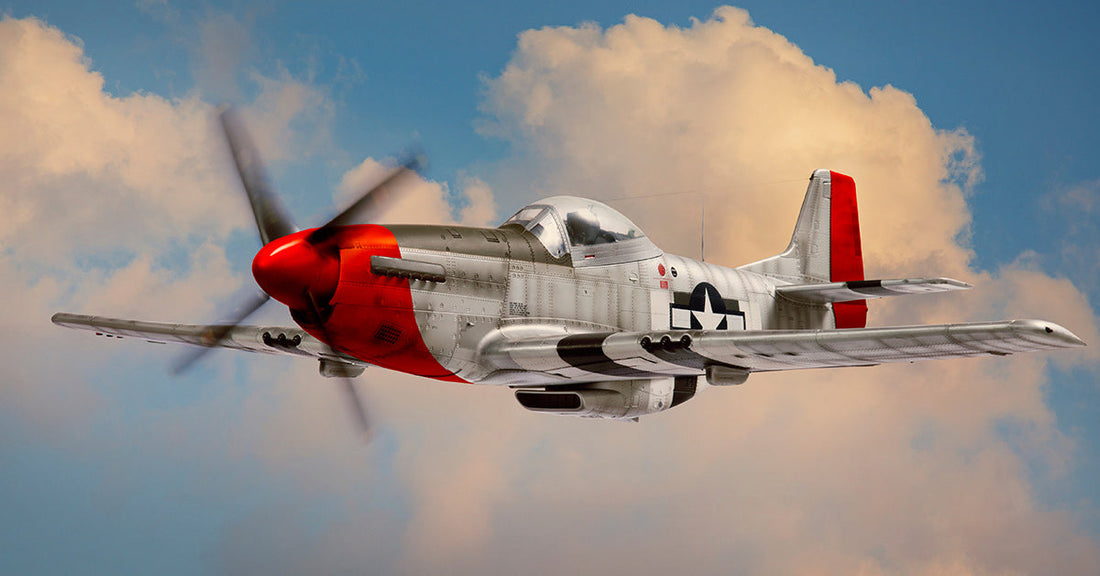
During World War II, a group of Black American pilots known as the Tuskegee Airmen challenged not only the Axis powers abroad but also the deeply ingrained racism of their own country. These men, trained in Tuskegee, Alabama, became legendary for their courage in combat and their role in reshaping the U.S. military. Their story is one of perseverance, skill, and a quiet revolution in the skies—one that helped pave the way for desegregation in the armed forces and beyond. The Tuskegee Airmen remain an enduring symbol of Black excellence in military aviation.

The training of Black pilots began in 1941 under what the U.S. government described as an "experiment." Officials largely expected the effort to fail, reflecting the prevailing racist assumptions of the era. A 1925 U.S. Army War College study had even claimed that Black soldiers were inherently unfit for military service. Despite this, civil rights organizations and Black newspapers pushed back, leading to the formation of a training program at the Tuskegee Institute. The location was chosen for its favorable flying weather and the presence of a civilian pilot training program already in place for Black students.

The first group of cadets graduated in March 1942, marking a historic moment. Among them were Second Lieutenants Lemuel R. Curtis, Charles DeBow, Mac Ross, George Spencer Roberts, and Captain Benjamin O. Davis Jr., who would later become a key figure in the U.S. Air Force. These men were the first Black military pilots in American history, and they were determined to succeed despite the low expectations set for them.
One early boost to the program came from First Lady Eleanor Roosevelt, who visited the Tuskegee Institute and took a flight with chief instructor Charles Alfred "Chief" Anderson. Her public endorsement helped draw national attention to the program and challenged prevailing stereotypes. In her newspaper column, she praised the students’ skills, writing that “these boys are good pilots.”
By the end of the war, nearly 1,000 Black Americans had become pilots through the Tuskegee program, and over 14,000 had served in supporting roles such as navigators, engineers, and mechanics. Although the majority were men, some women were also part of this historic effort. The Tuskegee Airmen flew more than 15,000 sorties and were known for their signature red-tailed aircraft. Their combat performance was impressive: they destroyed 36 enemy planes in the air, 237 on the ground, and approximately 1,000 enemy rail and transport vehicles.
Despite being assigned older, less capable aircraft like the Curtiss P-40 Warhawk and the Bell P-39 Airacobra, the Tuskegee Airmen proved their mettle in combat. As reported by the Tuskegee Airmen National Historical Museum, these planes were nearly obsolete and rarely used by other U.S. front-line units. Nevertheless, the airmen adapted and excelled. First Lieutenant Charles B. Hall made history by shooting down a German plane in his P-40, and Colonel Roscoe Brown downed a German Me-262 jet, a technologically superior aircraft, while flying a P-51 Mustang.
The challenges extended beyond the cockpit. Mechanics like Walter Suggs recounted how the U.S. government often withheld necessary parts, forcing them to improvise. In one example, Suggs described how they used empty food cans from the mess hall to patch holes in aircraft. These acts of ingenuity were essential to keeping the planes in the air and the missions on track.
Despite their heroism, the Tuskegee Airmen returned home to a country that remained largely unchanged. Segregation was still the law of the land, and many airmen were told to disembark from returning ships at separate exits from their white counterparts. Leroy Roberts Jr., one of the airmen, expressed disappointment that their service had not led to immediate improvements in civil rights. “We were hopeful that they would — and people would have paid more attention to what we did, what we accomplished,” he reflected.
However, their legacy did contribute to significant change. In 1948, President Harry S. Truman ordered the desegregation of the U.S. Armed Forces, a move influenced in part by the performance and perseverance of the Tuskegee Airmen. Many of these men went on to have distinguished careers. Colonel Benjamin O. Davis Jr. became the first Black general in the Air Force, and General Daniel “Chappie” James later became the first Black four-star general in any branch of the U.S. military.
Over the years, recognition of the Tuskegee Airmen’s contributions has grown. They earned more than 850 medals, including 96 Distinguished Flying Crosses. In 2007, President George W. Bush awarded the Congressional Gold Medal to around 300 surviving members of the group. Their legacy is not only one of military achievement but also of breaking barriers and challenging injustice.
The story of the Tuskegee Airmen is a powerful chapter in American history. They proved that skill and determination could overcome prejudice, and their success helped change the trajectory of the U.S. military and the nation itself. I found it striking how their courage in the face of both enemy fire and systemic racism helped lay the groundwork for a more inclusive society.