
🚨Urgent: Missile Strikes Shelter in Ukraine! Rush Emergency Aid!
The Real Von Trapp Family And The Story Behind The Sound of Music
Guest Contributor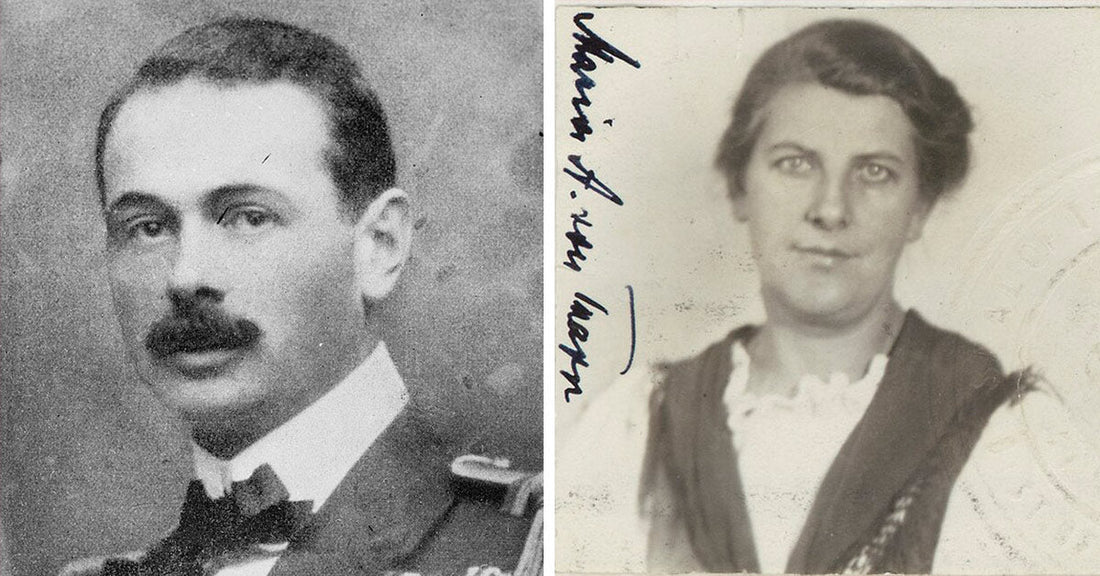
Most people know The Sound of Music as a heartwarming musical about a governess, a widowed naval officer, and their singing children who escape the rise of Nazi power in Austria. But behind the Hollywood version lies the real story of the von Trapp family, whose journey was both less dramatic and more complex than the film suggests. The true story of the von Trapps offers a fascinating look at courage, faith, and family during one of history’s darkest times. For those curious about the real von Trapp family, the differences between fact and fiction are as compelling as the musical itself.

The real Maria von Trapp, born Maria Augusta Kutschera in 1905, had a spirited and unconventional path to the von Trapp household. Raised in a secular environment, she found herself drawn to religion after attending a Palm Sunday service by chance. Her journey led her to the Benedictine Abbey of Nonnberg in Salzburg, where she trained to become a nun. However, her energetic personality often clashed with the convent’s strict discipline. Maria herself once recalled being “horrid” and difficult to manage, often breaking rules and even climbing on the convent roof.
When retired naval captain Georg von Trapp sought a tutor for his ailing daughter, the nuns selected Maria. Much like in the film, Georg was a widower with seven children. But contrary to his stern portrayal in The Sound of Music, his family described him as warm and supportive, particularly of their musical interests. Maria, too, was more fiery than Julie Andrews’ calm depiction. One of the children remembered her as having a volatile temper—unpredictable but fleeting.
Maria and Georg married in 1927, well before the Nazi annexation of Austria. Their union was rooted more in her devotion to the children than romantic love. Maria later explained that she agreed to marry Georg because he asked her to become a “second mother” to his children. Over time, she did grow to love him deeply, but initially, her bond was with the children above all.
Although the family’s financial situation appears comfortable in the film, the real von Trapps faced economic hardship. Georg lost much of his fortune during the global depression of the 1930s. In addition to Georg’s original seven children, Maria and Georg had three more together, making for a household of ten children in total. Despite these challenges, the family began performing together, eventually gaining recognition throughout Europe as the Trapp Family Singers.
Their musical success included winning first place at the Salzburg Music Festival in 1936. However, the political climate in Austria was rapidly changing. When Nazi Germany annexed Austria in 1938, the von Trapps found themselves in a precarious position. One child, Lorli, faced discipline at school for refusing to perform the Nazi salute or sing the German national anthem. Her teacher warned Maria that further defiance could result in being reported to authorities.
Georg von Trapp’s resistance to the Nazi regime was resolute. He declined an offer to return to military service and refused to perform at Adolf Hitler’s birthday celebration. Recognizing the growing threat, he gathered the family to discuss leaving Austria. He told them they would be giving up their possessions but preserving their values. “You can’t say no three times to Hitler,” he reportedly said, underscoring the urgency of their departure.
Unlike the dramatic mountain escape depicted in the film, the von Trapps left Austria quietly and without fanfare. They boarded a train under the pretense of a singing tour in America. Maria later pointed out the geographical inaccuracy of the film’s escape scene, noting that Salzburg borders Germany, not Switzerland. “Don’t they know geography in Hollywood?” she asked in a 1967 interview.
Once in the United States, the von Trapps continued to perform and eventually settled in Stowe, Vermont. There, they established a music camp and later opened the Trapp Family Lodge. Georg passed away in 1947, and Maria chronicled their experiences in her 1949 memoir, The Story of the Trapp Family Singers. Her story inspired two German films before being adapted into the Broadway musical and later the 1965 movie.
Despite the film’s success, the von Trapp family saw little financial return from it. They also took issue with some of its portrayals, particularly the characterization of Georg as a cold and distant father. Johannes von Trapp, one of Maria’s children, remarked in a 1998 interview that the film “simplifies everything,” adding that the real story was “less glamorous but more interesting than the myth.”
Maria, however, came to appreciate the impact of their story. She viewed it as an example of following divine guidance and facing adversity together. “I always told my children, ‘Find the will of God and do it,’ even in the little things,” she said. “Someday a big minute will come and you must be prepared.”
While The Sound of Music remains a beloved classic, the real history behind the von Trapp family offers a deeper, more nuanced narrative. Their journey from Austria to America, marked by music, faith, and resilience, continues to resonate with audiences around the world.