
🚨Urgent: Missile Strikes Shelter in Ukraine! Rush Emergency Aid!
The Remarkable Death of John Adams and Thomas Jefferson on July 4
Guest Contributor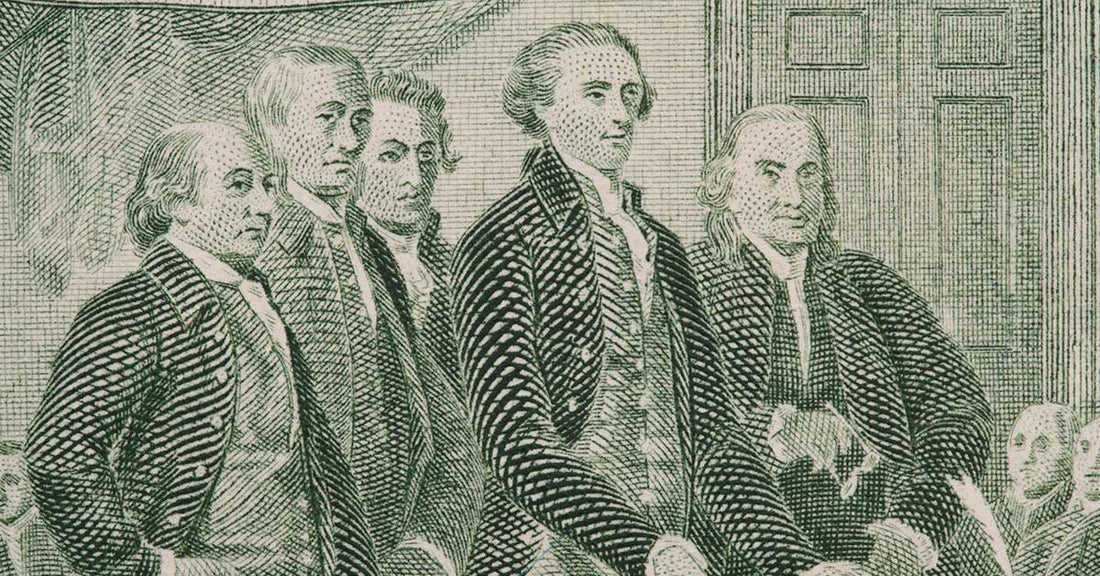
On July 4, 1826, two of America's most prominent Founding Fathers, John Adams and Thomas Jefferson, died within hours of each other. This remarkable coincidence occurred on the 50th anniversary of the Declaration of Independence, a document both men had helped shape. The deaths of Adams and Jefferson on the same day has long intrigued historians and the public alike. It was not just a symbolic passing of two great statesmen, but also a moment that seemed to underscore the deep historical resonance of American independence.

The story of John Adams’ death begins in Quincy, Massachusetts, where the 90-year-old former president had retired after a long and impactful political career. Though Adams had been in relatively good health for his age, he suffered a fatal heart attack on the nation’s most celebrated holiday. His final words, reportedly spoken shortly before 6 p.m., were “Thomas Jefferson still lives” or “Thomas Jefferson survives.” Unbeknownst to him, Jefferson had already died earlier that day at Monticello, Virginia.

Jefferson, aged 83, had been suffering from a range of health issues including kidney problems, joint pain, and infections. His death came around noon, just hours before Adams’. The fact that both men died on the same day, and on such a momentous anniversary, has led to speculation and reflection ever since. Some have wondered whether divine intervention played a role, while others have suggested the two men were determined to live long enough to see the 50th Fourth of July.
John Adams and Thomas Jefferson were more than just political figures—they were architects of the American experiment. Adams, born in 1735 in Braintree, Massachusetts, was a Harvard-educated lawyer who played a key role during the American Revolution. He served on 90 committees in the Continental Congress and was one of the five delegates assigned to draft the Declaration of Independence. Jefferson, the Virginian statesman often credited as the main author of the Declaration, was also on that committee.
Their political paths intertwined throughout the early years of the Republic. Adams served as the first vice president under George Washington, while Jefferson was appointed secretary of state. In 1796, Adams defeated Jefferson to become the second president of the United States. But in 1800, Jefferson returned the favor, unseating Adams in a bitter election that deeply strained their relationship.
Following his defeat, Adams retired to his family farm in Quincy. At 65, he felt he had accomplished much, though the loss to Jefferson remained a sore point. He spent his retirement surrounded by family, writing his autobiography and maintaining a private life. Jefferson, meanwhile, continued to engage in intellectual pursuits, including his leadership of the American Philosophical Society until 1815.
It wasn't until 1812 that the two former rivals reconnected, thanks in part to the encouragement of mutual friend Benjamin Rush. This reconciliation led to a remarkable correspondence between the two men. Over the next 14 years, they exchanged more than 150 letters, discussing everything from politics to philosophy to their own mortality. In 1822, they even broached the subject of death directly. Jefferson questioned whether life in old age was worth preserving, while Adams responded with a more optimistic view, calling death a “blessing to the individual, and to the world.”
I found this detail striking: despite their earlier animosity, Adams and Jefferson ended their lives in mutual respect and philosophical harmony. Their final years were marked not by rivalry but by reflection, a testament to the enduring bonds formed in the crucible of revolution.
The circumstances of their deaths have fueled numerous theories. Some believed they were engaged in a final, unspoken contest to outlive one another. Others speculated that their doctors may have hastened their deaths to allow them to pass on Independence Day. While none of these claims have been substantiated, they reflect the almost mythic status Adams and Jefferson hold in American history.
John Quincy Adams, who was president at the time of his father’s death, viewed the coincidence as nothing short of divine. In an executive order, he described their deaths as a “visible and palpable” sign of “Divine favor.” He emphasized that such men needed no monuments, for “we are their monuments.”
Today, John Adams rests in Quincy, Massachusetts, a man who lived to see the nation he helped build celebrate its 50th year. Thomas Jefferson lies at Monticello, his beloved Virginia estate. Their simultaneous passing on July 4, 1826, remains one of the most poignant moments in the story of American independence. It serves as a powerful reminder that even in death, these two Founding Fathers were united by the ideals they fought so hard to establish.