
The Titanic Wreck Today: Exploring Its Legacy and Ongoing Decay
Guest Contributor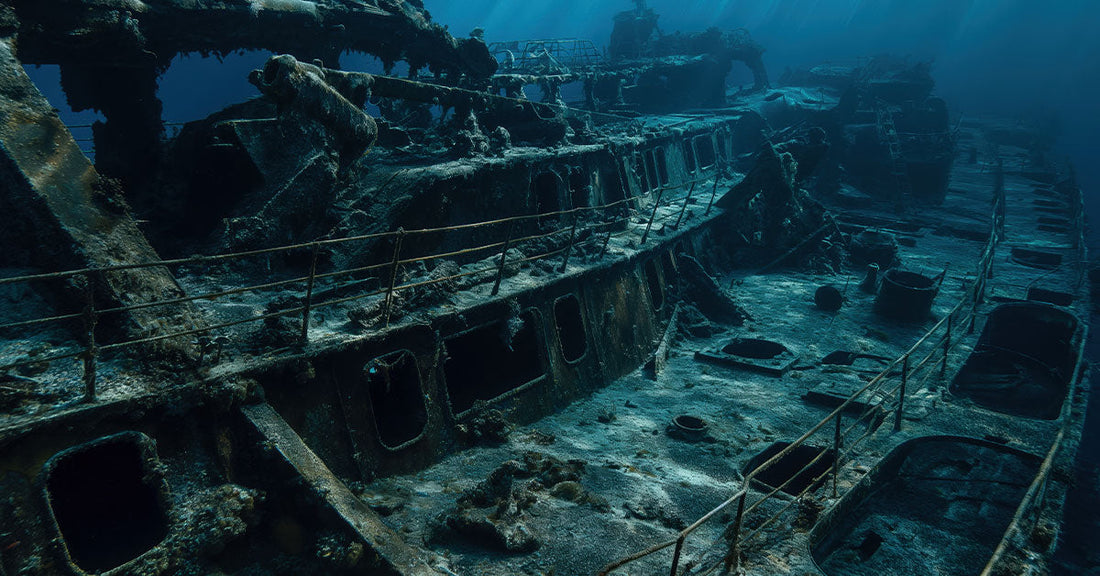
More than a century after its tragic sinking, the RMS Titanic remains one of the most haunting and studied shipwrecks in history. Lying approximately 12,500 feet beneath the surface of the North Atlantic Ocean, about 350 miles off the coast of Newfoundland, the Titanic has become a poignant symbol of human ambition and vulnerability. Since its rediscovery in 1985, the wreck has drawn intense interest from researchers, historians, and explorers alike. Today, new technologies continue to reveal how the Titanic has changed over time—and how it may soon vanish from the ocean floor entirely. For those interested in the Titanic shipwreck and its legacy, the story of what happened after it sank is as compelling as the disaster itself.

The Titanic embarked on its maiden voyage on April 10, 1912, from Southampton, England, with over 2,200 passengers and crew aboard. Hailed as a marvel of engineering and luxury, the ship was considered "unsinkable" by its designers and the public. Just four days into its journey, however, the Titanic collided with an iceberg, ultimately sinking in the early hours of April 15. Over 1,500 lives were lost, making it one of the deadliest maritime disasters in history. For decades, the exact location of the wreck remained a mystery, despite numerous failed attempts to find it.

Efforts to locate the Titanic began as early as the 1960s, with some proposals bordering on the fantastical—ideas ranged from filling the ship with ping pong balls to using Vaseline to raise it. Even the Walt Disney Company considered joining the search, though financial hurdles halted their plans. It wasn't until 1985 that a joint French-American expedition, led by oceanographer Robert Ballard, successfully discovered the wreck. Using the underwater vehicles Argo and SAR, the team located one of the Titanic’s boilers on September 1, more than 12,000 feet below the surface. They soon found the rest of the ship, confirming survivor accounts that it had split into two sections during its descent.
The discovery of the Titanic’s final resting place sparked global fascination. The following year, the first manned expedition to the site took place, capturing detailed images of the wreck. Many of the ship's interior rooms and fixtures were found surprisingly intact, offering a rare glimpse into the past. Since then, numerous expeditions have explored the site, often recovering artifacts such as sheet music, china, clothing, and even parts of the ship itself. In total, over 5,000 items have been salvaged by RMS Titanic, Inc., the company responsible for many of these missions. These artifacts have been displayed in exhibitions around the world, helping to preserve the memory of those who perished.
Interestingly, no human remains have ever been found at the site. While the ship’s physical structure continues to deteriorate, the human element of the tragedy endures through stories, recovered belongings, and ongoing research. In 2009, the last living survivor of the Titanic, Millvina Dean, passed away, marking the end of direct human connection to the disaster.
In recent years, the focus of Titanic expeditions has shifted from artifact recovery to preservation and documentation. In 2012, on the 100th anniversary of the sinking, the wreck became protected under a UNESCO convention. Since then, researchers have employed advanced imaging technologies to monitor the ship’s condition. A 2019 expedition produced the first 4K footage of the wreck, while a 2023 mission created a full-sized digital scan, offering unparalleled insight into how the ship broke apart and settled on the ocean floor.
Despite these advancements, the Titanic’s condition is rapidly declining. The ship is being consumed by bacteria and degraded by the high salt content of the ocean. Experts estimate that significant portions of the wreck could collapse by 2030. I found this detail striking, as it underscores the urgency of current documentation efforts. Although the complete disappearance of the Titanic may take centuries, its most recognizable features—like the bow—are already showing signs of severe decay.
Not all modern expeditions have been focused on research. In 2021, a company called OceanGate began offering commercial tours to the wreck site using a submersible named Titan. These high-priced excursions, costing $250,000 per person, ended in tragedy when the Titan imploded near the wreck in June 2023, killing all five people on board. The incident served as a sobering reminder of the risks involved in deep-sea exploration.
In July 2024, RMS Titanic, Inc. returned to the site for the first time in 14 years, armed with cutting-edge technology including remotely operated vehicles and high-definition cameras. One of the most remarkable findings from this expedition was the rediscovery of the Diana of Versailles, a bronze statue that once adorned the first-class lounge. The team also noted that a section of the bow’s railing had collapsed, further evidence of the wreck’s ongoing deterioration.
As the Titanic continues to erode beneath the waves, its story remains a powerful reminder of human ambition, tragedy, and resilience. With all survivors now gone and no plans to raise the ship, its legacy will live on through the artifacts recovered, the images captured, and the history preserved by those who have studied it. The Titanic may one day vanish from the ocean floor, but its place in collective memory is secure.