
🚨Urgent: Missile Strikes Shelter in Ukraine! Rush Emergency Aid!
The True Story of Paul Revere’s Midnight Ride in American History
Guest Contributor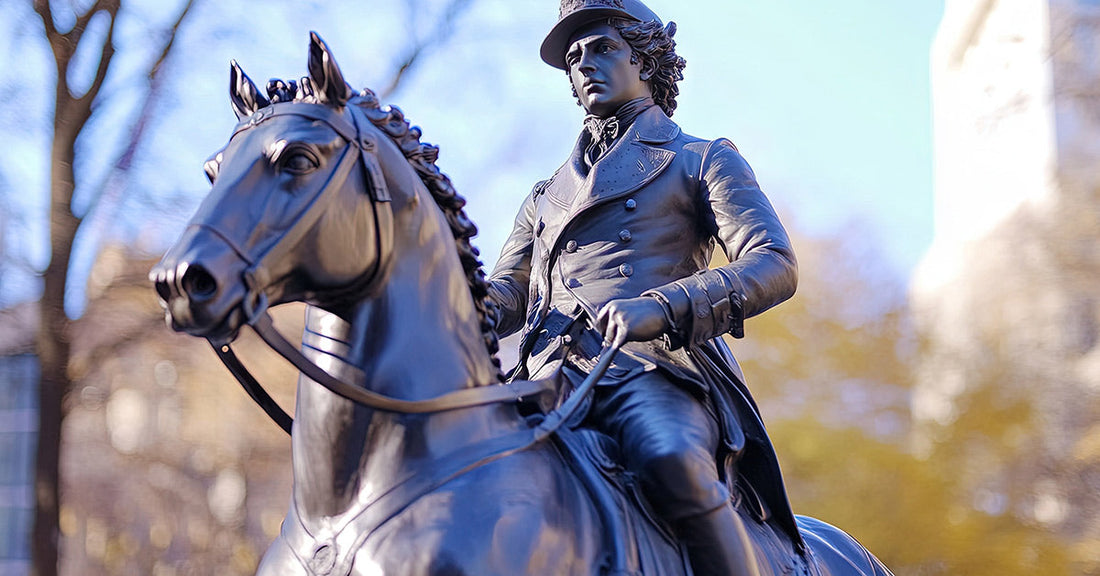
On the night of April 18, 1775, a silversmith from Boston mounted a borrowed horse and rode into history. Paul Revere’s midnight journey to warn American colonists of approaching British troops has become one of the most iconic episodes of the American Revolution. Often remembered through Henry Wadsworth Longfellow’s famous poem, the true story of Paul Revere’s ride reveals a complex and courageous effort that helped ignite the first battles of the Revolutionary War. For those interested in early American history, the midnight ride of Paul Revere remains a compelling moment of resistance and resolve.

Born in 1735 in the Massachusetts Bay Colony, Paul Revere was the son of a French immigrant silversmith and a Boston-born mother. As a teenager, he apprenticed under his father, eventually taking over the family business after his father’s death. His trade connected him with many of Boston’s influential citizens, relationships that would later prove pivotal during the tumultuous years leading to the American Revolution.

Revere’s involvement in colonial resistance grew steadily after the French and Indian War, when Britain imposed new taxes on the colonies to recover war debts. The Stamp Act of 1765, in particular, hurt Revere’s business and spurred him to join the Sons of Liberty, a group known for both peaceful protest and acts of defiance. He became increasingly active in revolutionary circles, participating in key events such as the Boston Tea Party and creating engravings that depicted British violence, including his famous rendering of the Boston Massacre.
By 1774, Paul Revere had become a trusted courier for the patriot cause. He frequently rode between towns to deliver messages and gather intelligence on British troop movements. One such mission took him to New Hampshire, though the report he carried turned out to be inaccurate. Still, his role as an express rider was crucial in the communication network that supported revolutionary efforts.
The events of April 18, 1775, however, would define his legacy. That evening, Revere received word that British forces planned to march from Boston to seize military supplies stored in Concord and possibly arrest Samuel Adams and John Hancock in Lexington. With urgency, Revere arranged for a signal lantern to be placed in the Old North Church — “one if by land, two if by sea” — to alert patriots across the river. Two lanterns were lit, indicating the British would cross by water.
Revere then crossed the Charles River himself and reached Charlestown, where he borrowed a horse and began his ride. Along the way, he warned households that “the Regulars are coming out,” a phrase more accurate than the oft-quoted “The British are coming,” since many colonists still considered themselves British at the time. He was soon joined by William Dawes, who had taken a different route, and later by Dr. Samuel Prescott.
While all three riders initially made good progress, their journey was interrupted outside of Concord. A British patrol intercepted them. Prescott escaped and made it to Concord, Dawes fell off his horse and returned to Lexington, and Revere was detained. After being questioned for over an hour, Revere was released when gunfire was heard in the distance. He returned to Lexington on foot, just in time for the outbreak of the Battle of Lexington and Concord — the first military engagements of the Revolutionary War.
I found this detail striking: despite his capture, Revere’s efforts helped ensure that key revolutionary leaders were warned in time and that military supplies in Concord were secured. His ride, though interrupted, played a vital role in the colonial response to British aggression.
Over the years, Paul Revere’s midnight ride has been celebrated in literature, film, and public memory. Longfellow’s 1861 poem, “Paul Revere’s Ride,” brought national attention to the event, albeit with some historical embellishments. The poem’s opening lines — “Listen, my children, and you shall hear / Of the midnight ride of Paul Revere” — are still widely recognized today. In 1911, Thomas Edison produced a silent film dramatizing the ride, and since then, Revere’s story has appeared in numerous cultural works, including video games and reenactments.
Revere’s original route is now commemorated each year, particularly in Massachusetts, where reenactors retrace his path during Patriot’s Day celebrations. Statues and historical markers also honor his contribution, ensuring that the story remains visible to new generations.
While the legend of Paul Revere has grown over time, the core of his story remains rooted in fact: a skilled craftsman who risked his safety for the cause of liberty. His midnight ride was not a solo act of heroism, but part of a coordinated effort involving many patriots. Still, Revere’s role stands out for its courage and impact, marking him as a key figure in the opening chapter of the American Revolution.