
Rare Snow Leopard Footage Gives Conservationists Hope
Guest Contributor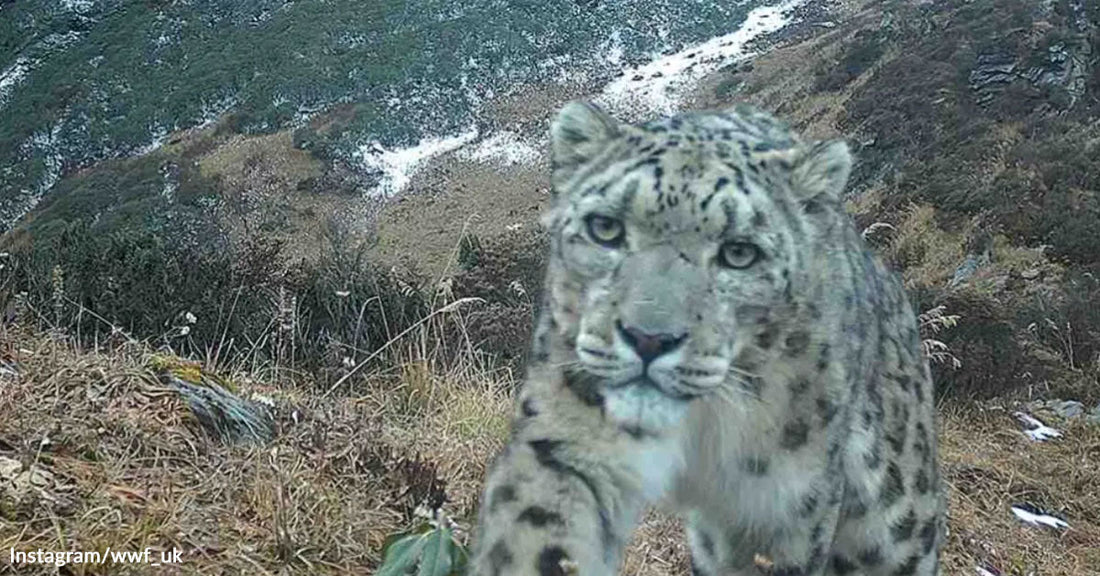
The snow leopard has long been known as the “ghost of the mountains,” a big cat so elusive that entire lifetimes in snow leopard country can pass without a single sighting. Once ranging widely across 12 countries in Asia, from Afghanistan and Bhutan to Mongolia and Russia, this mountain monarch is now facing a future that is far less secure. In recent years, conservationists and communities have turned to new tools, especially trail cameras, to better understand and protect snow leopard habitat and the vulnerable populations that still survive there.
For thousands of years, the snow leopard occupied a vast, rugged kingdom across some of the most remote peaks on Earth. Its range stretches through the highlands of China and India, across the plateaus of Kazakhstan and Kyrgyz Republic, and into the wild landscapes of Nepal, Pakistan, Tajikistan, and Uzbekistan. At the top of this alpine food web, the big cat once moved almost invisibly, shielded by steep cliffs, harsh weather, and a coat that blends perfectly with rock and snow.

Today, that cloak of invisibility is a double-edged sword. It keeps the animal safe from many eyes, yet it also makes snow leopard conservation more difficult. The less we see of these cats, the harder it is to measure their numbers, track their movements, or understand the threats they face. And those threats are growing. According to conservation organizations, snow leopards are in decline due to poaching, habitat loss, and a reduction in the natural prey they depend on for survival.
Layered over all of this is the most looming threat of all: climate change. The World Wildlife Fund reports that a warming planet could erase up to 30 percent of snow leopard habitat in the Himalayas alone. As temperatures rise, treelines shift upward, glaciers retreat, and the delicate balance of alpine ecosystems begins to unravel. This does not just affect one species. It affects entire mountain communities, both wild and human, that rely on stable weather, water sources, and healthy rangelands.
Conservation groups are not standing by. The World Wildlife Fund, in particular, has partnered with local communities and governments to give snow leopards a fighting chance. The organization has worked across Asia to raise awareness about the cat’s vulnerable status, push for development projects that respect fragile snow leopard habitats, and combat the illegal wildlife trade that targets these animals and their prey. These efforts acknowledge that saving a top predator such as the snow leopard also helps protect the entire ecosystem beneath it.
One important step has been helping countries better understand how many snow leopards remain. The WWF has supported India and Mongolia in their first national population assessments for the species. These assessments provide crucial baseline data, allowing researchers to see where snow leopards persist, how their numbers may be changing, and how climate impacts are unfolding over time. Reliable population information shapes smarter conservation strategies and helps governments direct resources to the landscapes that need the most support.
Yet counting such a secretive animal is far from simple. Snow leopards are famously shy and mostly nocturnal. Their thick, patterned coats help them vanish against snowfields and rocky slopes, which is why they earned the nickname “the ghost of the mountains.” Even experienced field biologists can spend weeks in prime habitat without ever catching a glimpse. That is where technology, especially modern trail cameras, has begun to transform snow leopard research.
Trail cameras, sometimes called camera traps, are motion activated devices that quietly record wildlife as it moves through a landscape. Positioned along game trails, ridgelines, and other natural corridors, they can operate for months at a time in harsh conditions. These cameras have become an increasingly valuable tool for researchers who need to monitor elusive species without disturbing them.
A recent post from WWF UK highlighted just how powerful these tools can be. Sharing footage and images from high in the mountains of China, the organization invited viewers to imagine life from the camera’s point of view: a silent observer at altitude, waiting patiently as snow leopards, red foxes, and takin wander through the frame. The monitoring work, led by WWF China, is part of an ongoing survey that began in 2022 across 10 high altitude regions, including the Wolong National Nature Reserve in Sichuan Province and Sanjiangyuan National Park in Qinghai Province.
In these landscapes, the trail cameras are doing what even dedicated field teams often cannot. So far, more than 600 photos of snow leopards have been captured. Each image, each glimpse of a patterned tail or padded paw, offers data that can be analyzed. Researchers can estimate how many individual cats are using an area, identify recurring patrol routes, and even map how different snow leopards share or divide up the same mountainsides.
Those 600 images matter even more in light of what scientists still do not know. Current estimates suggest that only about 22 percent of existing snow leopard populations have been recorded so far. That means there are large gaps in understanding, particularly in remote or politically complex regions. Every new photo, video, or confirmed sighting fills in a piece of the puzzle. A single trail camera tucked into a rocky outcrop can provide life saving information about where to focus anti poaching patrols, how to design protected area boundaries, or when to adjust livestock grazing practices to avoid conflict.
The WWF notes that conservationists are increasingly reliant on technology like these cameras as they work to secure the snow leopard’s future. Yet the tools themselves are only one part of a larger approach. On the ground, teams collaborate with herders and local residents to manage human leopard conflict, improve on the ground protection measures, and build awareness about the benefits of conserving this apex predator. Community stewardship programs aim to ensure that people living alongside snow leopards also see tangible advantages from conservation, such as support for livelihoods, sustainable tourism, or conservation linked development projects.
I found it striking that such a shy, nearly invisible animal is now becoming better known through quiet, patient digital eyes hidden in the rocks. The images generated by these cameras do more than fill scientific databases. They give people around the world a rare chance to witness a snow leopard padding through a snowy valley or pausing to glance at the lens, reminders that these cats are real, living beings instead of distant legends. For many viewers, that spark of connection can make the urgency of climate change and habitat loss feel far less abstract.
In the years ahead, snow leopard conservation will likely depend on this blend of tradition and innovation. Local knowledge, long standing relationships with mountain communities, and careful land management remain essential. At the same time, tools like trail cameras can keep watch in places that are too remote or harsh for people to visit often. Together, they form a kind of shared guardianship over the high mountains, where an animal once believed to be almost unseeable is finally coming into clearer view.
Read more at https://www.goodgoodgood.co/articles/trail-cameras-rare-footage-snow-leopard