
🚨Urgent: Rush Aid to People & Pets in Nepal's Devastating Floods! Help Now!
Exhausted Animal Runs to Truck Driver’s Feet Begging for a Drink of Water
Guest Contributor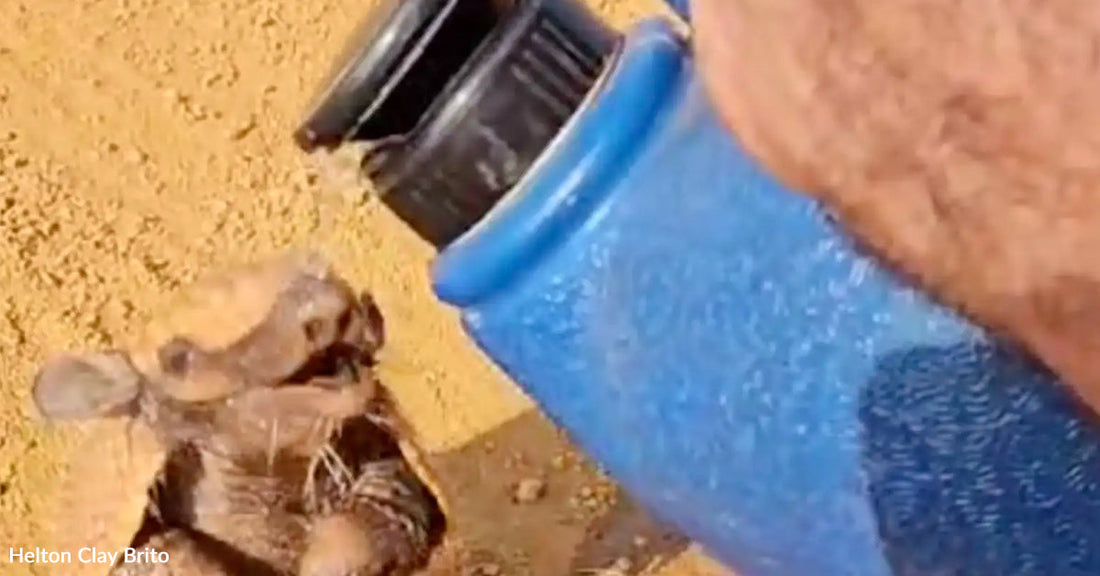
On a sunbaked dirt road in the Brazilian state of Minas Gerais, a quiet moment of compassion unfolded between a truck driver and an unlikely traveler. The story, which has resonated with readers around the world, centers on a small, weary armadillo and the driver who chose to stop and offer help. It’s a touching reminder of the power of empathy, even across species, and how a simple act of kindness can leave a lasting impression.

Truck driver Helton Clay Brito was navigating a remote stretch of road late last month when he noticed movement ahead. As he approached, he realized it wasn’t debris or another vehicle—it was a small armadillo, seemingly disoriented and struggling beneath the intense sun. The sight stirred something in Brito, who told The Dodo, “I felt in my heart that I had to stop the truck.”
The armadillo, described as appearing fatigued and aimless, didn’t shy away as Brito stepped out of his vehicle. Instead, it approached him, as if sensing that help had arrived. “When I got out, he ran to my feet,” Brito recalled. “It seemed like he knew I would help.” This rare interaction between human and animal unfolded with quiet urgency, as the driver quickly realized what the armadillo needed most: water.
With temperatures high and the terrain dry, hydration was likely a critical concern for the little creature. Brito poured water from his canteen, and the response was immediate. “When I poured water on him, I felt that he was relieved,” he said. “It seemed he hadn’t had a drink for days.” The armadillo’s reaction suggested not just thirst, but perhaps gratitude—or at least relief at the unexpected reprieve.
Encounters between humans and wildlife on rural roads are not uncommon, but what distinguishes this moment is the care and attention Brito offered. Rather than continuing on his route, he stayed with the armadillo, speaking to it softly and observing its condition. “He was happy,” Brito reflected, suggesting that the animal’s demeanor had shifted after receiving the water and gentle company.
Eventually, the two parted ways. The armadillo, now visibly revived, continued its journey along the dusty road. Brito returned to his truck, carrying with him not just the memory of the encounter, but a sense of peace. “I still feel peace in my heart for being able to help him,” he said. It’s a sentiment that speaks to the deeper emotional connections that can arise from even brief interactions with the natural world.
Stories like this one serve as quiet celebrations of empathy and attentiveness. In a world often focused on speed and efficiency, Brito’s decision to stop and assist a vulnerable animal is a meaningful deviation. It also highlights the importance of recognizing distress in all forms, whether in people or in wildlife, and responding with kindness whenever possible.
I found this detail striking: the armadillo’s apparent trust in Brito. Animals in the wild are usually wary of humans, especially in open environments where escape routes are limited. For this armadillo to approach a person—and a large vehicle—suggests a level of desperation, but also a unique moment of connection. That it chose to move toward help rather than away from it underscores the urgency of its condition and the impact of Brito’s compassion.
In terms of broader relevance, this story gently underscores how individual actions can make a difference, even when they seem small. Offering water to a single animal may not change the world, but for that armadillo, it changed everything. It’s a reminder that kindness doesn’t require grand gestures. Sometimes, it’s as simple as noticing, stopping, and caring.
For those who spend time on rural roads or in natural areas, this encounter also highlights the importance of staying alert to signs of wildlife in distress. While not every situation calls for intervention, being prepared with water or other basic supplies can make a significant difference in the right moment. It also encourages a mindset of stewardship—recognizing that humans share the environment with countless other species, many of which are vulnerable to the pressures of heat, habitat loss, and human activity.
Ultimately, Brito’s story is one of quiet heroism. It didn’t involve fanfare or recognition, just a spontaneous act of caring that left a lasting impression on both the helper and the helped. His experience, shared widely thanks to platforms like The Dodo, now serves as a gentle call to others: to pause, to notice, and to extend a hand—or a canteen—when the opportunity arises.