
💜 Thanksgiving Food Drive for Shelter Pets Help Us Feed 1 Million Shelter Pets!
USS Doris Miller Name Stands, Honoring Pearl Harbor Heroism
Guest Contributor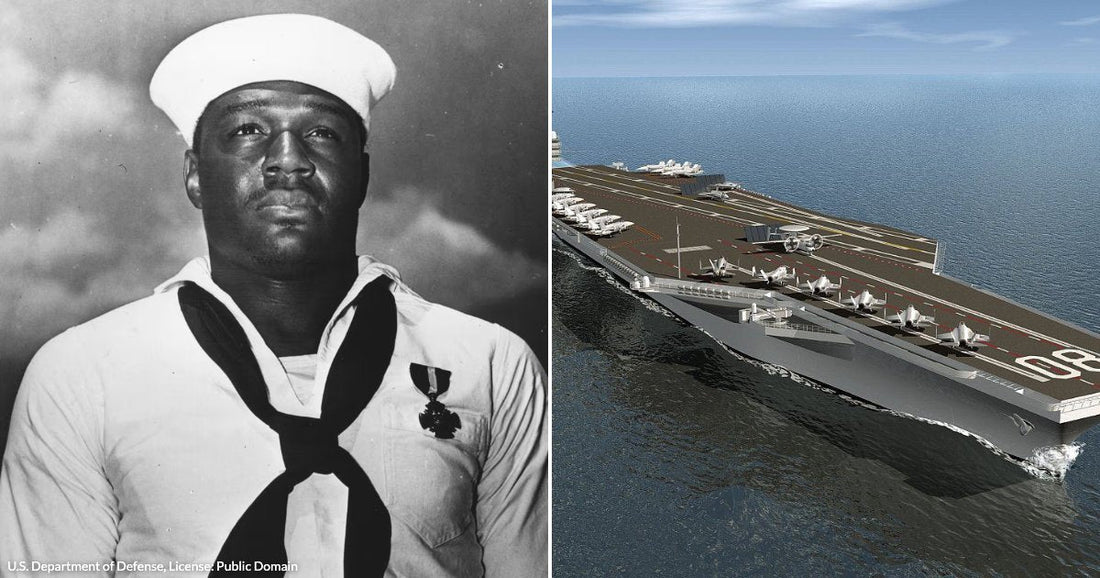
The decision to keep the future aircraft carrier named USS Doris Miller is more than a simple choice about a ship’s title. It is a statement about memory, recognition, and whose stories are honored on some of the most visible symbols of American power. In recent months, internal discussions reportedly weighed whether the Navy might rename the vessel for former President Donald Trump. The renewed commitment to Doris Miller’s name preserves not just a designation, but a powerful chapter in Pearl Harbor history and in the journey of African American service members toward recognition.
According to reporting, the Ford-class aircraft carrier was originally named for Doris “Dorie” Miller during Trump’s first term. The decision at the time already broke new ground: it marked the first time an aircraft carrier would honor an enlisted sailor and the first time a carrier would be named for an African American. That context makes the recent confirmation from the Navy especially significant. The service clarified that there is “no intention to change the name of the USS Doris Miller,” closing the door on speculation that the name might be shifted to honor Trump instead.

U.S. Department of Defense, License: Public Domain
The question of how the United States names its warships is not just a procedural issue; it is tied to whose contributions the nation chooses to spotlight. Aircraft carriers are among the most recognizable symbols of American military strength. Traditionally, these ships have carried the names of presidents, states, or major national figures. In that landscape, the choice to name one after a Black enlisted sailor who served as a mess attendant at a time of strict racial limitation stands out as a deliberate act of historical acknowledgment.
Doris Miller’s story begins far from the bridge of a carrier. He was from Waco, Texas, and enlisted in the U.S. Navy in 1939. At that time, the Navy kept most roles for Black sailors confined to service positions. According to the Department of Veterans Affairs, mess attendant was one of the only jobs available to Black men in the Navy. These sailors cooked, cleaned, and performed support work, excluded from most technical and combat-rated specialties that could lead to higher rank or greater public recognition.
On December 7, 1941, Miller was serving as Mess Attendant Third Class aboard a battleship at Pearl Harbor. He had been retrieving laundry when Japanese planes began their attack on the U.S. fleet. Damage from the first wave of bombs and torpedoes prevented him from returning to his assigned battle station. In that chaos, what followed would define his legacy.

U.S. Department of Defense, License: Public Domain
Miller first carried his wounded commanding officer to safety, a moment of courage that might have been remembered on its own. But what came next set him apart, particularly given the barriers that had kept Black sailors away from combat roles. Despite having received no training on the ship’s anti-aircraft guns, Miller took control of one and opened fire on attacking aircraft. As the Department of Veterans Affairs recounts, he laid down effective fire, continuing until his ammunition ran out and the ship began to sink.
Even as the vessel went under, Miller stayed focused on others. Reports describe him helping fellow sailors to safety, only leaving once he had done all he could and then making his way to shore. The image of a man who had been allowed only a service role turning, in a moment of crisis, into a front-line defender of his ship and shipmates, is part of what makes his story so enduring. I found this detail especially striking because it captures both his personal bravery and the larger contradictions of the era in which he served.
Miller’s heroism did not go unnoticed. In 1942, Admiral Chester Nimitz awarded him the Navy Cross, at that time one of the highest decorations a sailor could receive. The recognition was historic in itself, but the public response also revealed how constrained opportunities for African American service members remained. Miller was sent on a War Bond tour with several white service members, and according to the Department of Veterans Affairs he became the first African American allowed on that speaking circuit. His presence onstage challenged audiences to recognize that courage and sacrifice were not limited by race, even when institutions still were.
Tragically, Doris Miller’s life was cut short. Roughly a year after the bond tour, he was killed in action during the Battle of Makin when his ship was struck by a torpedo from a Japanese submarine. He never lived to see the broader changes his service helped inspire, yet his story stayed alive. It resurfaced in popular culture decades later, for example when he was portrayed by Cuba Gooding Jr. in the 2001 film “Pearl Harbor.” That depiction introduced many viewers to his name for the first time.
Today, the honor of having an aircraft carrier named after him extends his legacy in a new way. For his family, this moment carries deep meaning. His great-nephew, Thomas Bledsoe, described the decision to keep the name as a historic moment that safeguards a legacy of “courage, sacrifice, and service to our nation.” Bledsoe emphasized that Miller’s story is not only family history, but American history, and argued that his courage deserves to be remembered, honored, and recognized for generations. That sentiment highlights another important dimension of naming a ship after Miller: it turns his story into something visible to future sailors who will serve on that carrier and to people around the world who will hear its name.
Alongside the naming decision, there has also been movement to further recognize Miller’s actions at Pearl Harbor. Reporting noted that the Navy has recommended him for the Medal of Honor, the nation’s highest award for military valor. The final approval would require action from Congress and the president. If that recognition were ultimately granted, it would deepen the formal acknowledgment of his bravery that began with the Navy Cross and continues now with one of the Navy’s most advanced ships bearing his name.
The internal discussions about possibly renaming the carrier for Donald Trump added a layer of uncertainty to this story. When those conversations were first reported, the Pentagon had no announcement to make, and the Navy did not comment. That silence left open the possibility of a change that would have shifted the honor away from Miller. The new statement from the Navy, confirming that there is no intention to alter the ship’s name, effectively restores clarity. It ensures that the earlier decision to lift up an enlisted Black sailor’s heroism will stand as originally intended.
In the broader landscape of military history and public memory, the USS Doris Miller stands as both a tribute and a reminder. It honors a man who, limited by the racism of his time, nonetheless stepped beyond his assigned role under the most extreme pressure imaginable. It also reminds the country that the full story of its armed forces includes people who were long denied equal recognition. Keeping the name reinforces the idea that courage and character, not rank or background alone, are worthy of the highest honors.
As this Ford-class carrier continues through construction toward eventual active service, its name will carry Doric Miller’s story across oceans and into future generations of naval tradition. In that way, the decision not to rename the ship is more than an administrative choice; it is a commitment to remember a sailor whose actions on a single day at Pearl Harbor continue to resonate as a powerful example of bravery under fire.
Read more at https://www.cnn.com/2026/11/20/politics/navy-wont-rename-carrier-for-trump