
World War II Veteran Shares Personal Memories on 80th V-J Day Anniversary
Guest Contributor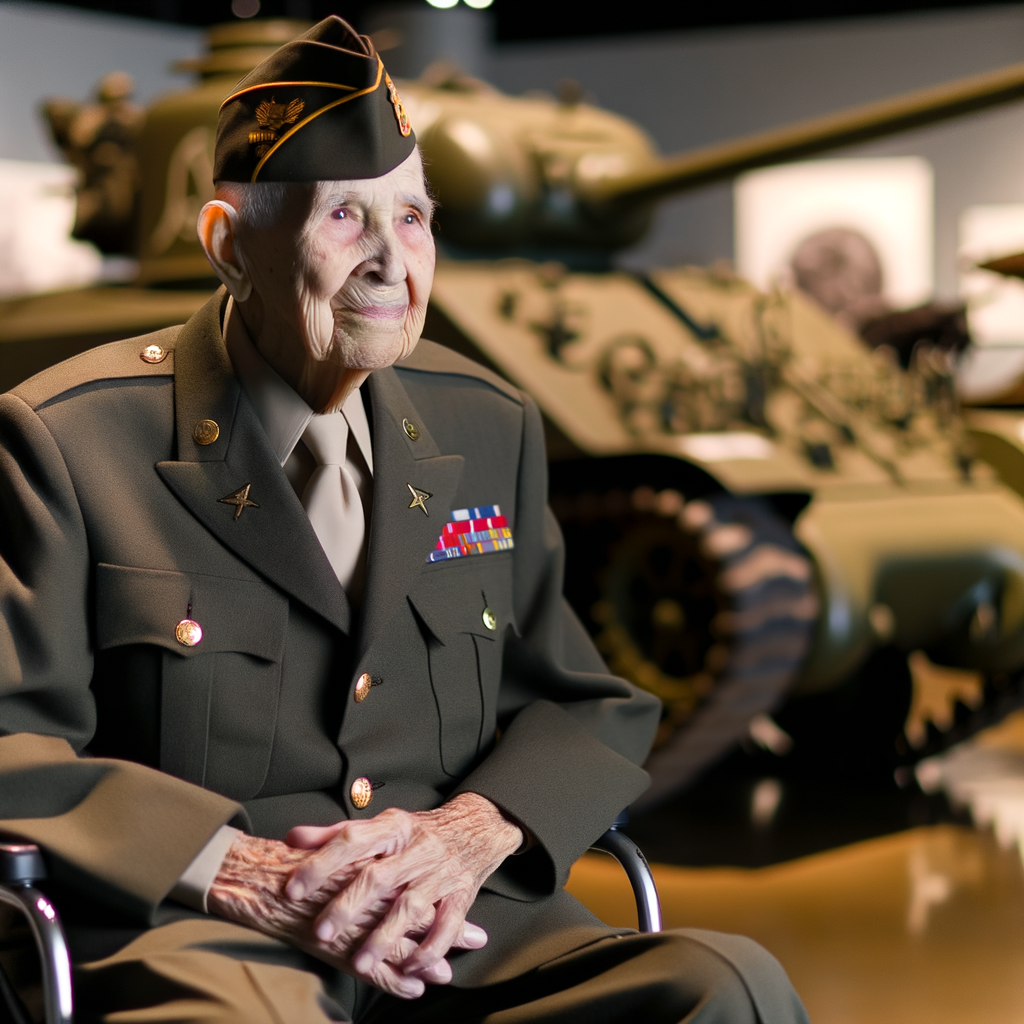
As the world marks 80 years since V-J Day, a moment that signaled the end of World War II, one Massachusetts veteran is offering a powerful reminder of the human stories behind the history. Caster Salemi, now 103 years old, shared his memories at the American Heritage Museum in Hudson, surrounded by the very World War II tanks and artifacts that shaped his youth. His reflections bring to life a pivotal chapter in world history and offer a deeply personal lens on the events that led to Japan's surrender on August 15, 1945.

Salemi, a former U.S. Army sergeant, was drafted into service in 1943 and deployed to the Pacific theater, where he spent three years in the Philippines. His unit, a field artillery battalion, typically operated five to six miles behind the front lines. Their mission was essential yet perilous: maintaining communication between firing batteries and command headquarters. This required Salemi to hardwire field telephones—an arduous task that meant climbing trees, crawling through dense jungle undergrowth, and confronting the region’s natural hazards, including insects and snakes.
One of the challenges Salemi and his battalion faced was the unreliability of their equipment in jungle conditions. "One thing we found out was that the radios we were issued would not work in the jungle," he recalled. In an era before satellite communication and digital technology, the importance of reliable field communication could not be overstated. Salemi’s role, though behind the front lines, was critical to the coordination and effectiveness of military operations in the Pacific.
Salemi's memories are a poignant reminder of the human resilience and resourcefulness demanded by war. Sitting in the museum, dressed in the same uniform he wore over 80 years ago, he acknowledged the emotional weight of revisiting these memories. "It does bring back many good memories, and some not so good," he said. His presence at the museum is not just a tribute to his own service, but also an embodiment of the sacrifices made by his entire battalion—of which he is now the only known surviving member.
When Japan surrendered in mid-August 1945, effectively ending World War II, it took several days for Salemi and his fellow troops to learn the full scope of what had occurred. News of the atomic bombings of Hiroshima and Nagasaki reached them slowly, and the nature of the weapons used was not immediately understood. "We didn't know what a nuclear bomb was. We had no idea the damage it could do," Salemi said. The bombings, which occurred on August 6 and 9 respectively, resulted in an estimated 100,000 to 200,000 deaths in the two Japanese cities. These events remain among the most consequential and debated decisions in military history.
Reflecting eight decades later, Salemi expressed the belief that the United States faced no less catastrophic alternative at the time. "The Japanese had this notion that they couldn't surrender, and so they would keep fighting, and all we could envision is massive casualties if we invaded Japan," he said. His perspective echoes the difficult calculations Allied leaders faced in the final months of the war, and the immense human cost that a land invasion might have entailed.
Salemi’s story, shared during a weekend of commemorative events at the American Heritage Museum, offers a rare and invaluable insight into the lived experience of World War II veterans. The museum’s programming, which includes World War II tank demonstrations and historical exhibits, serves not only to educate but also to honor those who served. For visitors, hearing directly from someone who was there adds a dimension that no textbook or documentary can replicate.
I found this detail particularly striking: Salemi still fits into the uniform he wore as a young soldier. It’s a small but powerful symbol of continuity, resilience, and memory. At 103, his voice carries the weight of history, and his willingness to share these memories ensures that future generations can better understand the sacrifices made during one of the most turbulent periods in global history.
As we reflect on the 80th anniversary of Japan’s surrender, stories like Salemi’s remind us that history is not just a series of dates and events, but a tapestry of individual experiences. His account underscores the complexity of war, the cost of peace, and the enduring importance of remembering those who served with courage and conviction.