
🚨Urgent: Rush Aid to People & Pets in Nepal's Devastating Floods! Help Now!
Young Black Bear Rescued After Getting Head Stuck in Plastic Jar
Guest Contributor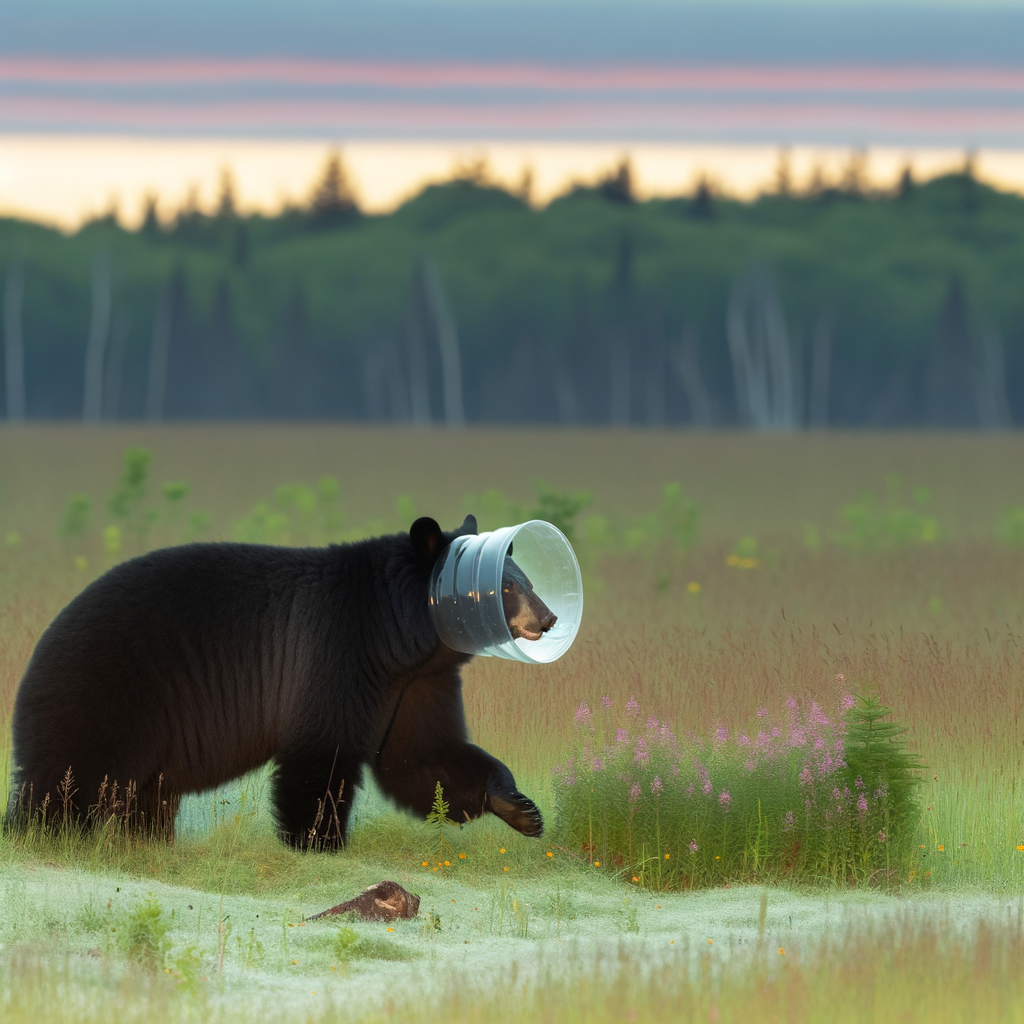
In a scene that could have been lifted from a children’s storybook, a young black bear in northern Wisconsin found itself in a sticky situation—literally. The bear, a roughly 70-pound, 2-year-old female, was spotted wandering through multiple counties with a large plastic jar stuck on its head. According to the Wisconsin Department of Natural Resources (DNR), the bear was first reported in north central Sawyer County on July 26, 2025. Over the next several days, the animal covered nearly 50 miles, moving through southern Bayfield County and Douglas County, while concerned residents continued to report sightings.

This wildlife encounter, though unusual, underscores the broader challenges of human-wildlife interaction, especially in areas where natural habitats overlap with rural communities. The DNR, in partnership with the U.S. Department of Agriculture (USDA) Wildlife Services, coordinated a careful response that involved tracking, live trapping, and eventually sedating the bear to remove the jar. Wildlife officials noted that the bear had likely been surviving on body fat reserves, a common adaptation for bears during summer months when food can be inconsistent.

Efforts to capture the bear initially proved difficult due to its wide-ranging movement. Staff set several live traps based on reported sightings, but the bear’s mobility made capture elusive. Finally, on Sunday, August 3, a trained wildlife professional responded to a report from a private residence where the bear had returned. The professional was able to safely sedate the bear, allowing the team to remove the jar and assess her condition.
Fortunately, the bear showed no signs of serious injury. There were no lacerations, and aside from being underweight, she appeared to be in good health. The jar itself had puncture marks, likely from the bear’s own claws, and one observer noted that she had been able to drink by dunking her head in water. Randy Johnson, a large carnivore specialist with the DNR, explained that while the bear was thinner than average for her age and sex, she was still alert and responsive upon release.
I found this detail striking: despite having a jar stuck on her head for what may have been over a week, the bear still managed to find water and survive. It’s a testament to both the resilience of wildlife and the importance of timely human intervention. The bear was relocated to a remote, wooded area with ample access to food and water, giving her the best chance at recovery in her natural environment.
To comply with federal regulations, wildlife staff tagged the bear with two plastic ear tags for identification. This is a standard procedure when immobilization drugs are used on free-ranging wildlife. After the tagging and a final health check, the bear was released and quickly began feeding on a nearby patch of berries. According to the DNR, natural food sources are currently abundant in northern Wisconsin, which bodes well for her continued survival.
This incident sheds light on the broader issue of wildlife safety and human waste. While the bear’s story ended on a hopeful note, it also serves as a reminder of the unintended consequences that discarded plastic and other materials can have on animals. The plastic jar, likely a common household item, became a life-threatening obstacle for the bear. Public awareness and responsible waste disposal are crucial in preventing similar events in the future.
Wildlife officials emphasized the importance of community involvement. It was public reports that helped track the bear’s movements and ultimately led to her safe capture. The DNR and USDA Wildlife Services rely on this kind of cooperation to manage wildlife-related challenges, whether they involve nuisance animals or more serious threats to animal welfare.
While the story has a light-hearted tone—after all, a bear with its head stuck in a jar is reminiscent of cartoon antics—the underlying message is serious. Wildlife agencies face complex tasks in balancing animal welfare, public safety, and environmental stewardship. The successful rescue of this young bear illustrates what can be achieved through persistence, expertise, and community support.
As black bears continue to thrive in Wisconsin, especially in forested regions like Sawyer and Bayfield counties, encounters between humans and bears are likely to increase. The DNR encourages residents to secure trash, remove attractants, and report unusual animal behavior. These steps not only protect wildlife but also help maintain a safe and respectful coexistence between humans and native species.
The bear’s release back into the wild, healthy and uninjured, is a hopeful conclusion to what could have been a tragic story. It also highlights the importance of agencies like the USDA Wildlife Services and the DNR, whose coordinated efforts make such outcomes possible. Their work ensures that even when wild animals find themselves in very human dilemmas, there is a path back to the wild.