
Discovering Clavelina ossipandae: The Tiny Sea Creature Resembling Panda Skeletons
Guest Contributor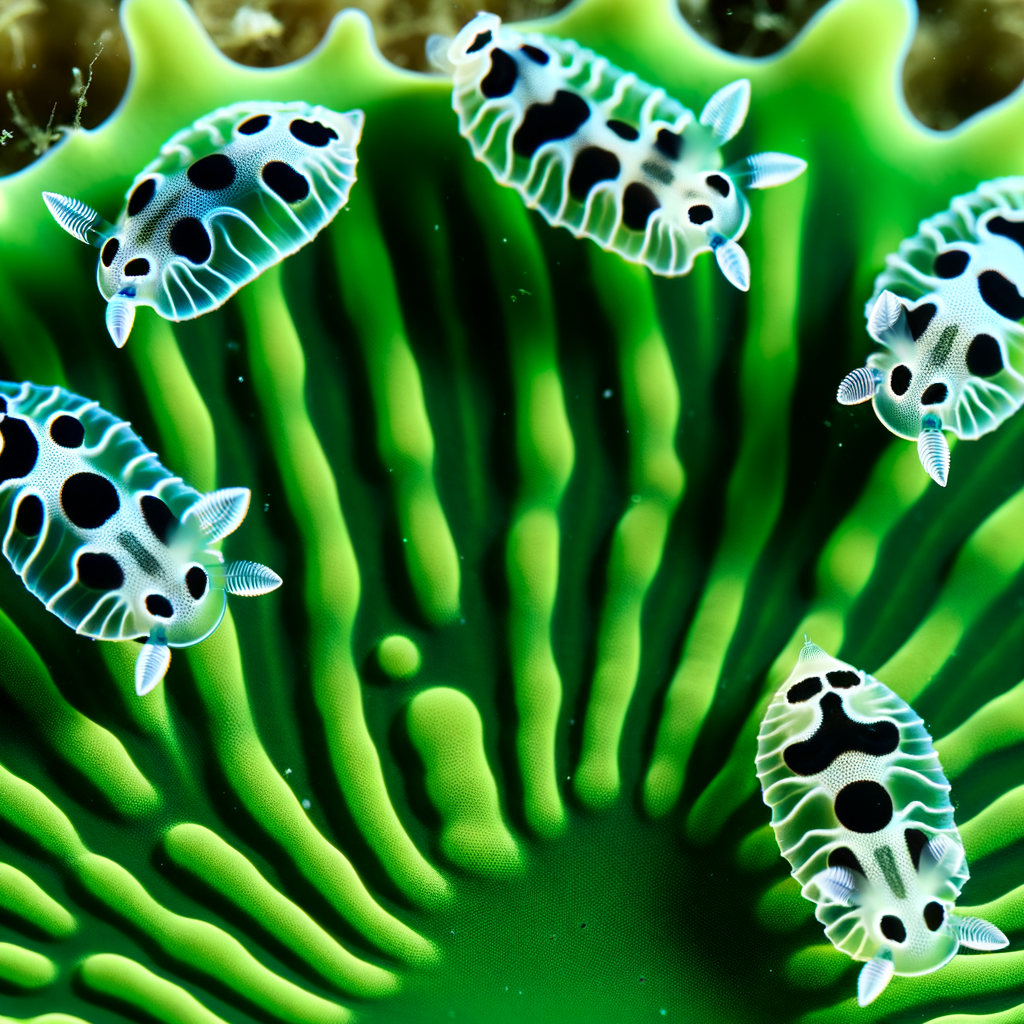
In the sunlit shallows off Kumejima Island in Japan, divers recently stumbled upon a discovery that looked more like a whimsical aquarium ornament than a living marine animal. What they captured on camera, however, was very real—a tiny sea creature that resembles a “swimming panda bear skeleton.” This striking siphon-pumping animal, now identified as a new species named Clavelina ossipandae, has caught the attention of both scientists and the public for its unique appearance and ecological role.

The initial sightings of this inch-tall creature date back to 2017, when diver forums began sharing photos of what appeared to be miniature, striped animals with dark eye-like spots. These images sparked curiosity among marine biologists, prompting researchers like Naohiro Hasegawa of Hokkaido University to investigate further. His team eventually confirmed that the animal belonged to the genus Clavelina, but was distinct enough to merit its own classification.
The discovery of Clavelina ossipandae is a testament to the growing value of citizen science and digital observation. What began as casual snapshots by divers evolved into a formal taxonomic study, aided by the clarity of modern underwater photography. This approach reflects a broader shift in marine biology, where researchers increasingly rely on high-quality images and social media to identify potential new species before fieldwork even begins.
One of the most remarkable features of C. ossipandae is its appearance. Each transparent zooid, which can grow up to 20 millimeters in length, displays transverse white bars that mimic skeletal bones and black pigment patches that resemble panda eyes. According to Hasegawa, the white “bones” are actually blood vessels running horizontally through the gills. The species also has a jet-black endostyle—a food-trapping groove—unlike the pale versions found in related species. This distinctive pigmentation offers an easy field marker for divers and photographers trying to distinguish it from similar tunicates.
From a biological standpoint, C. ossipandae fits squarely within the tunicate lineage, a group of marine filter feeders that are sessile as adults but possess a notochord during their larval stage. This evolutionary trait links them to the phylum Chordata, which also includes vertebrates like humans. Once settled on rocks or coral, these animals switch to a filter-feeding lifestyle, drawing in seawater through an oral siphon, filtering out microscopic food particles, and expelling the water through an atrial siphon.
Despite its tiny size, the panda-mimicking sea squirt plays a significant role in its ecosystem. By filtering bacteria and microalgae from the water, colonies of C. ossipandae help maintain water clarity in reef zones, supporting the health of corals and juvenile fish. These natural water purifiers are particularly effective in shallow, plankton-rich environments, processing water volumes many times their own size each hour.
To confirm the uniqueness of the species, Hasegawa’s team conducted genetic analysis, sequencing 810 base pairs of the cytochrome c oxidase subunit I gene. The results showed a 1.26 percent divergence between two individuals, consistent with intraspecific variation. Phylogenetic analysis placed the samples firmly within the Clavelina clade, supporting the conclusion that this was not a mere color morph of an existing species but a new addition to marine biodiversity.
All collection data and genetic profiles have been archived with Japan’s National Museum of Nature and Science, ensuring that future researchers can access and build upon these findings. This level of documentation is particularly important for tunicates, as many harbor bioactive compounds with potential pharmaceutical applications, including anti-cancer properties. While no such compounds have yet been identified in C. ossipandae, properly classifying it helps guide future bioprospecting efforts.
I found this detail striking: the discovery happened in a popular snorkeling area, suggesting that even well-traveled marine environments may still harbor unnamed species. It highlights how much biodiversity remains hidden in plain sight, awaiting a curious eye and a well-timed photograph. As mobile phone cameras continue to improve, the ability of citizen scientists to contribute meaningful data to professional research only grows stronger.
The case of Clavelina ossipandae also raises intriguing questions about the evolution of coloration in non-visual animals. Hasegawa notes that the purpose of the panda-like patterning is still unknown. It could serve as camouflage, UV protection, or simply be a metabolic byproduct. Regardless of its function, the striking appearance of this sea squirt has clearly captured human attention and underscored the importance of preserving diverse marine habitats.
Conservationists often emphasize the need to protect charismatic megafauna, but discoveries like this one make a strong case for safeguarding the small, often overlooked creatures that play vital roles in reef ecosystems. These sponge-sized animals may not draw crowds on their own, but they are essential threads in the complex web of marine life.
As researchers continue to explore the oceans with help from citizen scientists, it’s likely that more such surprises await. Whether for their ecological function, evolutionary significance, or simply their visual charm, creatures like Clavelina ossipandae remind us of the richness and mystery still present in our planet’s waters.