
Eugene Bullard: The First Black American Fighter Pilot’s Remarkable Journey
Guest Contributor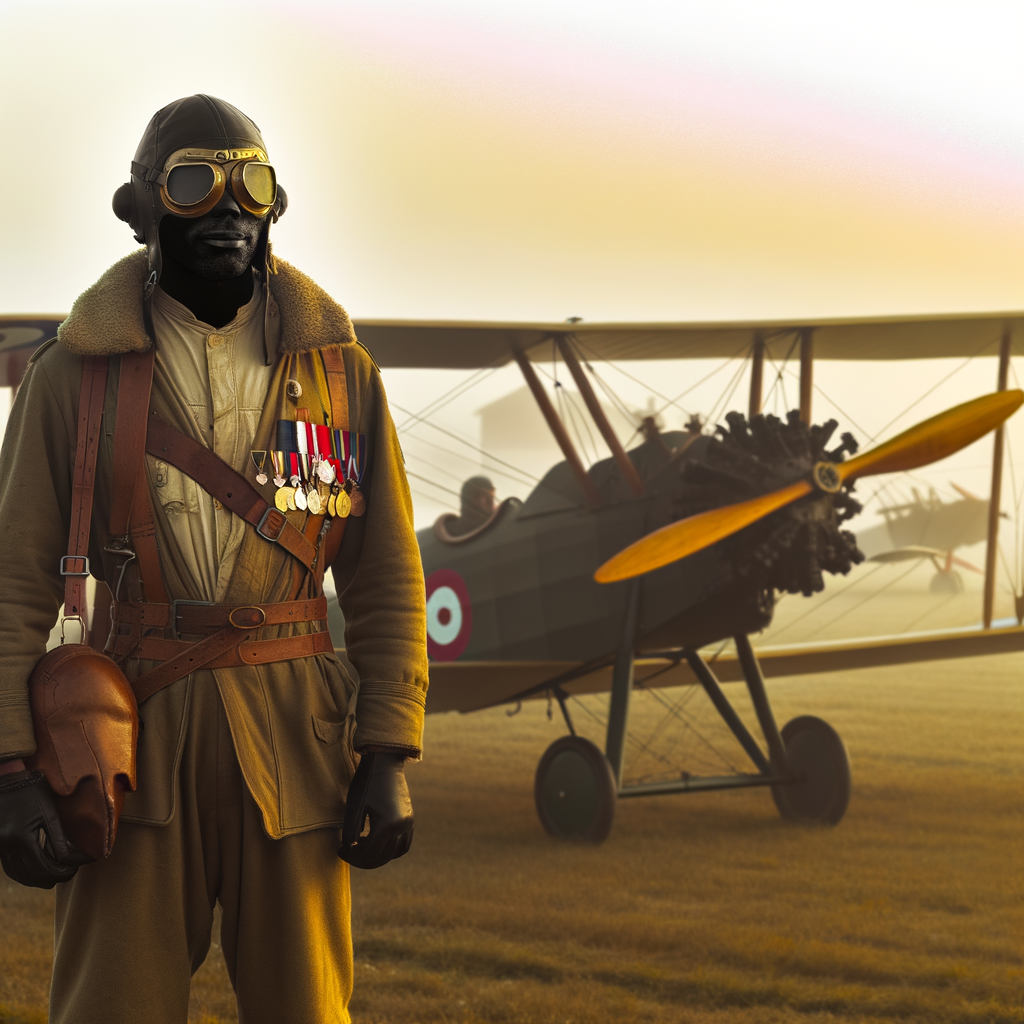
When Eugene Bullard appeared on the Today Show in 1959, viewers saw a well-dressed elevator operator with a quiet demeanor. What they didn’t see at first glance was a man whose life had spanned continents, wars, and a series of remarkable transformations. Bullard, who became the first Black American fighter pilot during World War I, had lived a life that defied expectations and challenged the limits placed on him by his time. His story, deeply rooted in resilience and courage, offers a powerful glimpse into a chapter of history that is too often overlooked.

Photo: Wikimedia Commons/Sus scrofa, License: Public Domain

Born in Columbus, Georgia, in 1895, Eugene Bullard was the son of a formerly enslaved man and a woman of Creek descent. Growing up in the segregated South, Bullard experienced racism early and often. One particularly harrowing moment came when a lynch mob threatened his family, forcing his father to flee. At just 11 or 12 years old, Bullard ran away from home with little more than a few coins from selling his pet goat and a dream of finding a land where Black people were treated with dignity.
That search eventually led him to Europe. After stowing away on a ship bound for Germany in 1912, Bullard made his way to Scotland and then to France. There, he discovered a world vastly different from the one he had fled. The author notes that Bullard felt he had been “born into a new world,” where he was treated as an equal. He began working odd jobs and eventually found success as a welterweight boxer, a path that brought him to Paris and allowed him to stay in a country he quickly came to love.
When World War I broke out, Bullard didn’t hesitate. At 19, he joined the French Foreign Legion and later transferred to the regular French Army. His bravery at the Battle of Verdun earned him the Croix de Guerre and other honors, but a serious injury ended his time in the trenches. Undeterred, Bullard set his sights on the skies. He bet a friend $2,000 that he could become a pilot—and won. He trained and flew with the Lafayette Escadrille, a French unit composed largely of American volunteers, becoming the first Black American combat pilot. His plane bore the motto “Tout sang que coule est rouge,” or “All blood runs red.”

Photo: Wikimedia Commons, License: Public Domain

Despite his accomplishments, Bullard’s race remained a barrier. When the United States entered the war, he applied to join the U.S. Air Service alongside 28 other American pilots. All were accepted—except Bullard. Still, he continued flying for France until a dispute with a superior officer grounded him permanently. Although his combat career ended, Bullard had already made history.
After the war, Bullard embraced life in post-war Paris. The city’s Montmartre district, affectionately dubbed “Harlem on the Seine,” became a hub for Black American artists, musicians, and writers. Bullard managed clubs like Zelli’s Royal Box and later opened his own, Le Grand Duc. There, he mingled with cultural icons such as Ada “Bricktop” Smith, Langston Hughes, and Dooley Wilson. His fluency in German also led him to work as a spy for French intelligence, eavesdropping on Nazi officers who frequented his club.
When the Nazis invaded Paris in 1940, Bullard once again took up arms. He fought briefly before being injured and smuggled out of France. Returning to the United States after nearly three decades abroad, he was met not with celebration, but with the harsh realities of Jim Crow. While white veterans were welcomed with accommodations and stipends, Bullard received nothing. He settled in Spanish Harlem and took on various jobs, including longshoreman, security guard, and perfume salesman. Eventually, he found work as an elevator operator at the RCA Building in Manhattan.
Though largely unrecognized in the United States, Bullard remained a celebrated figure in France. He was invited back for events honoring the Lafayette Flying Corps and, in 1959, was made a Chevalier of the French Legion of Honor. That same year, a chance encounter with Today Show host Dave Garroway led to his television appearance, where he shared his story and displayed his 15 war medals. Despite renewed interest, publishers rejected his memoir, calling it too unbelievable to be true.
Eugene Bullard passed away in 1961 from intestinal cancer. He was buried in his French Legionnaire uniform, his coffin draped in the French flag. His life, filled with extraordinary achievements and quiet dignity, remains a testament to perseverance in the face of systemic injustice. I found it striking that even after being denied recognition by his own country, Bullard never stopped fighting—for his beliefs, for his adopted homeland, and for a better world.