
Eurasian Otter Rediscovered in Malaysia’s Tangkulap Forest Reserve After Decade
Guest Contributor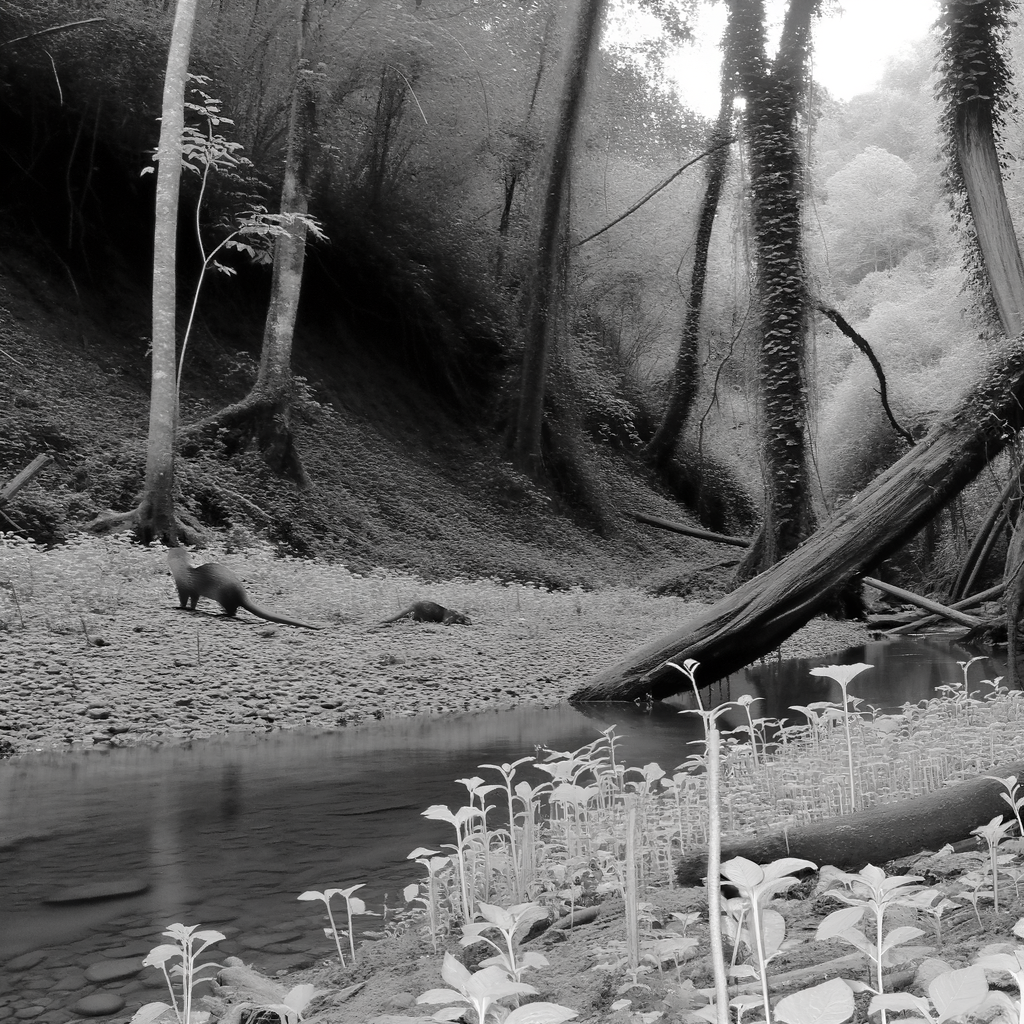
In a remarkable moment for wildlife conservation, researchers in Malaysia have captured photographic evidence of a Eurasian otter in the wild — the first such sighting in over a decade. The elusive animal was spotted by a motion-sensor camera deep within the Tangkulap Forest Reserve, a protected area in the Malaysian state of Sabah. This unexpected discovery has thrilled conservationists and added new momentum to ongoing efforts to protect the region’s rich biodiversity.

The Eurasian otter, a species known for its elusive nature, had not been confirmed in Malaysia since 2014. Its apparent disappearance led many experts to fear that it had vanished entirely from the area. That changed when a camera, originally set up by conservation organization Panthera to monitor the endangered Flat-headed cat, captured a fleeting image of the otter during a period of regional flooding. The otter was seen navigating a dry section of the forest floor before quickly exiting the camera’s frame.

“This photographic evidence not only solidifies its presence in the Tangkulap Forest Reserve but also designates this area, managed by the Sabah Forestry Department, as the sole location in Malaysia known to host all four native otter species,” said Tee Thye Lim, Project Coordinator for Panthera Malaysia, in an interview with The Dodo. I found this detail striking — a single location now serves as a sanctuary for the full diversity of Malaysia’s native otters.
In addition to the Eurasian otter, the Tangkulap Forest Reserve is home to the Asian small-clawed otter, the smooth-coated otter, and the hairy-nosed otter. The presence of all four species in one area is not just a rare ecological convergence. It is also a testament to the success of targeted conservation strategies and habitat protection efforts. The discovery underscores the importance of preserving forest reserves like Tangkulap, which serve as critical refuges for species that are otherwise difficult to monitor or protect.
Panthera’s camera trap program was originally intended to document the Flat-headed cat, another rare and vulnerable species. However, the unexpected appearance of the Eurasian otter has provided a welcome surprise and an additional layer of insight into the forest’s ecological makeup. The organization’s use of non-invasive monitoring methods, such as motion-sensor cameras, allows researchers to gather valuable data without disturbing wildlife — a key consideration when working with sensitive or endangered species.
“This news is incredibly exciting, especially considering that the last confirmed sighting of a Eurasian otter was in 2014,” Lim remarked. The long absence of sightings had left researchers uncertain about the species’ status in the country. This new evidence not only confirms the otter’s survival but also raises hope that small, undetected populations may still exist in other parts of Malaysia.
During the time the image was captured, the area was experiencing flooding. According to Lim, the otter was seen in a non-flooded section of the forest, briefly passing by the camera before turning around and disappearing from view. While the sighting was brief, it was enough to generate significant excitement among the research team. The moment served as a poignant reminder of how even the most elusive animals can still be part of a thriving ecosystem — if given the space and protection to survive.
For conservationists, the discovery offers renewed motivation. It highlights the effectiveness of sustained fieldwork and the potential for rediscovering species thought to be lost. The Tangkulap Forest Reserve, already a biodiversity hotspot, now holds even greater importance as a living archive of Malaysia’s native fauna. The presence of all four native otter species is not only scientifically significant but also symbolically powerful — a sign that conservation efforts are making a tangible difference.
While researchers hope to gather more data and possibly observe additional individuals, the current priority is to continue monitoring and protecting the habitat. The appearance of the Eurasian otter has already influenced conservation planning, reinforcing the need for continued vigilance and support for protected areas.
Encounters like this one serve as a reminder of the delicate balance within natural ecosystems and the importance of preserving them. They also bring a sense of wonder and hope, showing that nature can still surprise us — even after years of silence. As technology and conservation science continue to evolve, more such rediscoveries may lie ahead, hidden in the forests, waiting to be revealed.