
How Jadav Payeng Transformed Majuli Island with Reforestation Efforts
Guest Contributor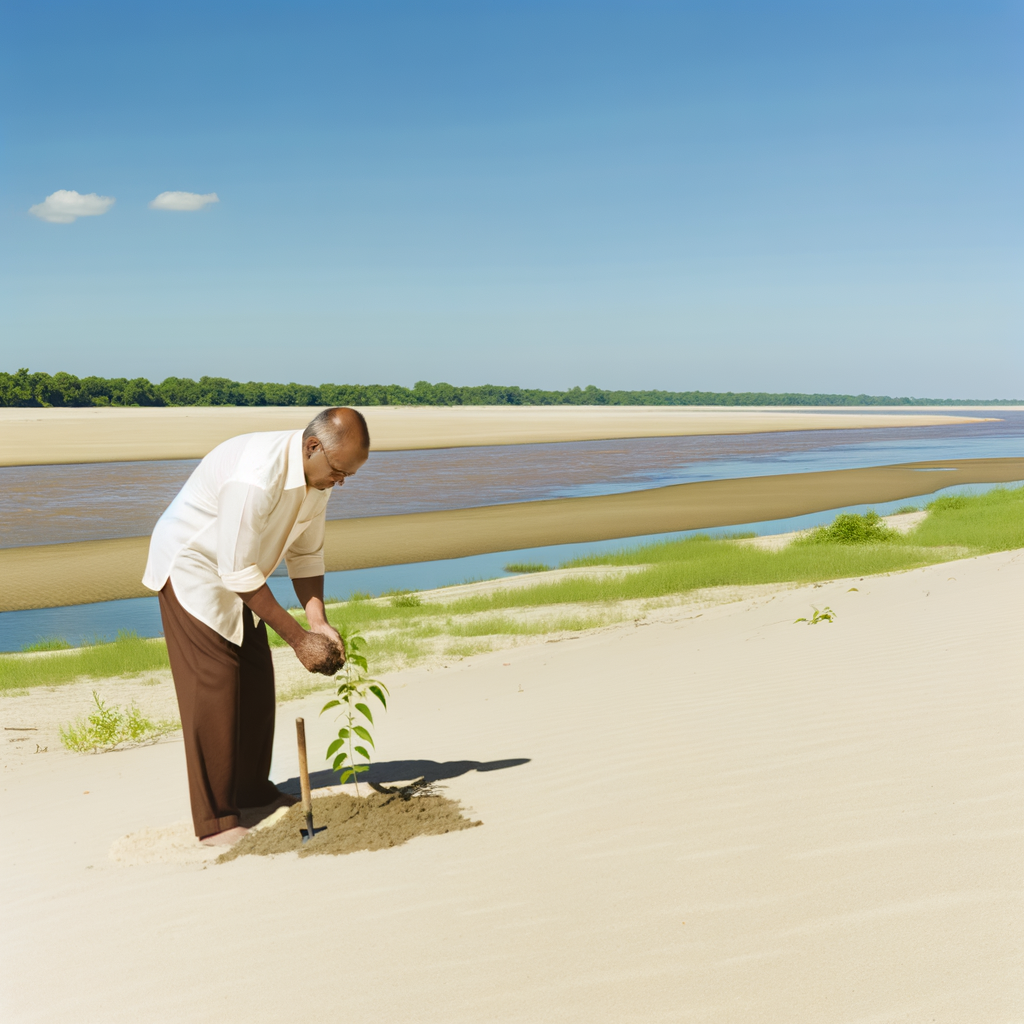
When climate change, erosion, and deforestation threaten the very ground beneath one’s feet, most people look to governments or organizations for solutions. But on Majuli island in Assam, India, one man took matters into his own hands—literally. Jadav Payeng, now widely known as the “Forest Man of India,” spent over four decades transforming a barren sandbar into a thriving, 1,360-acre forest teeming with wildlife. His story is a remarkable testament to perseverance, environmental stewardship, and the quiet power of individual action.

Located on the Brahmaputra river in northeastern India, Majuli island has long been home to the Mishing tribe and over 170,000 people. But its future has been uncertain. Over the past century, the island has lost nearly three-quarters of its landmass due to increasingly severe seasonal flooding. These floods, once a predictable annual event, have grown more destructive, likely influenced by climate change and seismic activity. What once was fertile land became a lifeless expanse of sand, with vegetation washed away and wildlife displaced.

In 1979, a particularly devastating flood left a haunting impression on a young Jadav Payeng. After the waters receded, he discovered the sun-scorched bodies of hundreds of snakes that had been swept ashore and died without shelter. The sight shook him deeply. “When I saw it, I thought even we humans will have to die this way in the heat,” he later recalled. That moment of grief and clarity became the seed for an extraordinary journey.
Without formal training or institutional support, Payeng began to plant trees. Using a stick to poke holes in the sand, he dropped in seeds, one by one. His approach was simple, but his vision was expansive. He believed that trees could stabilize the soil, absorb excess water, and provide refuge for animals and humans alike. Over time, he planted bamboo, then other native species, gradually building a canopy that would invite birds, insects, and larger animals back to the area.
What began as a solitary act of hope has grown into a forest larger than New York City’s Central Park. Once-empty sandbanks are now home to deer, monkeys, birds, and even elephants and tigers. The ecosystem Payeng nurtured is not just an environmental marvel—it’s a living, breathing symbol of resilience. I found this detail striking: Payeng has “lost count” of the number of trees he has planted. That kind of humility, paired with such a massive impact, is rare.
For decades, the outside world remained unaware of his quiet revolution. It wasn’t until 2008 that forest officials stumbled upon the dense woodland while tracking a herd of elephants. Their surprise was understandable; no one expected such a flourishing ecosystem in what had long been considered a wasteland. A year later, nature photographer Jitu Kalita encountered the forest while exploring the river by boat. From afar, it looked like a mirage. Up close, it was unmistakably real.
Kalita’s article about Payeng in a local newspaper sparked wider recognition, eventually leading to the 2013 short film Forest Man, which was screened at the Cannes Film Festival. National and international honors followed. In 2015, Jadav Payeng was awarded the Padma Shri, one of India’s highest civilian honors. Yet despite the accolades, he remains rooted—both figuratively and literally—in Majuli, protecting the forest he calls his “biggest home.”
Payeng often emphasizes that he didn’t build the forest alone. “You plant one or two trees, and they have to seed. And once they seed, the wind knows how to plant them, the birds here know how to sow them, cows know, elephants know, even the Brahmaputra river knows,” he said. It’s a humble acknowledgment of nature’s role in regeneration, and a reminder that environmental restoration is a partnership between human effort and natural processes.
His story resonates not only because of its scale, but because it offers a rare example of long-term commitment to reforestation. In an era of quick fixes and fleeting attention, Payeng’s work underscores the value of patience and consistency. The forest he created now serves as a natural buffer against floods, a sanctuary for endangered species, and a source of inspiration for environmentalists around the world.
Jadav Payeng’s journey reminds us that environmental change doesn’t always begin with sweeping policy or massive funding. Sometimes, it starts with one person, one seed, and a vision that refuses to fade. For those searching for hope in the face of climate challenges, the forest on Majuli island stands as living proof that one determined individual can make a world of difference.