
Rescued Minke Whale Returns Alive in Rare Kachemak Bay Strandings
Guest Contributor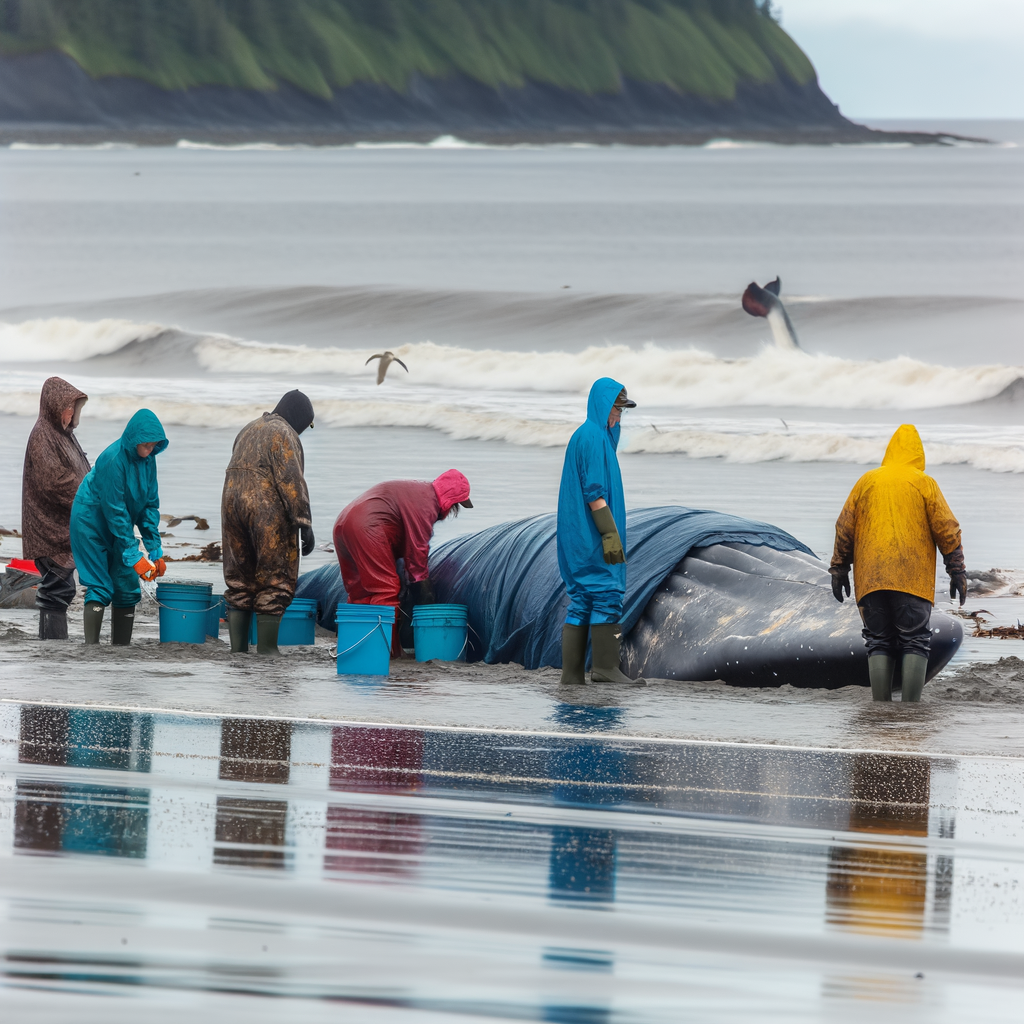
Last Friday, residents near Seldovia, Alaska, witnessed a rare and emotional event: a 15-foot minke whale became stranded on MacDonald Spit, a narrow strip of land across Kachemak Bay from Homer. After spending approximately six hours beached, the whale was able to return to the water, thanks in part to the efforts of local responders and the timely arrival of the rising tide. This incident has drawn attention not only for its dramatic nature but also for what it might suggest about broader environmental concerns in the region.

Minke whales, the smallest species of baleen whales in North America, are known for their elusive behavior. According to the National Oceanic and Atmospheric Administration, they are less frequently observed than their larger cousins like humpbacks, even though they inhabit many of the same waters. The appearance of one stranded onshore was a notable event for the community and for Stephen Payton, the environmental coordinator for the Seldovia Village Tribe.

Payton, who has worked in environmental response for a decade, said this was his first time encountering a live whale in distress. When he received word of the stranding, he rushed out to MacDonald Spit, aided by a local resident who picked him up on a four-wheeler. By the time he arrived, concerned citizens had already formed a small bucket brigade, working to keep the whale wet with towels and sheets. The drizzly weather helped prevent the whale from drying out, but it had already sustained visible injuries from thrashing on the rocky beach.
"It was really scratched up," Payton said. "You could tell it had probably been rolling around on the rocks." He also noted that the whale was lying on its side, oriented parallel to the beach, with its blowhole facing the water. This positioning raised concerns that the animal might drown, as minke whales reportedly can suffocate within 10 to 20 minutes if they are unable to breathe properly.
Fortunately, the tide began to rise, and observers noted that the whale was able to right itself. As the water level increased, Payton and others were forced to retreat from the beach, but updates from local residents later in the day confirmed that the whale had been seen swimming and spouting in the bay. A video later shared by the Seldovia Village Tribe on social media showed the whale splashing in the shallows as it made its way back to deeper water.
While the successful return of the whale to the ocean was a relief, the incident has raised concerns among local environmental stewards. Payton suspects that a harmful algal bloom may have played a role in the whale’s disorientation. In the week leading up to the stranding, there were reports of multiple dead marine animals in the area, including a porpoise, a seal, two otters, and two whales. This pattern has led to speculation that a toxic bloom could be affecting marine life in Kachemak Bay.
"There's a lot of concern right now that there might be a larger harmful algal bloom event happening," Payton said. He noted that different types of toxins produced by such blooms can have various effects on marine mammals, potentially impairing their navigation or causing other health issues. While no definitive cause has been confirmed, the clustering of incidents has prompted increased vigilance among local environmental groups and agencies.
The minke whale rescue highlights both the vulnerability and resilience of marine wildlife. It also underscores the importance of community response and environmental monitoring. While professional responders like Payton play a critical role, the initial actions of local residents were instrumental in keeping the whale alive until nature could assist with the rest.
For those unfamiliar with minke whales, these animals can grow up to 35 feet in length, though the one found near Seldovia was about 15 feet long — possibly a juvenile. They are generally solitary and tend to avoid ships and human activity, which makes their appearance on a populated beach particularly unusual. Kachemak Bay is known to host a variety of marine mammals, but sightings of minke whales are relatively rare compared to more commonly observed species like humpbacks.
As climate conditions shift and ocean temperatures rise, harmful algal blooms have become a growing concern in many coastal regions. These blooms can produce toxins that affect not only marine animals but also birds and even humans through the food chain. Monitoring efforts in Alaska and elsewhere aim to identify these blooms early, but their unpredictable nature makes prevention and response challenging.
For now, the beached whale’s return to the water offers a hopeful outcome amid broader environmental uncertainty. It also serves as a reminder of the interconnectedness of ecosystems and the need for continued vigilance in protecting marine life. Those who encounter stranded or distressed marine mammals are urged to contact the Alaska SeaLife Center’s 24/7 hotline at 888-774-7325 and to avoid approaching the animals or disclosing their locations publicly, as human interaction can add stress to already vulnerable creatures.
As the community around Kachemak Bay continues to monitor local wildlife and investigate potential environmental threats, the story of the rescued minke whale stands as a testament to collective effort and the enduring mystery of the ocean’s inhabitants. I found this detail striking: in ten years of environmental work, this was Payton’s first live whale rescue — a powerful reminder of how rare and significant such encounters can be.