
🚨Urgent: Rush Aid to People & Pets in Nepal's Devastating Floods! Help Now!
Unexpected Animal Friendship: Ocelot and Opossum Bond in the Amazon Rainforest
Guest Contributor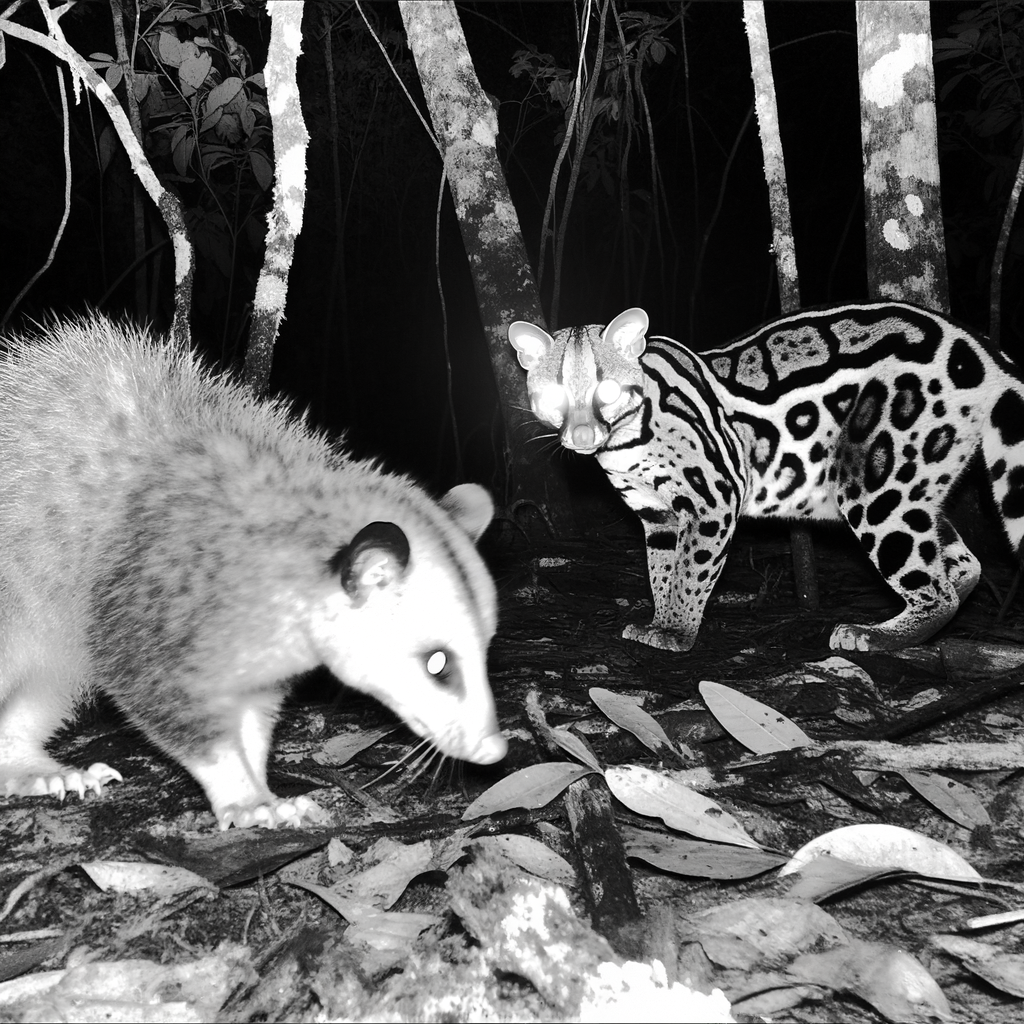
In the heart of the Amazon rainforest, a surprising twist in the natural order has caught the attention of scientists and nature lovers alike. When researchers at the Cocha Cashu Biological Station in southeastern Peru set up camera traps to study bird behavior, they didn’t expect to capture a rare interspecies interaction. What they recorded instead was a nocturnal stroll between an ocelot and an opossum—two animals that, by all accounts, should be predator and prey. This unexpected footage is now sparking fresh questions about animal behavior and cooperation in the wild.

Ocelots, sleek wildcats slightly larger than domestic felines, are known hunters. Opossums, on the other hand, are marsupials often seen as solitary and vulnerable. Yet in the video, the ocelot trails the opossum not with aggression but with what appears to be casual companionship. They move in tandem through the dense jungle, a scene that left behavioral ecologist Isabel Damas-Moreira and her team both surprised and intrigued. “We were skeptical about what we had seen,” she told reporters, wondering if the ocelot was simply studying its prey. But the opossum’s calm demeanor didn’t fit that theory.
The mystery deepened when a second clip surfaced: the same pair retracing their steps along the trail minutes later, still side by side. As Damas-Moreira put it, they looked “like two old friends walking home from a bar.” Encouraged by this anomaly, the researchers reached out to colleagues across the Amazon. They uncovered three more similar videos from different locations and years, suggesting that this wasn’t a one-time fluke but perhaps a more widespread phenomenon.
To explore the nature of this unusual bond, Damas-Moreira and her colleagues conducted an experiment, recently published in the journal Ecosphere. They placed fabric strips treated with the scents of ocelots, pumas, and a neutral control in front of camera traps. The results were striking: opossums visited the ocelot-scented fabric 12 times, often pausing to sniff, rub against, or even bite it. In contrast, the puma scent drew only a single, brief visit. This behavior suggests a unique attraction to ocelots that researchers are still trying to understand.
One hypothesis gaining traction is “chemical camouflage.” As evolutionary biologist Ettore Camerlenghi of ETH Zurich explained, the opossum’s strong scent might help mask the ocelot’s presence from its prey, or conversely, the ocelot’s proximity might shield the opossum from larger predators. This kind of mutual benefit could explain why these two species are seen together more often than expected.
There’s also the possibility of a hunting alliance. Opossums are resistant to the venom of pit vipers, a common and dangerous snake in the Amazon. Ocelots lack this defense, so teaming up with an opossum might offer them some protection. Camerlenghi noted that similar partnerships exist elsewhere in the animal kingdom. In North America, for instance, coyotes and badgers have been observed hunting together, each benefiting from the other’s skills and senses.
Erol Akcay, a theoretical biologist at the University of Pennsylvania who was not involved in the study, wasn’t surprised by the findings. He pointed out that nature is full of cooperative relationships, many of which go unnoticed. One of his favorite examples is the mutualism between honeyguide birds and humans. The birds lead people to bee nests, and once the humans harvest the honey, the birds feed on the leftover beeswax. Akcay speculated that the ocelot-opossum duo might share a similar dynamic, with opossums guiding ocelots to prey they can’t catch alone, and then feeding on the remains.
For Diego Astúa, a professor and curator of mammals at the Federal University of Pernambuco in Brazil, the discovery is particularly fascinating. His research focuses on opossums, which are typically solitary and avoid even their own kind outside of mating or family groups. “Really cool!” was his reaction to the study. He emphasized how little is known about opossum behavior and suggested that more surprises may lie ahead as research continues.
I found this detail striking: without the use of camera traps, this behavior might never have come to light. Both ocelots and opossums are nocturnal and elusive, making them difficult to observe directly in the dense rainforest. Still photographs could have easily misrepresented their interactions as hostile, but video footage captured a nuance that still images could not. As Damas-Moreira noted, the moving images told a more complex story—one of possible cooperation rather than conflict.
This serendipitous discovery serves as a reminder of how much remains to be learned about the natural world. Camerlenghi summed it up well: “Science often works like that. You search for one thing and end up finding something else, which sometimes turns out to be even more interesting than what you were originally after.”
As researchers continue to investigate this curious companionship, the ocelot and opossum may become unlikely ambassadors for a broader understanding of interspecies relationships. Whether driven by mutual benefit, chemical camouflage, or simple coincidence, their nighttime walks through the jungle are a testament to nature’s complexity—and its capacity to surprise us.