
🚨Urgent: Rush Aid to People & Pets in Nepal's Devastating Floods! Help Now!
Unexpected Football Pitch Visitors: How Service Dogs and Playful Pups Steal the Show
Guest Contributor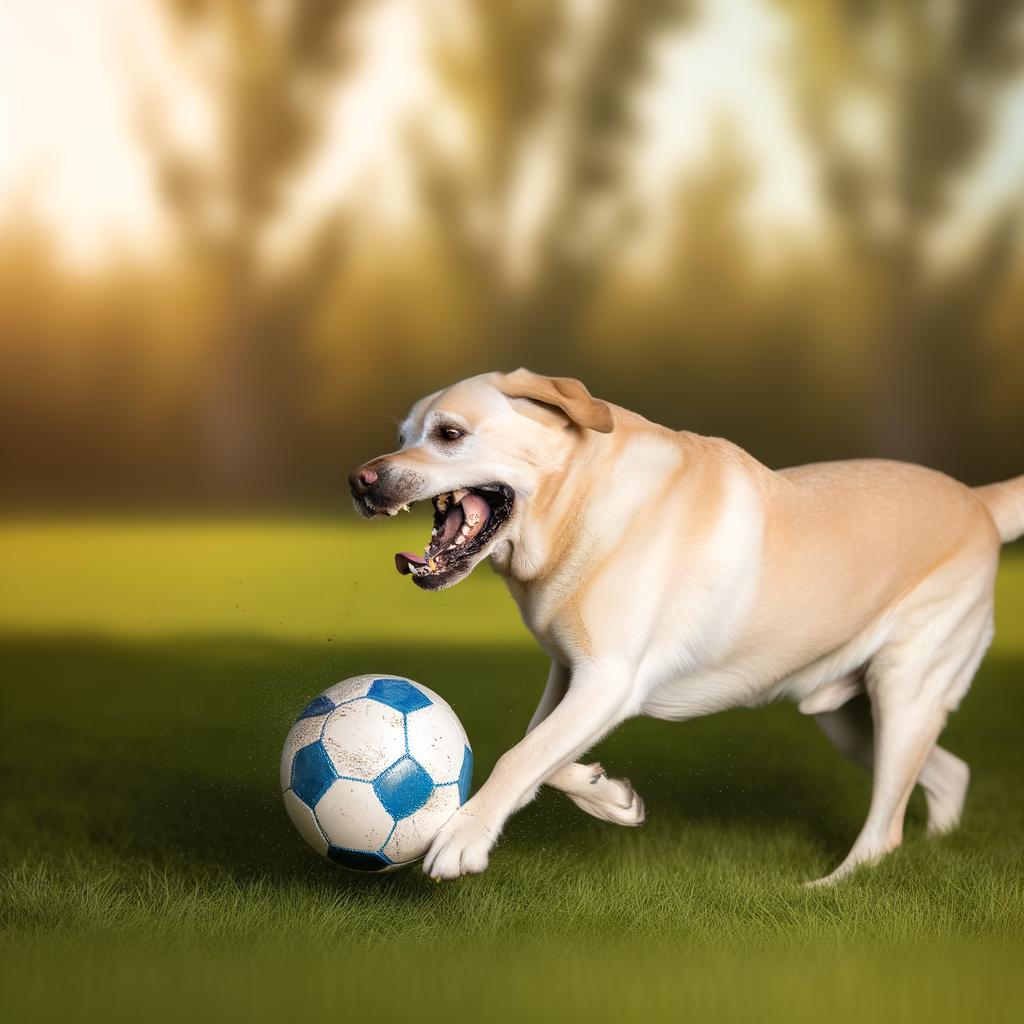
It’s not every day that a football match is interrupted by an unexpected four-legged player, but when it happens, it tends to steal the spotlight. During the European Football Championship in Germany, service dogs were a common sight, playing a vital role in ensuring the safety of fans and players alike. But as one recent video highlights, not all dogs on the pitch are there for official duties. Sometimes, they’re just irresistibly drawn to the game—especially the ball.
Dogs and footballs have a curious relationship. The combination of movement, speed, and shape seems to trigger something primal. In the video that’s been making the rounds online, a dog makes an impressive save during a match, drawing cheers and laughter from the crowd. It’s a light-hearted moment, and one that underscores just how instinctual a dog’s attraction to a rolling ball can be. For those who’ve ever played fetch with a pet, the behavior is instantly recognizable.
At the European Championship, service dogs were deployed extensively across the host country. According to the original report, Germany employs more than 2,200 service dogs through the Bundespolizei. These dogs are trained to carry out a variety of tasks, from sniffing out explosives to maintaining public order. Before each match, they meticulously inspect the stadiums—checking seats, corridors, sectors, and changing rooms. Each dog spends between 20 and 40 minutes on this crucial task before being rotated out for rest.
While their work is serious and essential, not all canine appearances at matches are official. There have been several instances in recent years where dogs have unexpectedly taken to the field. In one particularly memorable case from 2023, a dog in Mexico joined a football match mid-play and made a surprising save. The animal’s enthusiasm was contagious, and it quickly became the star of the show. In another incident during a CONCACAF Champions League match between El Salvador’s Alianza and the Philadelphia Union, a dog ran onto the pitch and made off with the ball. The match itself ended in a goalless draw, but the dog’s antics were what fans remembered most.
These spontaneous moments raise a natural question: why are dogs so drawn to balls? The answer lies in their instincts. Many dogs have a deep-rooted drive to chase, a behavior inherited from their ancestors. Historically, dogs were bred for hunting and retrieving. Even today, those instincts remain intact. When a ball rolls across the ground, it mimics the movement of prey, activating a dog’s hunting reflex. They know it’s not an animal, but the motion is enough to spark excitement.
Beyond instinct, there’s also the simple joy of play. For dogs, chasing and retrieving a ball is not just exercise—it’s a deeply satisfying activity. Balls move quickly, bounce unpredictably, and are easy to carry. Unlike larger objects, a tennis ball or small football fits neatly into a dog’s mouth, making it the perfect toy. This universal love of balls explains why even a highly trained service dog might find it hard to resist when one rolls past.
I found this detail striking: even in the midst of a high-stakes international tournament, with all the security protocols and professional athletes, a dog’s playful nature can still capture global attention. It’s a reminder that joy often comes from the simplest moments. Whether it’s a spontaneous save or a stolen ball, these canine cameos offer a charming contrast to the intensity of professional sport.
While these events are rare, they’re not entirely unexpected. Football stadiums are dynamic environments, and even with the best planning, surprises can happen. The presence of service dogs adds another layer of interest. These animals are trained to focus, to ignore distractions, and to perform under pressure. Yet, as the video shows, the allure of a moving ball can be strong—even for a dog on duty.
The role of dogs at major sporting events is both practical and symbolic. On one hand, they provide essential services, helping to keep fans safe and stadiums secure. On the other, they represent a connection to something more light-hearted—a shared love of play, movement, and companionship. When a dog runs onto the pitch, it’s not just a disruption; it’s a moment that unites the crowd in laughter and surprise.
As football continues to be a global phenomenon, it’s likely that dogs will remain part of the experience, whether as diligent service animals or unexpected participants. Their presence, whether official or accidental, adds a layer of warmth to the game. And for those watching, it’s a delightful reminder that even in the most structured environments, spontaneity still has a place.