
Replace Cruel Street Carriages With Electric Rides And Real Compassion

2,983 signatures toward our 30,000 goal

9.943333333333333% Complete

Sponsor: The Animal Rescue Site

Central Park can keep the magic without the misery as we urge the City Council to pass Ryders Law help drivers transition and bring electric carriages that protect horses people and the park we love.
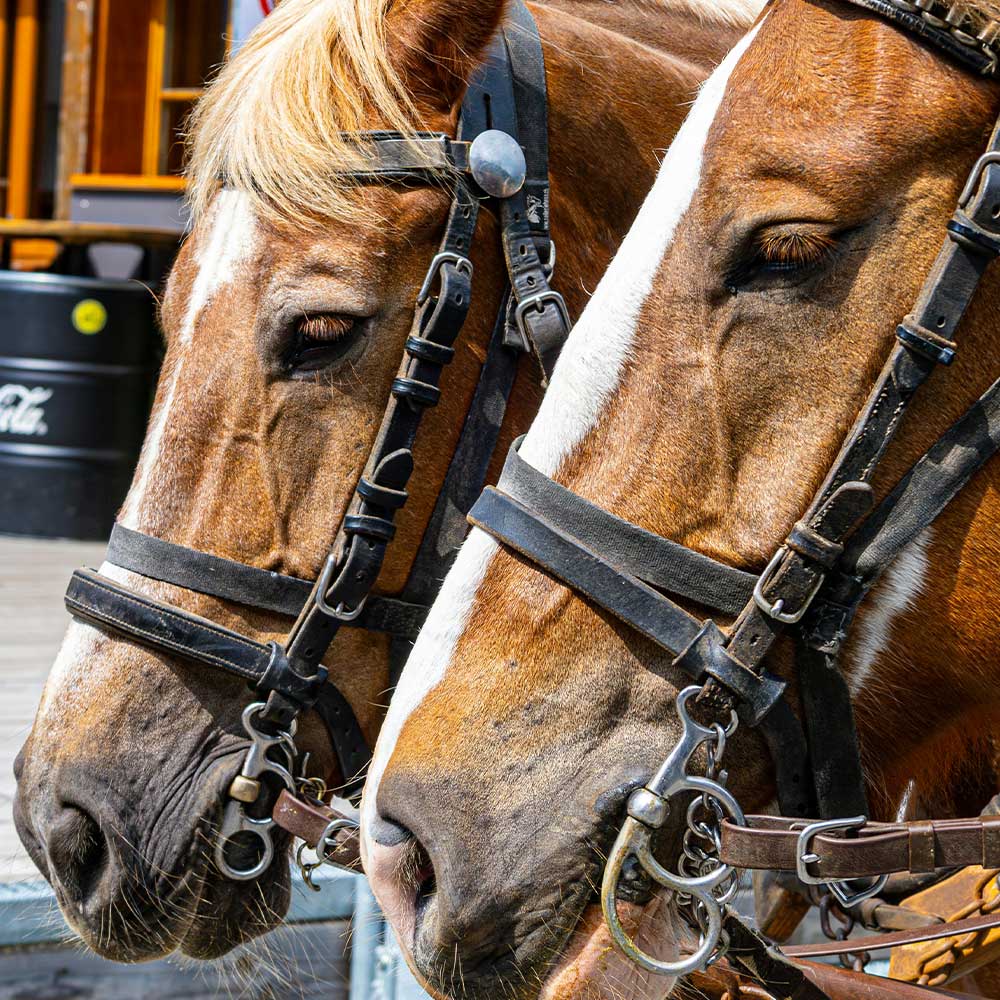
Replace Cruel Street Carriages With Electric Rides And Real Compassion

Carriage rides look timeless. The reality is urgent. Horses pull heavy loads through traffic, breathing exhaust, pounding asphalt, and facing sudden hazards that trigger panic and collisions. Documented collapses and deaths reveal a pattern of preventable harm that no animal should endure in a crowded urban park.1,2,3

Ryder’s collapse in 2022—and his death weeks later—forced New Yorkers to confront that reality. The summer of 2025, a jury acquitted his driver of animal-cruelty charges. The verdict does not erase what riders, pedestrians, and horses face when heat, congestion, and fear intersect on city streets.4

Rules Can’t Remove Risk

New York’s regulations cap work hours, require vet checks, set heat limits, and mandate furloughs. Yet rules cannot change physics: asphalt radiates heat, engines emit fumes, and hard pavement punishes legs and joints. Even with oversight, spooking incidents and collisions continue because the job itself places prey animals in chaotic conditions.2,6

Advocates, veterinarians, and investigators have tracked exhaustion, dehydration, respiratory problems, and crashes across cities that still allow carriages. These are not rare anomalies; they are predictable outcomes of mixing horses with dense traffic and tourist crowds.1,2,3

A City Ready to Move

Mayor Eric Adams has called the practice “increasingly incompatible” with a modern, heavily used Central Park and urged the Council to pass Ryder’s Law while preparing for the end of horse-drawn carriages. He also committed to transition help for drivers and the exploration of electric carriages to preserve the beloved ride without animal risk.5

This is about compassion and public safety. Compassion means preventing suffering when humane alternatives exist. Safety means removing a known hazard from a park shared by families, runners, cyclists, and visitors from around the world.2,6

What Passing Ryder’s Law Will Do

Ryder’s Law will phase out horse-drawn carriages on a clear timeline, pair workers with paid training and job placement, buy back licenses, and green-light electric carriages that deliver the same slow, scenic experience without heat stress, exhaust, or collisions involving horses. It is a practical path that protects animals, workers, and the public—all at once.4,5

Add Your Voice

We all win when we choose both humanity and common sense. Tell the New York City Council to pass Ryder’s Law, fund transition support, and champion electric carriages. Sign the petition now to help secure a safer, kinder future for horses, drivers, and everyone who loves Central Park.


More on this issue:

  1. Last Chance for Animals, LCA Blog (14 December 2017), “Horse Drawn Carriages — An Industry of Cruelty.”
  2. PETA Staff, PETA (n.d.), “The Cruelty of Horse-Drawn Carriages.”
  3. Humane Decisions Staff, Humane Decisions, “Why Horse-Drawn Carriages are Cruel to Horses.”
  4. Taylor Robinson, The New York Times (21 July 2025), “N.Y.C. Carriage Driver Cleared of Animal Cruelty After Horse’s Death.”
  5. Eric Adams, New York Daily News (19 October 2025), “End the horse-drawn carriage industry.”
  6. National Geographic Staff, National Geographic (n.d.), “The bitter controversy surrounding NYC’s carriage horse industry.”

The Petition

To the Members of the New York City Council,

We, Americans from every corner of this country who love New York for its spirit, ingenuity, and leadership, respectfully urge you to pass Ryder’s Law without delay, pair it with strong transition support for drivers and stable workers, and champion electric carriages as a humane, modern alternative in Central Park.

The images and incidents that have defined this debate—horses collapsing in summer heat, spooking into traffic, and laboring through dense crowds—reflect a truth that is impossible to ignore: in a twenty-first-century city, the traditional horse-drawn carriage model is increasingly incompatible with a crowded urban park and its safety needs. New Yorkers deserve a peaceful, people-first park. The horses deserve work that does not place them at chronic risk. And the men and women who have relied on this industry deserve a dignified path forward.

Compassion and humanity are not abstract ideals; they are practical imperatives. Compassion asks us to prevent suffering when proven alternatives exist. Humanity requires that, as we protect animals, we also protect livelihoods. A just transition can do both. With Council leadership, New York can demonstrate that policy can be firm in principle and generous in practice.

We therefore call on the Council to:

  1. Pass Ryder’s Law to phase out horse-drawn carriages on a clear timetable with enforceable benchmarks.
  2. Fund transition programs that offer job placement, paid training, license buyback, and small-business support for drivers, stable workers, and mechanics.
  3. Authorize and promote electric carriages that preserve the iconic carriage experience while ending the use of horses in dense traffic and extreme weather.
  4. Publish transparent reporting on implementation, including safety outcomes, worker placements, and visitor satisfaction.
  5. Partner with parks, tourism, and labor stakeholders to ensure accessible pricing and equitable participation in the new system.

This is an opportunity worthy of New York: to keep what people cherish—the slow, scenic ride through Central Park—while retiring what causes preventable harm. By passing Ryder’s Law, supporting workers through the transition, and embracing electric carriages, the Council can protect animals, enhance public safety, and model a compassionate innovation that cities around the world can follow.

Act now to secure a better future for all—horses, workers, New Yorkers, and the millions who visit and look to this city for leadership.

Sincerely,