Tens of Thousands of 9/11 Responders Are Still Getting Sick and the Federal Program Meant to Help Is Struggling
Matthew Russell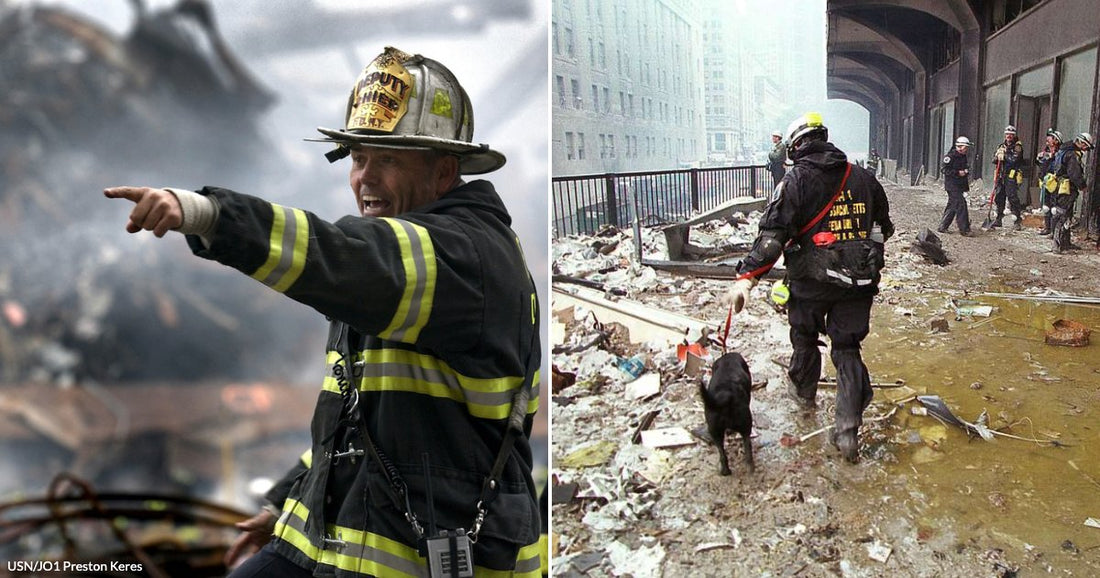
More than two decades after the September 11 attacks, tens of thousands of people who rushed to Ground Zero — or simply lived and worked nearby — are still getting sick. Cancers. Respiratory disease.
Now, emerging evidence points to serious cardiac and cognitive conditions as well. The federal program created to treat them has faced funding cliffs, staffing cuts, and bureaucratic delays that have left some critically ill people without the care they were promised.

U.S. Air National Guard/Tech. Sgt. Mark C. Olsen
The Scale of the Health Crisis
The toxic dust cloud that blanketed Lower Manhattan after the towers fell contained a devastating mix of asbestos, heavy metals, pulverized concrete, and combustion byproducts. The health consequences have been severe and long-lasting. According to New York Cancer & Blood Specialists, responders and survivors face significantly elevated rates of multiple myeloma, thyroid cancer, prostate cancer, and other malignancies compared to the general population — with cancers continuing to emerge years after initial exposure.
The American Association for Cancer Research has documented that responders show higher incidence rates across more than two dozen cancer types. That burden has only grown as more time passes and latent diseases surface.

USN/JO1 Preston Keres
The Program Meant to Help — and Its Struggles
The World Trade Center Health Program (WTCHP) was established specifically to monitor and treat eligible 9/11 responders and survivors. For years it served as a lifeline — covering medical monitoring, certified illness treatment, and prescription costs at no charge to participants. But the program has repeatedly faced threats to its continuity.
In early 2025, federal staffing reductions hit the program hard. NBC News reported that workforce cuts created serious uncertainty about the program's ability to function, with administrative capacity strained at a time when enrollment demand remains high. Around the same time, ABC News found that certification processing had stalled, leaving some members with serious, potentially qualifying illnesses unable to access care.
Congress acted. In early 2026, lawmakers secured permanent funding for the WTCHP — a significant development, reported by ABC News. But permanent authorization and functional operations are not the same thing. FireRescue1 noted that staffing deficits continue to threaten the program's ability to actually deliver care — even with the funding secured.

U.S. Air National Guard/Tech. Sgt. Mark C. Olsen
New Conditions, Unfinished Business
The recognized list of covered 9/11 conditions is also under pressure to expand. The FDNY and medical advocates are pushing federal health officials to add cardiac disease and cognitive decline — including dementia — to the list of certified 9/11-related illnesses, according to Firehouse. Research increasingly links Ground Zero exposure to these conditions, but without official certification, affected members cannot access WTCHP coverage for them.
The gap between what the science shows and what the program covers leaves a growing number of sick people in limbo.

What Needs to Happen
Permanent funding was a necessary step, but it is not sufficient on its own. Staffing levels need to match the program's mandate. Certification processing needs to function without dangerous delays. And the list of covered conditions needs to reflect the full picture of what exposure to that toxic cloud has done to human health. The people who responded to the worst attack on American soil — and those who simply couldn't escape it — were told the country would take care of them. That commitment demands follow-through.
Click below to make a difference.