
Brave Dogs Fought Through Smoke and Rubble to Save Lives on 9/11
Matthew Russell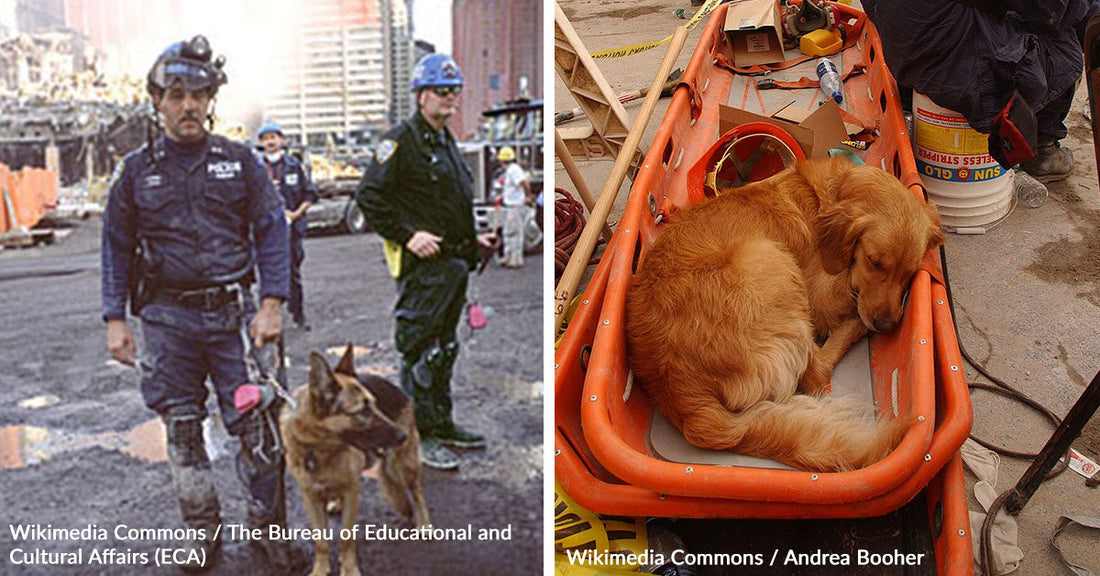
The first hours after the towers fell were chaos and grit. Into that scene came hundreds of working dogs—search-and-rescue, police K-9s, and trained comfort teams—deployed beside their handlers across the World Trade Center, the Pentagon, and Shanksville. Estimates place the number at more than 300.
Their job was simple to say and brutal to do: find the living, locate the lost, and steady hearts that shook.
Handlers worked 12-hour shifts. So did the dogs. Paws were rinsed, eyes cleared, noses soothed, and spirits kept high with “mock finds” staged when real rescues grew rare.
Veterinarian Cynthia Otto, who helped care for the animals at Ground Zero, later told the American Kennel Club why that mattered: “You need to remind the dogs every so often that they do get to win.”

Photo: Wikimedia Commons / UnitedfStates Department of State, License: Public Domain
Police officers and their K9 partners searched tirelessly through the destruction of the World Trade Center.

Search Teams on the Pile
FEMA-certified search dogs went up shifting hills of steel and concrete, following the faintest trace of human scent. The last person pulled alive from the site—27 hours after the collapse—was located with a dog’s help, Scripps News reports.
New York’s Apollo arrived within minutes of the South Tower’s fall and searched up to 18 hours a day in the first weeks. He would go on to be honored for that work.
Guide Dogs Who Led Their People Home
Inside the towers, two service dogs—Roselle with Michael Hingson and Salty with Omar Rivera—took the stairs, floor after floor, against heat and smoke. They refused to leave their partners and brought them out alive. Their stories remain among the day’s clearest portraits of devotion, reports San Mateo Veterinarian.

Photo: Wikimedia Commons / SFC Thomas R. Roberts, License: Public Domain
Veterinarians provide care to a rescue dog that worked long hours searching through debris at Ground Zero.

Comfort in a Sea of Sirens
Before therapy teams arrived in force, even search dogs became magnets for weary firefighters and police officers seeking a moment of calm.
“If workers saw a search and rescue dog, even just sitting, resting, they would come over because they needed that compassionate moment,” recalled VMAT responder Dr. Patrice Klein told the 9/11 Memorial & Museum.
Formal comfort teams soon followed. Handler Frank Shane, who worked Ground Zero with Nikie for months, put the need plainly: “People want a teddy bear… something that grounds them to a period in time that’s safe because everything else is just chaotic,” he told the 9/11 Memorial & Museum.
Nationally, that response helped define “comfort dogs” in disaster work, as early crisis-response leaders later told the American Kennel Club.

Photo: Wikimedia Commons / Andrea Booher, License: Public Domain

A search-and-rescue dog rests in a stretcher as responders continue recovery work at Ground Zero.
Names We Still Say
Trakr, a German Shepherd from Canada, located the final survivor found at the Trade Center, then collapsed from smoke and exhaustion before recovering. Years later, his DNA led to five cloned pups, reports Scripps News, an unusual coda to a singular life.
Bretagne, of Texas Task Force 1, served at Ground Zero and later during major hurricanes, then spent retirement helping first-graders learn to read. She was believed to be the last surviving 9/11 search dog when she died at 16, the American Kennel Club reports.
Sage, only two when she worked the Pentagon debris, later deployed on high-profile searches at home and abroad and earned national honors, reports Scripps News.
Jake, rescued as a stray, spent 17 days on the pile, later became one of fewer than 200 U.S. government-certified disaster dogs, and trained teams nationwide, Mossy Oak reports.
Riley, photographed being carried across the wreckage, shifted from live-find to comfort work when the realities of the mission set in.

Photo: Wikimedia Commons / Andrea Booher, License: Public Domain
A handler helps guide his German Shepherd across unstable rubble during the search for survivors.

The Legacy They Built
The public’s close view of K-9 work after 9/11 spurred donations, training pipelines, and long-term health studies. The Penn Vet Working Dog Center grew from that moment, and organizations such as the National Disaster Search Dog Foundation expanded capacity and facilities. The need, experts say, still outpaces supply.
“There is a shortage of dogs and funds to support them,” Dr. Otto told the American Kennel Club, calling for more training, more science, and more hands on the leash.
Twenty-four years on, we remember the handlers who asked, and the dogs who answered. They did not hesitate. They worked until the job became memory—and then they kept working.