
🚨Urgent: Rush Aid to People & Pets in Nepal's Devastating Floods! Help Now!
Australia’s Bushfires Leave Families Fleeing Pets Missing and Wildlife Burning
Matthew Russell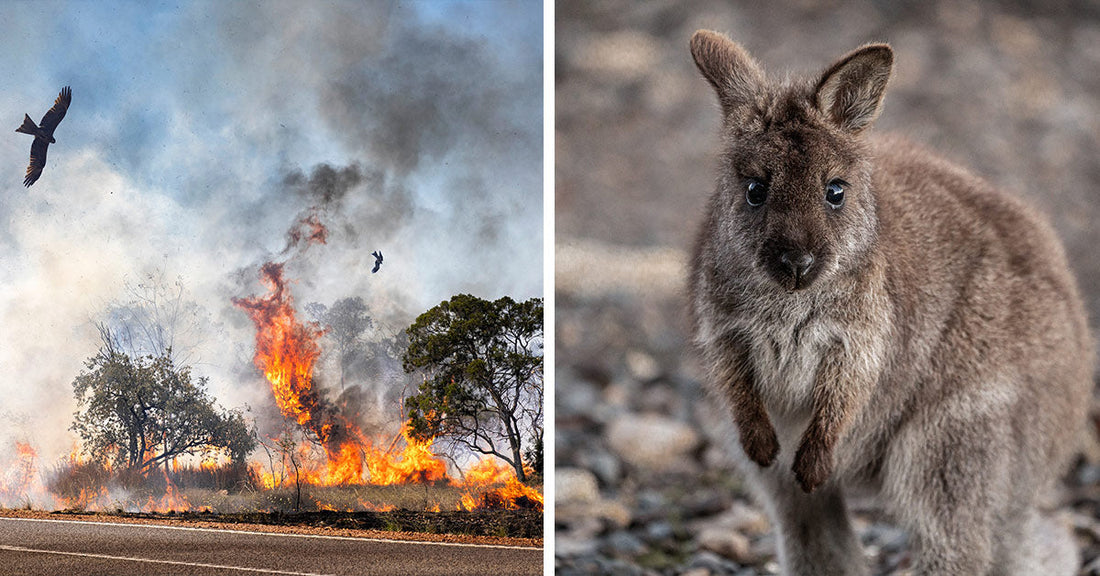
Bushfires have torn across southeastern Australia, leaving scorched hillsides, damaged towns, and families displaced. In Victoria, flames advanced under extreme heat and wind, burning hundreds of thousands of hectares and destroying hundreds of buildings, according to The New York Times.
Authorities confirmed one death after human remains were found near Longwood, where fires overran rural roads and properties, police told Reuters. Power outages spread across fire-hit regions, while smoke degraded air quality across Melbourne and surrounding areas, the BBC reports.

Bushfires in Victoria burned vast areas in a matter of days.
People Forced to Leave Earlier
Residents are changing how they respond to bushfires. Many now evacuate sooner, heeding warnings rather than staying behind to defend homes.
During recent fires near Melbourne, residents packed up in the middle of the night as forecasts warned of extreme heat and catastrophic fire danger. After surviving Australia’s 2009 Black Saturday inferno, journalist Stuart Braun said he was not taking chances this time, as DW reported.
Victorian Premier Jacinta Allan urged residents to leave early.
“I know how hard it is to leave homes,” she told DW, adding that evacuation was the safest way to save lives.

Wildlife habitats have been burned across forests and farmland.
Homes Lost in Minutes
Entire streets were reduced to ash in towns like Harcourt. Brick chimneys stood alone among twisted metal and burned gardens.
Firefighter Tyrone Rice lost his own home while battling the blaze. He told the BBC that the loss was “a kick in the guts.”
Residents described the fire’s randomness. One house burned. The next stood untouched. Socks left hanging on washing lines showed how quickly families were forced to flee, according to The Guardian.

Hundreds of homes and buildings have been destroyed.
Pets and Livestock Caught in the Path
The fires swept through farms and grazing land, killing livestock and destroying fodder. Thousands of cattle were likely affected as emergency feed was rushed to farmers, Prime Minister Anthony Albanese said in televised remarks reported by Reuters.
Sheep were seen wandering across burned paddocks near Longwood, while families fled with pets when possible, The New York Times reports. In fast-moving fires, not all animals could be saved.
Wildlife Faces a Long Recovery
For wildlife, the fires are only part of the crisis.
Across southern Australia, injured animals are being found on the edges of burn zones, including koalas suffering severe burns who require urgent treatment. During the recent fires alone, more than 350,000 hectares have burned, compounding losses already seen during the Black Summer fires, when an estimated three billion animals were affected, according to the International Fund for Animal Welfare.
Rescue teams are working in dangerous conditions to locate survivors. Some animals escape the flames only to face starvation or exposure as habitats disappear.
Extreme heat is adding another deadly layer. Flying foxes, already weakened by food shortages, are collapsing from trees in large numbers due to heat stress. Wildlife rescue networks have taken in hundreds of bats as temperatures push animals beyond their limits, IFAW reports.

Recovery from this disaster could take months or years.
When Fire Is Followed by Flood
The crisis does not stop at the fire line.
While the south burns, northern Australia is dealing with widespread flooding driven by tropical systems and the remnants of ex-Tropical Cyclone Koji. As residents are evacuated by helicopter and boat, wildlife responders are rescuing kangaroos, birds, and other animals stranded by rising water, according to IFAW.
In some regions, cyclone winds destroyed wildlife rehabilitation enclosures, forcing emergency rebuilding even as new rescues arrive. Animals displaced by fire are now facing floodwaters, leaving few safe places to recover.
Communities Step In Where They Can
Relief centers opened in pubs, band rooms, and community halls. As The Guardian reports, in Harcourt, a miniature railway became a hub for food, supplies, and shared grief.
Fundraisers raised hundreds of thousands of dollars for destroyed businesses. Neighbors offered beds and meals. Volunteers returned from fire lines to help each other rebuild.
What Comes Next
Fire officials warned it could take weeks to gain control, with hot and windy weather expected to return, the chief fire officer told Reuters.
One life has been lost so far, but the damage is widespread. For people, pets, and wildlife, survival now depends on recovery. The fires will burn out. The losses will remain.
Click below to make a difference.