
High-Altitude Solar Farms In China Match The Output Of A Megadam In Weeks Not Years
Matthew Russell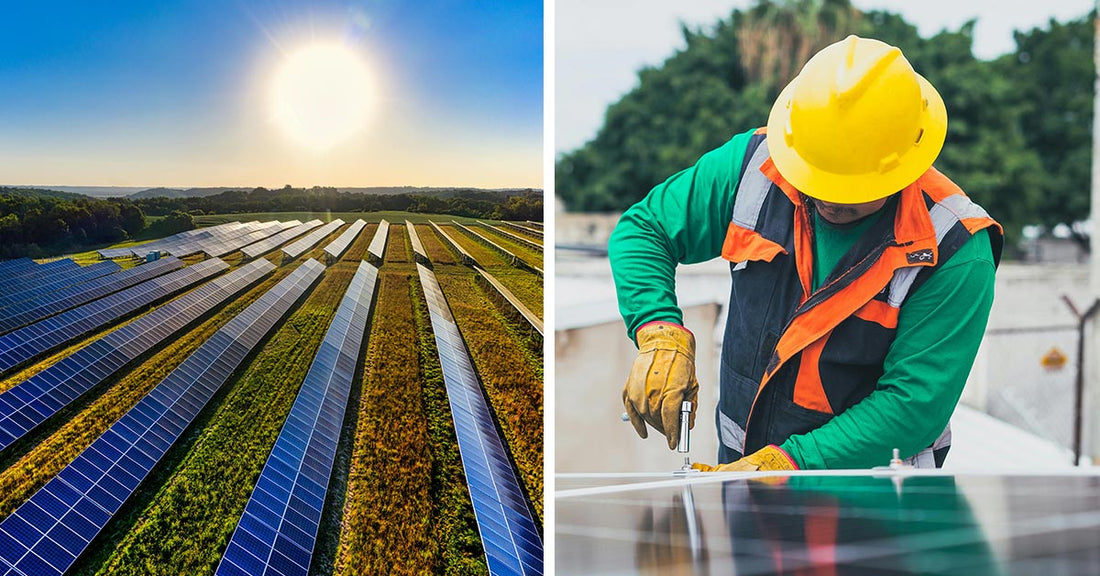
China is racing sunlight across the roof of the world.
On the Tibetan Plateau, utility-scale solar stretches for miles at altitudes where air runs thin and panels run cooler, which boosts efficiency. Arrays blanket an alpine desert in Gonghe County, while wind farms ride nearby ridgelines to smooth daytime solar with night breezes. The buildout is vast—and fast.
China is now installing solar capacity so quickly that every three weeks the additions rival the generating capacity of the Three Gorges Dam, a hydropower colossus that took years to finish and displaced more than a million people, The New York Times reports.

China’s new high-altitude solar farms produce power faster than any project on Earth.
Talatan’s Scale, and Why Altitude Helps
The core of this surge is Talatan Solar Park. At 162 square miles, it dwarfs other solar clusters and sits on mostly flat, high country that eases logistics and maximizes sun exposure. High elevation delivers brighter irradiance, while cold, dry air helps panels run at peak output. The power doesn’t stay put. Ultra-high-voltage lines ferry electricity more than a thousand miles to coastal factories and cities.
Altitude changes the economics far beyond the panels. Data centers relocated to Qinghai use less cooling energy—an edge that compounds when computing loads spike. According to The New York Times, local industries tied to the clean-energy supply chain have followed, aided by cheaper renewable power and room to expand.

The Tibetan Plateau has become a vast clean-energy zone stretching beyond the horizon.
Proving Ground at 5,228 Meters
China is also testing how high “high-altitude” can go. In Tibet’s Shannan region, the Caipeng Solar-Storage Power Station operates at 5,228 meters—now the world’s highest-elevation solar plant. Its newest 100-MW phase, built in 115 days, uses n-type TOPCon bifacial panels to harvest direct sun and strong ground reflection from snow, paired with a 20-MW/80-MWh battery system for evening supply and grid stability. Together with the initial 50-MW phase, the project targets seasonal shortages and improves frequency and voltage control in a challenging grid environment, Interesting Engineering reports.
That storage matters. It helps turn altitude into dependable power instead of only daytime bursts. Liquid-cooled batteries and fast regulation features extend output after dark and reduce curtailment—key steps as more variable renewables fill China’s western provinces.

Every three weeks, China installs enough solar panels to equal the Three Gorges Dam’s output.
From “Photovoltaic Sheep” to Gigawatt Pipelines
On the plateau, the ecological footprint looks different than in crowded river valleys. Mounting panels higher lets native vegetation persist and even expand in the panels’ wind shadow. Tibetan herders now graze “photovoltaic sheep” between rows, and the full project aims to power five million households when complete, the Los Angeles Times reports. The bigger challenge is distance. New long-haul transmission corridors—one already linking Qinghai to Henan, with more planned toward Guangdong—are designed to move power from high plains to high demand.
Designing for Water, Not Just Wind
Innovation isn’t confined to mountaintops. China also leads in floating solar, where cooler water boosts panel efficiency, evaporation drops, and maintenance gets easier. One vast array near Huainan sits atop a flooded coal mine—a literal rise from underground to a cleaner horizon—showing how repurposed sites can host gigawatts without competing for arable land, as TIME reports.

Thin air and cold temperatures make high-altitude panels more efficient.
The Emissions Signal
The speed of construction is shifting the emissions curve. In early 2025, national carbon output edged down even as electricity demand rose, buoyed by record solar additions—212 gigawatts in six months—alongside wind and nuclear growth. Policy and grid reforms still must catch up, but the direction is notable.
Pair altitude gains, storage, and new transmission, and a clearer picture emerges: high-country solar is not a spectacle. It’s an operating model built to scale.
We need clean energy innovation like this in the United States. Click below to call for more focus on solar solutions to power our future without pollution.