
Coca Cola’s Plastic Bottles Are Choking the Oceans Faster Than Anyone Admits
Matthew Russell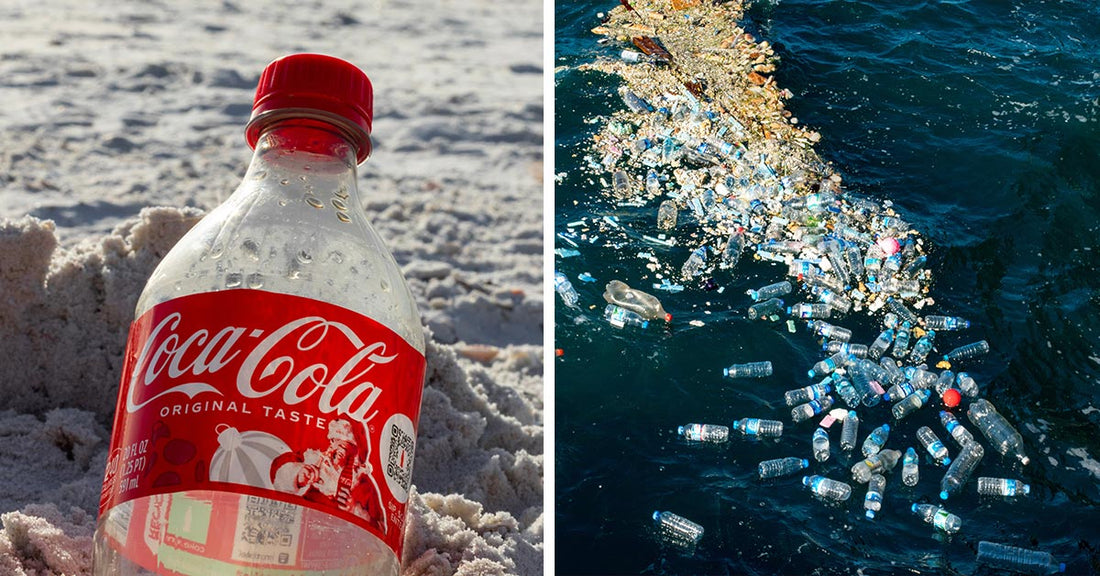
Coca-Cola’s PET plastic bottles have become one of the most persistent forms of pollution reaching marine ecosystems. According to analysis cited by The Guardian, Coca-Cola products are projected to contribute more than 600 million kilograms of plastic waste to oceans and waterways every year by 2030 if current production patterns continue. That volume reflects the sheer scale of single-use PET packaging entering global markets.
Once discarded, PET bottles fragment into microplastics that move easily through marine food webs. Fish, seabirds, turtles, and plankton ingest these particles, mistaking them for food or absorbing them indirectly. Over time, microplastics accumulate in tissues and transfer up the food chain, creating long-term ecological and health risks.

PET bottles regularly enter rivers, coastlines, and open oceans.
PET Plastic and the Recycling Illusion
Coca-Cola promotes PET as recyclable, but recycling has failed to keep pace with production. The Plastic Pollution Coalition explains that less than nine percent of all plastic ever produced has been recycled, with most plastic instead burned, buried, or leaked into the environment. Even when PET is recycled, the process generates microplastics and concentrates chemical additives that persist in ecosystems.
Recycled PET bottles also rely on virgin plastic. Additives, caps, and structural requirements mean new petrochemical plastic remains part of each bottle. This dynamic allows companies to claim progress while overall plastic production continues to rise.

Coca-Cola is one of the largest users of single-use PET plastic in the world.
Scaling Back Reuse as Plastic Use Grows
In late 2024, Coca-Cola revised its environmental goals, abandoning earlier commitments to expand reusable packaging. Environmental groups cited by Oceana warned that this shift locks in decades of additional single-use plastic waste. Internal targets to sell at least a quarter of beverages in refillable containers were removed, while new goals emphasize recycled content and collection rates instead.
Plastics Today notes that nearly half of Coca-Cola’s primary packaging remains plastic, mostly PET. Without firm reuse targets, critics argue that lightweighting and recycling improvements do little to reduce the total number of bottles produced each year.

Once in the sea, PET breaks into microplastics rather than biodegrading.
Lightweight Bottles, Heavy Environmental Costs
Coca-Cola’s own announcements highlight engineering advances that reduce bottle weight. In March 2024, Coca-Cola claimed that redesigned PET bottles use less plastic per unit and could displace the equivalent of hundreds of millions of bottles annually.
While these changes reduce material use per bottle, environmental groups caution that efficiency gains often coincide with higher sales volumes. Lower material costs can enable more production, leaving the total plastic footprint unchanged or larger over time.
Marine Life Bears the Burden
Brand audits conducted by the Break Free From Plastic Movement repeatedly identify Coca-Cola as the most frequently found brand in coastal cleanups worldwide. PET bottles, caps, and labels rank among the most common items collected from beaches, mangroves, and nearshore waters.
For marine species, this pollution translates into entanglement, ingestion, and habitat degradation. Floating bottles transport invasive organisms across oceans, while microplastics settle into sediments where bottom-dwelling species feed and reproduce.

Recycled PET still depends on virgin plastic inputs.
Reuse Remains the Missing Solution
Oceana’s analysis highlighted by The Guardian points to reuse as the most effective way to prevent plastic from reaching the sea. Returnable glass bottles can circulate dozens of times before recycling, sharply reducing waste.
Coca-Cola already operates refill systems in several countries, proving the infrastructure exists. The environmental outcome for oceans now hinges on whether those systems expand or remain sidelined as single-use PET bottles continue to dominate global shelves.
Click below to make a difference.