
Conjoined Turtle Twins Fight for Life After Rare Surgery in Virginia
Matthew Russell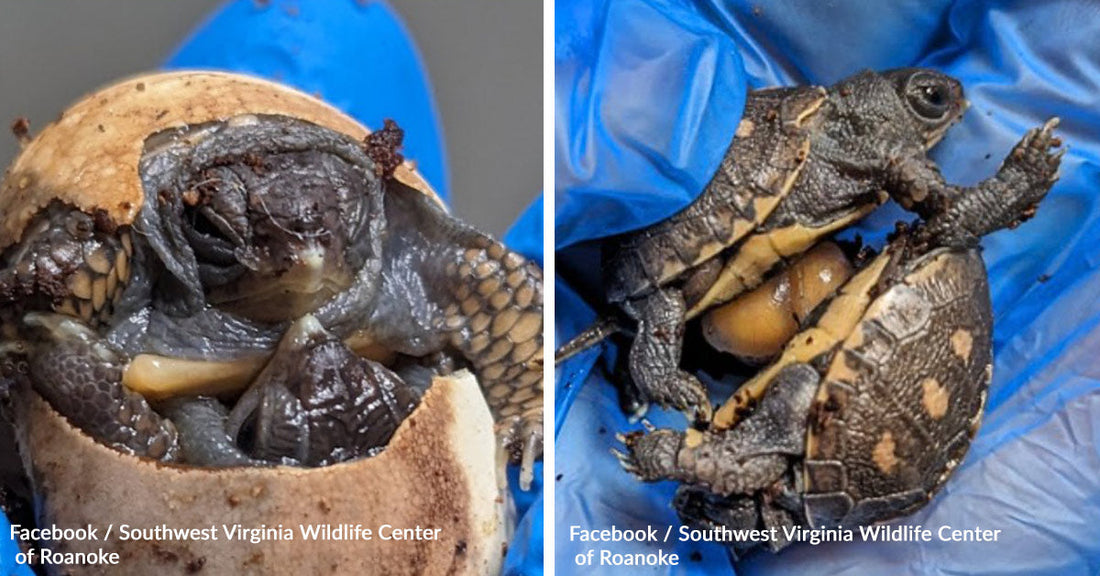
At the Southwest Virginia Wildlife Center, a rare event unfolded when two Eastern box turtles hatched from a single egg. Unlike their siblings, these hatchlings were conjoined at the yolk, a condition so unusual that it quickly drew national attention.
Their mother, already under care for a severe ear abscess, laid the clutch of eggs while in recovery at the center, giving staff the chance to monitor the process closely, WJLA reports.

Two Eastern box turtles hatched conjoined in Virginia.
The Surgical Separation
Veterinarians at the center allowed nature time to work before stepping in. When the conjoined twins struggled to hatch, the team carefully intervened. Using precise surgical techniques, they separated the turtles’ shared yolk sac. Each hatchling, weighing just three grams—about half the size of their clutch mates—was then placed in a delicate recovery setup: shot glasses lined with moist paper towels to prevent drying and movement that could reopen the incisions, according to WFXR.

Odds of Survival
Eastern box turtles face steep odds in the wild. Experts estimate fewer than 0.1 percent survive to adulthood. For twins, the chances are slimmer. One study on snapping turtles found twin births occur in only about 1 percent of cases, with most failing to hatch due to limited resources inside the egg.
The center says if the separated twins can survive the coming weeks and begin feeding, their chances of eventual release will improve, WSLS rpeorts.
Care and Conservation
For now, the hatchlings will remain under round-the-clock care. They will spend the winter at the facility, gaining strength before a possible release.
“As long as they survive the next few weeks and begin to eat, their odds of release are good,” staff told The Washington Post.
Their growth will be closely tracked to see if they can close the size gap with their siblings.

Most turtle twins fail to hatch on their own.
Why It Matters
The story highlights both the fragility and resilience of Virginia’s box turtles, now listed as a threatened species. Their populations continue to fall due to habitat loss, road mortality, poaching for the pet trade, and slow reproductive rates. Since 2021, it has been illegal to own them as pets in Virginia. Wildlife officials stress the importance of small acts—like moving a turtle safely across the road in its direction of travel—that can make a difference in survival. For these tiny twins, human intervention has already rewritten their odds.