
Beachgoer with Rake Protects Endangered Sea Turtle Hatchlings in Tulum
Guest Contributor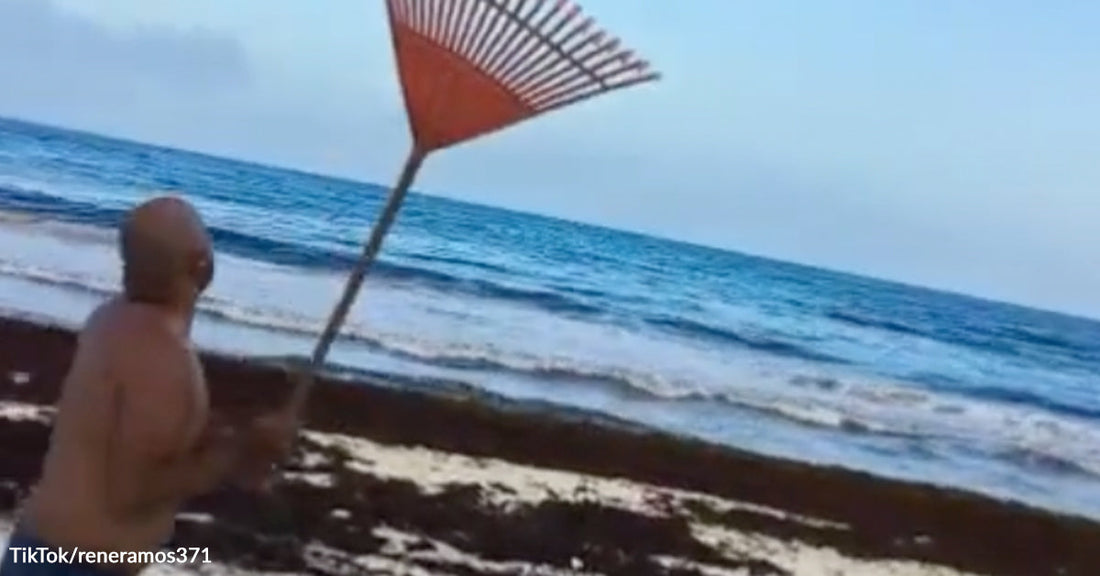
On the sun-drenched beaches of Tulum, Mexico, the journey from nest to ocean is a treacherous one for newly hatched sea turtles. These tiny creatures—loggerhead, leatherback, and green sea turtles—are all protected species, yet their endangered status offers little defense against the natural threats that await them. One of the most common dangers comes from above, as predatory birds patrol the skies, ready to swoop down on the vulnerable hatchlings.
It was against this backdrop that a beachgoer named Rene Ramos found himself in an unexpected position to make a difference. While visiting the beach in Tulum a few weeks ago, Ramos noticed a clutch of sea turtle eggs had just hatched. As the baby turtles began their instinctive crawl toward the sea, danger quickly presented itself in the form of circling birds. Without hesitation, Ramos grabbed a large rake and began using it to shield the hatchlings, fending off the birds and giving the turtles a better chance of survival.

This simple act of compassion—using a landscaping tool to protect endangered baby sea turtles—likely saved hundreds of lives. Ramos shared his experience online, reflecting on the opportunity to witness both the nesting and hatching process. “I had the opportunity to appreciate when the turtles spawned,” he wrote. “Now I could see them emerge and try to reach the sea.”
I found this detail striking: how a single person, armed with nothing more than a rake and a sense of duty, could have such a profound impact on the survival of a species. Ramos’s quick thinking and willingness to intervene illustrate the power of individual action in conservation efforts.
Typically, sea turtles hatch at night when the cover of darkness offers some protection from predators. But daylight hatchings, like the one Ramos encountered, expose the young turtles to heightened risks. While nature is often left to take its course, human intervention at critical moments can tip the scales in favor of these endangered animals.
Fortunately, Ramos is not alone in his desire to protect Tulum’s sea turtles. The region is home to organized efforts such as the Municipal Committee for the Protection of Sea Turtles. These groups work diligently to mark and monitor nesting sites, ensuring that the eggs are safeguarded from both natural and human threats. In some cases, eggs are even collected and incubated until hatching, after which the baby turtles are released under safer conditions.
Biologist Rocío Peralta, in an interview with The Tulum Times, emphasized the importance of active, on-the-ground conservation. “It’s not just about rules on paper. It’s about boots on the ground and eyes on the nests,” she said. “Each egg we protect is a chance for future generations to witness turtles on our shores.” Her words underscore the critical role that both policy and proactive action play in wildlife protection.
The challenges facing sea turtles are numerous. In addition to natural predators, human activity remains a persistent threat. Coastal development, pollution, and the presence of pets on the beach can all disrupt nesting sites and endanger hatchlings. While regulations exist to limit these impacts, enforcement can be inconsistent. That’s why the presence of volunteers and concerned citizens—like Ramos—can make a significant difference.
Sea turtle conservation is a global concern, but stories like this one from Tulum bring it into sharp focus. They remind us that preservation is often a communal effort, relying not just on scientists and organizations, but on everyday people who choose to act when it matters most. Whether it’s using a rake to shield hatchlings or participating in organized conservation programs, each gesture contributes to a larger mission.
Efforts to protect endangered sea turtles in Tulum highlight the intersection of environmental awareness and individual responsibility. As more people become informed about the fragility of marine ecosystems, the hope is that more will be inspired to take part in their preservation. Simple actions, when multiplied across communities, can lead to meaningful change.
In the case of Rene Ramos, his spontaneous decision to help a group of baby sea turtles reach the ocean safely serves as a heartening example of how one person’s compassion can ripple outward. It’s a reminder that sometimes, the tools we need to make a difference are already in our hands—quite literally.