
Young Humpback Whale Dies After A Devastating Strike Leaves Him Stranded On The Sand
Guest Contributor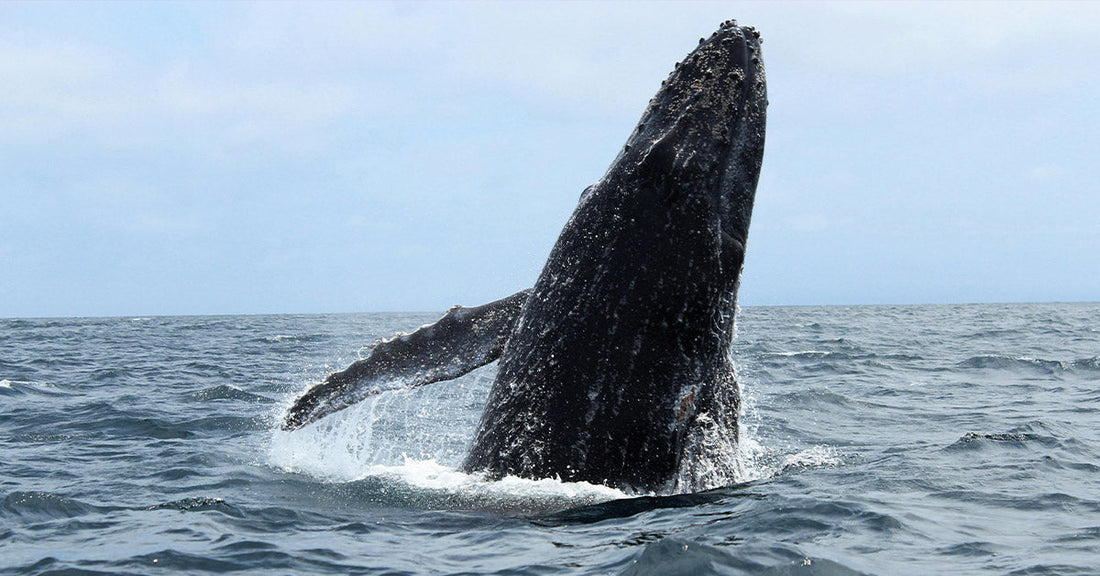
Along the waters of Cape Cod Bay in the summer of 2025, a young humpback whale became an unexpected celebrity. Whale watchers and crew from Hyannis Whale Watcher Cruises say the juvenile seemed to revel in the spotlight, breaching and slapping his long white flippers against the surface. They nicknamed him “Oil Change” for the bold white marking on his tail fluke. This playful visitor captivated passengers and crew, and his story now stands as a poignant reminder of both the wonder and the fragility of encounters with humpback whales.
Oil Change was a juvenile male, about 32 feet long and estimated at a minimum of 20,000 pounds. The eco-tourism company that came to know him has been operating out of Barnstable Harbor since 1980, and their staff recognized him from photographs taken across repeated encounters in 2025 starting in late July. According to the company, he “stole our hearts,” a sentiment echoed by those who watched him roll and leap against the backdrop of Cape Cod’s coastline, a place where whale watching is part of the region’s identity.

Researchers and whale watch naturalists had tracked this animal’s movements beyond Cape Cod Bay. Laura Lilly, director of conservation and education with Hyannis Whale Watcher Cruises, noted that Oil Change had been documented in New York waters in 2023 and 2024 and then only in Massachusetts in 2025. The pattern suggested a young whale still settling into his migration and feeding routes along the busy U.S. Atlantic Coast.
One encounter stood out to the crew. On that day, Oil Change spent extended time breaching and flipper slapping, behavior that passengers rarely get to see so frequently. Scientists do not fully understand why humpbacks perform these surface displays, although possibilities include communication, social signaling, or aiding digestion. Lilly explained that such activity is perfectly normal yet not particularly common, which made that day especially memorable for onlookers who watched the powerful animal hurl his body out of the water again and again.
Months later, the joyful memories of those summer trips met a heartbreaking postscript. On January 8, 2026, a dead humpback whale washed ashore in the Ocean Ridge community near Bethany Beach in Delaware. Responders from the Marine Education, Research and Rehabilitation Institute, known as MERR, had first seen the whale floating roughly two miles off the Indian River Inlet two days earlier. Once the carcass reached shore, heavy equipment was brought in on January 9 so that the scientists could move the remains up the beach and perform a necropsy.
MERR’s examination revealed subdermal hemorrhaging and a broken jaw on the right side. These injuries are consistent with blunt force trauma, and MERR executive director Suzanne Thurman stated that this type of damage is often associated with a collision with a large vessel. The nature of the wounds indicated that the whale was alive when it was struck. While the team could not confirm with absolute certainty that a ship strike caused Oil Change’s death, the injuries aligned closely with that scenario.
When it became clear that this stranded whale was the same animal that Cape Cod whale watchers had followed and photographed just months earlier, the loss felt particularly personal to those who had seen him in life. Thurman acknowledged that every whale death is sad but noted that this one seemed “especially so” because Oil Change had formed such a visible connection with people along the East Coast. Volunteers, scientists, and nearby residents gathered not as distant observers but as individuals who felt linked to this single animal’s story.
The response to the stranding involved a wide network of support. Volunteers worked within a tight time frame to collect data and samples during the necropsy. The Delaware Department of Natural Resources and Environmental Control assisted with heavy machinery and staff. Local residents near the stranding site provided coffee and doughnuts, offered the use of their bathrooms, and showed what Thurman described as genuine caring and compassion for the whale and the people working around him. The scene illustrated how coastal communities can come together around both science and empathy.
Following the examination, the whale’s body was buried on the beach. For large whales that cannot be safely towed offshore, burial in place is a standard practice. It allows the animal to decompose naturally while returning nutrients to the coastal ecosystem. The quiet image of a once-vibrant humpback now resting beneath the sand contrasts sharply with the exuberant breaching that thrilled spectators in Cape Cod Bay, underscoring how quickly wonder can give way to loss.
Hyannis Whale Watcher Cruises reflected publicly on Oil Change’s death, calling it more than likely “a terrible accident,” while also emphasizing the broader lesson. Their message focused on the ongoing perils that whales face every day, including vessel strikes and entanglement in traditional fishing gear. They encouraged people to honor the whale’s memory with actions that protect marine life, such as reducing fuel use, choosing sustainable food and fishing practices, cutting back on single-use plastics, and supporting organizations involved in whale protection and rescue, including MERR, Whale and Dolphin Conservation, the Center for Coastal Studies, and the International Fund for Animal Welfare.
Oil Change’s death also fits into a larger and troubling pattern along the Atlantic Coast. Humpback whales are protected under the Marine Mammal Protection Act throughout their range. In Massachusetts they are listed as endangered under state law and considered a species of “greatest conservation need” in the state’s wildlife action plan. Even with these protections, serious human-caused threats persist. Lilly highlighted that vessel strike has become one of the leading causes of whale mortality in the mid-Atlantic region and noted that this young humpback’s fate is far from unique. She pointed to another recent case in which a fin whale was found on the bulbous bow of a ship in New Jersey on January 4.
In 2017, the National Oceanic and Atmospheric Administration declared an “Unusual Mortality Event” for humpback whales along the U.S. Atlantic Coast in response to these ongoing threats. As of 2025, 262 dead humpback whales had been documented. Among the 129 whales that received necropsies, about 45 percent were confirmed to have died from either ship strikes or entanglement in fishing gear. These numbers place individual stories like Oil Change’s within a broader conservation concern, one that continues to unfold as shipping traffic, fishing pressure, and climate change reshape the ocean environment.
Scientists are also documenting shifts in when and where humpback whales appear. According to the Massachusetts Division of Fisheries and Wildlife, humpbacks are arriving in Cape Cod Bay nearly three weeks earlier than they did two decades ago, a steady trend toward earlier seasonal use. Similar shifts have been observed in the Gulf of St. Lawrence, where humpbacks now arrive and depart almost a month earlier than in the 1980s while spending a similar amount of time in the region. A 2025 study from Duke University indicates that humpback distribution within the Gulf of Maine is changing as well, influenced by warming waters, altered salinity, and shifting prey availability.
Climate models suggest that by the end of this century more than one-third, and possibly as many as two-thirds, of the world’s humpback whale breeding grounds could become warmer than the temperatures these whales currently use. This projected change adds another layer of pressure on a species that must already navigate busy shipping corridors and fishing areas. I found this detail striking because it connects a single whale’s story to long-term global trends that are subtle yet significant, gradually reshaping the seascapes that whales depend on.
For those who watched Oil Change breach in Cape Cod Bay, his story now contains equal parts joy and sorrow. It is a quiet reminder of how narrow the margins can be between awe and absence, and how every individual animal carries a larger narrative about conservation, human activity, and a changing ocean. The people who met this young humpback at the surface will likely remember his energy for years, even as his life becomes part of the scientific record that guides efforts to protect humpback whales in the North Atlantic and beyond. Read more at Cape Cod Times