
Rescuers Capture a Marmot In SF Bay Area, Hundreds of Miles From Where He Should Be
Guest Contributor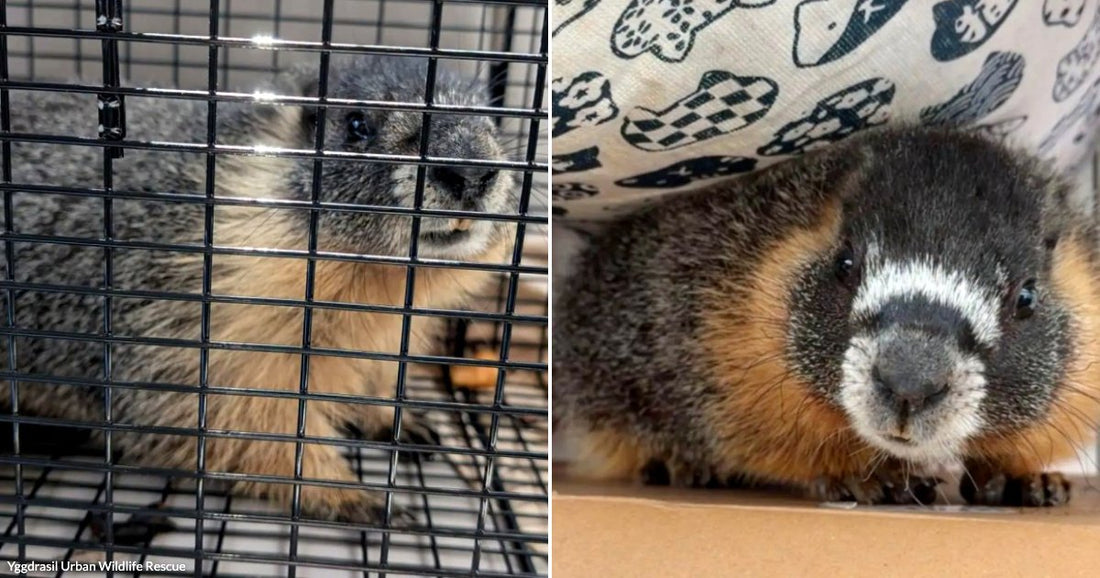
A second mysterious marmot has turned up in the San Francisco Bay Area, and this unlikely visitor from the mountains has captured a lot of curiosity. The story of how a yellow-bellied marmot ended up in an East Bay job site highlights the surprising ways wildlife can intersect with city life, and why travelers returning from places like Lake Tahoe or Burning Man are being asked to check for stowaway animals.
The latest marmot was discovered in Antioch, a city far from the high altitude habitats these animals usually call home. Marmots are burrowing rodents that typically live across the Sierra Nevada mountains, where rocky slopes and alpine meadows provide food, shelter, and the cooler climate they prefer. Seeing one in the dense Mission District of San Francisco earlier in the month was already unusual. Having a second marmot turn up in Antioch in the same month has been described by local rescuers as one of the stranger wildlife cases they have ever handled.

According to Yggdrasil Urban Wildlife Rescue, often referred to as YUWR, the Antioch marmot was first spotted loitering at a job site. The animal spent a few days on the run before volunteers were able to safely capture it. The group reported that, unbelievably, this was the second yellow-bellied marmot to turn up in the Bay Area in September. The first had been found and rescued in San Francisco’s Mission District on September 4, far from any typical marmot territory.
Wildlife experts believe the explanation for these urban marmots lies not in mysterious migration, but in human travel patterns. Marmots are known for an odd and risky behavior: they sometimes climb into vehicle undercarriages, sip radiator fluid, pass out, and then wake up hours later in completely different locations. YUWR notes that this phenomenon has been documented before, and it likely explains how a high mountain resident ends up bewildered in a busy city neighborhood or on a construction site.

Yggdrasil Urban Wildlife Rescue
Antioch Animal Services suspects that both marmots may have started their journeys in a high altitude region such as the Lake Tahoe area. The timing lines up with heavy holiday and event travel. Antioch officials pointed to the days following Labor Day weekend as a likely window when visitors returned from the mountains, possibly unknowingly transporting wildlife with them. YUWR also raised another possibility. Many Bay Area residents attend the Burning Man festival in Nevada, traveling through the Tahoe and Reno corridor and stopping in mountain areas along the way. Vehicles returning from those trips could have carried hidden passengers tucked inside engine compartments or other sheltered spaces.
I found this detail striking because it underscores how easily animals can become accidental travelers when human routines shift during holidays or major events. A scenic stop in the mountains might feel uneventful to a driver, yet for a curious marmot drawn to the warmth of a car’s mechanical parts, it can be the start of an unplanned road trip.

Yggdrasil Urban Wildlife Rescue
The organizations involved in these rescues are now trying to piece together where the marmots came from, in hopes of returning them safely. Identifying the exact origin of a wild animal is not simple. Still, rescuers believe that if they can narrow down the route taken by particular vehicles, there may be a chance to bring the marmots back close to their home range. Antioch Animal Services has asked anyone who recently traveled to the Delta Fair Boulevard area of Antioch, particularly from mountain regions, to reach out and share where they visited over the holiday period.
In the meantime, both marmots are recovering at the Yggdrasil Urban Wildlife Rescue center. They are being given time to rest from what must have been disorienting journeys that involved unfamiliar sounds, climates, and surroundings. YUWR has emphasized that they are doing their best to get the animals back to their home base. The situation offers a reminder that while marmots are sturdy and well adapted to rugged terrain, urban landscapes can pose serious challenges, from traffic and toxins to a lack of appropriate food and shelter.
The back-to-back discoveries have spurred a broader public request. The rescue center is encouraging anyone who traveled through the Lake Tahoe area around early September, especially those who attended the Burning Man festival, to carefully check their vehicles for stowaway wildlife. This includes looking under the car, around the engine area, and in any nooks where a small animal might seek warmth or shelter. Even if a traveler is already home, a quick inspection could catch a marmot or other animal before it wanders into a hazardous environment.
Stories like this highlight the intersection of human mobility and animal behavior in a way that is both light-hearted and serious. On one hand, the idea of a marmot hitchhiking hundreds of miles inside a vehicle sounds almost like a children’s story. On the other hand, these journeys can be dangerous for animals that suddenly find themselves in dense urban neighborhoods or industrial zones rather than alpine meadows. The work of groups like Yggdrasil Urban Wildlife Rescue and Antioch Animal Services shows how local agencies and volunteers step in to bridge that gap, responding quickly when wildlife ends up in the wrong place at the wrong time.
The second mysterious marmot in the Bay Area also raises a simple, practical lesson for travelers. When returning from high elevation or remote natural areas, a brief check of your car can make a meaningful difference. It can protect wildlife that may have climbed aboard without anyone noticing, and it may prevent stressful encounters on busy streets for both animals and people. In this case, a few extra minutes spent looking could be the first step in sending a yellow-bellied marmot safely back to the mountains where it belongs.
Read more at https://www.aol.com/articles/second-mysterious-marmot-found-bay-183731000.html