
Nearly 3,000 Lives Were Lost in a Single Morning That Changed America Forever
Matthew Russell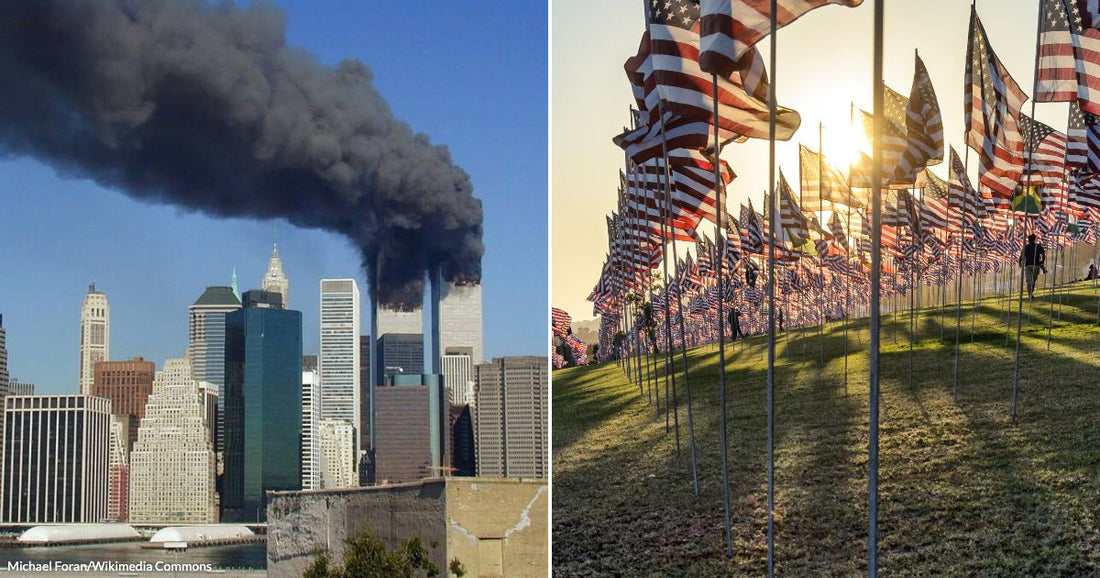
The terrorist attacks of September 11, 2001 are often summarized by a single number: 2,977. That is the official count of how many people died on 9/11, not including the 19 hijackers. Yet when looking more closely at what happened that day and in the years that followed, it becomes clear that the real human toll is larger, more complex, and in many ways impossible to fully measure. The physical destruction, the loss of life in the immediate attacks, and the long-term health effects from exposure to toxins at Ground Zero have created a tragedy that continues to unfold decades later.
The morning of September 11 began like any other weekday in the United States. Just after 8 a.m., however, unsettling details started to filter in from the skies. At 8:19 a.m., flight attendant Betty Ann Ong alerted ground personnel that something was terribly wrong aboard American Airlines Flight 11. In a recorded call she said, “I think we’re getting hijacked,” a statement that would soon mark the beginning of the deadliest terrorist attack in world history.

Hijackers were not only on Flight 11. They had also seized control of United Airlines Flight 175, American Airlines Flight 77, and United Airlines Flight 93. All 19 men were affiliated with al Qaeda and intended to strike high-profile symbols of American power. Their plan involved coordinated attacks against both civilian and military targets that would unfold in barely more than an hour.
At 8:46 a.m., American Airlines Flight 11 slammed into the North Tower of the World Trade Center in New York City, cutting through floors 93 to 99. Seventeen minutes later, United Airlines Flight 175 crashed into the South Tower, destroying floors 77 to 85. People on both planes were killed instantly, as were many of those on the impacted floors. Those trapped above the crash zones found themselves cut off from stairwells and elevators with no viable escape route.

Michael Foran/Wikimedia Commons, License: Public Domain
The attacks were not limited to New York. At 9:37 a.m., American Airlines Flight 77 struck the Pentagon, killing dozens of people inside the building along with everyone on board. Before many people could fully process what was happening, the disaster intensified. The South Tower of the World Trade Center collapsed less than thirty minutes after being struck, burying anyone still inside and many first responders who had rushed to save lives.
Meanwhile, passengers on United Airlines Flight 93 fought back. Believing their plane was likely headed for a power center in Washington, D.C., possibly the U.S. Capitol, they attempted to retake control from the hijackers. Their actions prevented the plane from reaching its apparent target. It crashed near Shanksville, Pennsylvania, at 10:03 a.m. The North Tower of the World Trade Center fell twenty-five minutes later. Only then did the immediate wave of destruction come to an end and the grim work of counting the dead begin.

Determining the total number of people who died on 9/11 was not straightforward. At the Pentagon, strict security protocols and controlled access meant officials could quickly identify who had been inside the building at the time of the crash. One hundred twenty-five people on the ground were killed, including 55 military personnel, along with 53 passengers and six crew members aboard Flight 77.
The passenger manifests for United Airlines Flight 93 and the two aircraft that hit the Twin Towers also gave clear information. Seven crew members and 33 passengers died on Flight 93, including several who helped lead the effort to confront the hijackers. On American Airlines Flight 11, 76 passengers and 11 crew members were killed. United Airlines Flight 175 carried 51 passengers and nine crew members, among them two year old Christine Lee Hanson, who became known as the youngest victim of September 11.
The largest number of deaths occurred in and around the World Trade Center. An estimated 2,600 people were killed there, from office workers and visitors to firefighters and police officers who ran toward danger during the crisis. Among them were 343 firefighters, a fire patrolman, and 71 law enforcement officers. Many of these first responders died in the collapses after working relentlessly to evacuate those trapped inside.
Taken together, these figures form the officially recognized 9/11 death toll of 2,977, which excludes the hijackers. Yet even this carefully compiled total cannot capture the full scale of the loss. One major reason is the nearly complete destruction of the Twin Towers. The collapse and subsequent fires reduced much of the physical evidence to fragments. According to reporting cited from NPR, investigators recovered more than 21,000 partial remains, sometimes only tiny pieces of bone.
Even with years of forensic work, many families never received a definitive identification. After a quarter of a century, the remains of roughly 1,100 known victims have still not been identified. The conditions at Ground Zero made DNA analysis especially challenging. As Mark Desire, the assistant director of forensic biology at the New York City medical examiner’s office, explained, everything from fire and water to sunlight, mold, bacteria, jet fuel, diesel fuel, and building chemicals damaged genetic material. These factors often left the fragments too degraded to successfully test.
Another complication involves people who may have been in the World Trade Center without official records, including undocumented workers. If someone lacked paperwork or formal employment records and their remains were not identified, they may never be counted among the victims. Without a complete accounting of who was inside the buildings at the time of impact, it is impossible to say with certainty how many people died in New York that day.
The tragedy of 9/11 did not end with the collapse of the towers and the immediate loss of life. Tens of thousands of people were exposed to a toxic mix of dust and debris at Ground Zero, including asbestos, silica, heavy metals, fiberglass, and other hazardous substances. Over time, many survivors, residents, and responders developed serious respiratory illnesses and cancers linked to this exposure.
According to the Centers for Disease Control and Prevention, more than 120,000 people have enrolled in the World Trade Center Health Program, which offers free medical care to those whose health was affected by the attacks and their aftermath. As of 2023, at least 6,781 of those enrollees had died of illnesses or cancers believed to be connected to conditions at the site. That means the number of people who have died because of 9/11 related health problems already exceeds the number killed in the attacks that morning.
These later deaths highlight that the real 9/11 death toll is not confined to a single date. Instead, it continues to grow quietly, affecting families who may have thought their loved ones survived the worst only to lose them years or even decades later. For many, the effects of that day have been measured not just in a single shocking event but in ongoing grief, medical appointments, and long-term uncertainty.
Behind every statistic is a person whose life was interrupted. The victims came from many states and from dozens of other countries. They included a toddler en route to Disneyland, an elderly couple traveling to a wedding, and more than 400 first responders who chose to run toward danger. One financial firm lost 658 employees within a few hours, wiping out colleagues, friends, and mentors in a single blow. The variety of stories, backgrounds, and dreams illustrates that the impact of 9/11 reached far beyond New York, Washington, and Pennsylvania.
I found it striking that even the most advanced forensic methods and diligent record keeping cannot fully contain the human scope of this event. Numbers like 2,977 or 6,781 help people understand the scale, yet they are inevitably incomplete. The ongoing work at Ground Zero, the health care provided by the World Trade Center Health Program, and the quiet memorials held each year all underline the same point. The true cost of September 11 cannot be captured by a single figure, and the process of reckoning with that loss is still unfolding.