
Todd Beamer Helped Lead Flight 93 Passengers Against Hijackers Knowing He Might Never Come Home
Matthew Russell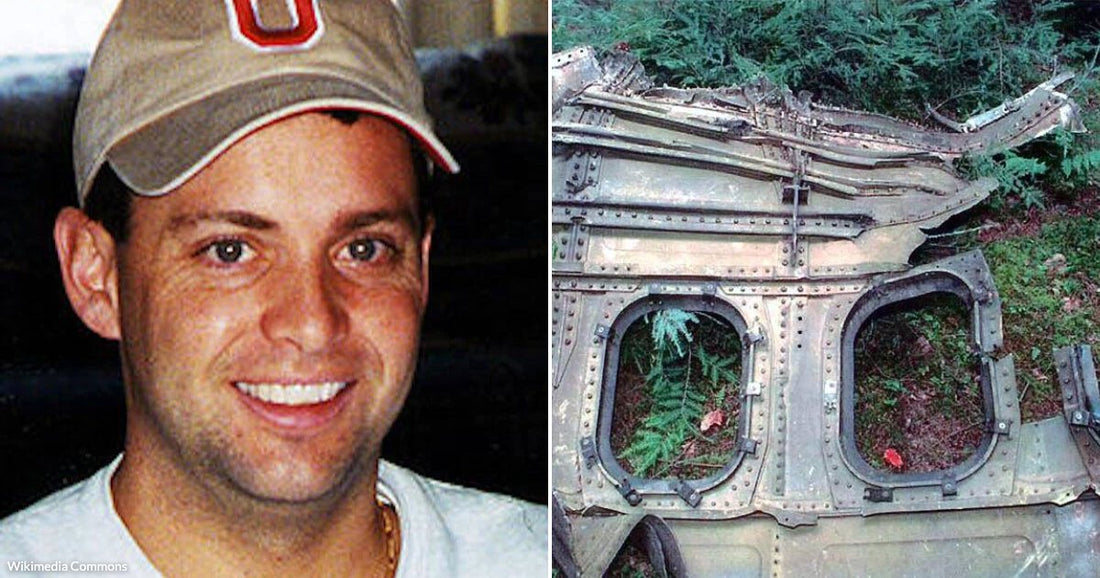
The story of Todd Beamer and the passengers of United Airlines Flight 93 is one of the most poignant chapters of September 11, 2001. Among the four planes hijacked that day, Flight 93 was the only one that did not reach its target, and many believe the actions of its passengers helped save the U.S. Capitol. At the center of this story stands Todd Beamer, a 32-year-old sales representative, husband, and father whose quiet courage and now famous phrase “Let’s roll” have become part of the shared memory of 9/11.
Before that tragic morning, Todd Beamer’s life looked in many ways like an American success story. Born on November 24, 1968, in Flint, Michigan, he grew up as the middle child of David and Peggy Beamer. His family moved several times as his father’s career advanced, from Michigan to Poughkeepsie, New York, then on to a suburb of Chicago. Those years were filled with school, church, and sports. At Wheaton Christian Grammar School and later Wheaton Academy, Beamer became known for his love of athletics, especially baseball, and for his steady, easygoing nature.

Wikimedia Commons
Baseball was more than a pastime for him, it was a dream. He hoped to play professionally and carried that goal with him when his family moved again, this time to Los Gatos, California. There he completed his studies at Los Gatos High School and enrolled at Fresno State University. He continued to pursue sports with determination, but a serious car accident altered his path. Although everyone involved survived, his injuries were severe enough that the prospect of a professional baseball career faded. That turning point pushed him toward a different kind of ambition.
Beamer ultimately transferred back to the Chicago area and attended Wheaton College. There he met fellow student Lisa Brosious, who would later become his wife. Lisa would recall in her book “Let’s Roll!” that their first date took place on November 2, 1991. The relationship deepened through shared values, faith, and plans for the future. They married in 1994, around the time Todd completed an MBA at DePaul University. The couple settled in New Jersey, where he joined Oracle Corporation, selling systems applications and database software. Lisa also worked at Oracle for a time, selling educational services, before stepping away to care for their growing family.

Wheaton Academy
By 2000, Todd and Lisa Beamer were parents to two sons and had moved from Princeton to Cranbury, New Jersey. His dedication at work earned him recognition and an incentive trip. In early September 2001, Oracle rewarded him with a five day trip to Italy that he shared with Lisa, who was pregnant with their third child. The couple returned to the United States on September 10. Less than 24 hours later, Todd would board United Airlines Flight 93, expecting nothing more than a routine business trip to San Francisco and a return flight home that evening.
Flight 93 was scheduled to leave Newark International Airport at 8 a.m. on September 11, but heavy congestion delayed its departure until 8:42 a.m. There were seven crew members, 33 other passengers, and four hijackers on board. Just four minutes after takeoff, American Airlines Flight 11 crashed into the North Tower of the World Trade Center. At 9:03 a.m., United Airlines Flight 175 hit the South Tower. Unaware of those impacts or of the wider plan unfolding, the passengers and crew of Flight 93 settled in for a cross-country flight.

Wikimedia Commons
At 9:28 a.m., their world changed. The hijackers, identified as Ahmed al Nami, Saeed al Ghamdi, Ahmad al Haznawi, and Ziad Jarrah, stormed the cockpit armed with knives and box cutters. Controllers at the Cleveland Air Route Traffic Control Center heard a struggle and a distress call. Soon after, a voice with a heavy accent came over the aircraft’s public address system, instructing passengers to sit down and warning that there was a bomb on board. Two minutes later the plane changed course, and those monitoring radar realized it was no longer heading toward San Francisco.
On the ground, the pattern of attacks was becoming horrifyingly clear. At 9:37 a.m., American Airlines Flight 77 struck the Pentagon. Investigators later concluded that Flight 93 was likely intended for a target in Washington, D.C., with the U.S. Capitol Building a leading candidate. In the cabin, passengers and flight attendants began using Airfones to call loved ones and airline personnel. Through those calls, they learned about the planes that had hit the World Trade Center. Those fragments of information shaped a grim understanding: they were part of a coordinated plot and had little chance of survival if they did nothing.
Todd Beamer tried to call for help. At 9:42 a.m., he attempted a call to AT&T that failed. A minute later, a call to his wife did not go through. He then reached a GTE Airfone operator, Lisa Jefferson, and spoke with her for about 13 minutes. During the conversation, he calmly described the hijacking and shared that he and several other passengers, including Mark Bingham, Jeremy Glick, and Tom Burnett, were organizing to retake the plane. Flight attendants such as Sandra Bradshaw and CeeCee Lyles were preparing their own actions using boiling water and any heavy objects they could gather.
Jefferson later recounted that Beamer’s faith steadied him in those final minutes. He asked her to pray with him, reciting the Lord’s Prayer and Psalm 23. Other passengers joined in. He also gave her a message for his family, asking that if he did not survive, someone would tell them how much he loved them. At the end of the call, he turned to the group preparing to move toward the front of the plane. Jefferson heard him ask, “Are you ready?” then say the words that would echo far beyond that moment: “Okay, let’s roll.”
The passenger revolt began at 9:57 a.m. According to the 9/11 Commission Report, the cockpit voice recorder captured sounds of struggle and shouts like “Stop him!” and “Let’s get them!” In response, the hijackers pitched and rolled the aircraft in violent maneuvers in an attempt to throw the attackers off balance. The recorder suggests that the passengers continued pressing forward. By 10:02 a.m., one hijacker urged, “Pull it down!” Investigators concluded that the hijackers remained at the controls, but believed that the passengers were only seconds away from overpowering them. At 10:03 a.m., Flight 93 crashed in a field near Shanksville in Stonycreek Township, Pennsylvania, killing everyone on board.
Flight 93 was approximately 20 minutes by air from Washington, D.C. when it went down. U.S. officials later revealed that Vice President Dick Cheney had authorized a shootdown if the plane entered the capital’s airspace. When news arrived that the aircraft had crashed short of Washington, Cheney reportedly said, “I think an act of heroism just took place on that plane.” In the broader context of 9/11, when 19 hijackers killed 2,977 people across four attacks, the actions of the passengers and crew of Flight 93 offered a rare glimmer of agency and resistance.
In the months and years that followed, Todd Beamer’s name became intertwined with that sense of courage. His phrase “Let’s roll” became a national rallying cry. Institutions and communities found ways to honor him. A post office in New Jersey was dedicated in his memory. A high school in Washington State was named after him. Wheaton College, his alma mater, christened a building with his name. Lisa Beamer’s book about their life together and his final hours took its title from his last recorded words.
At home, that brief phrase remained a thread connecting his children to the father they lost. Lisa recalled to the Pittsburgh Post-Gazette that her sons had adopted “Let’s roll” as part of their everyday language. When the family prepared to leave the house, they would repeat those words. Her youngest would say, “C’mon, Mom, let’s roll,” echoing a father he would never get to know in person but whose legacy shaped his family and inspired a nation.