
235 Years of US Coast Guard History and Untold Stories
Guest Contributor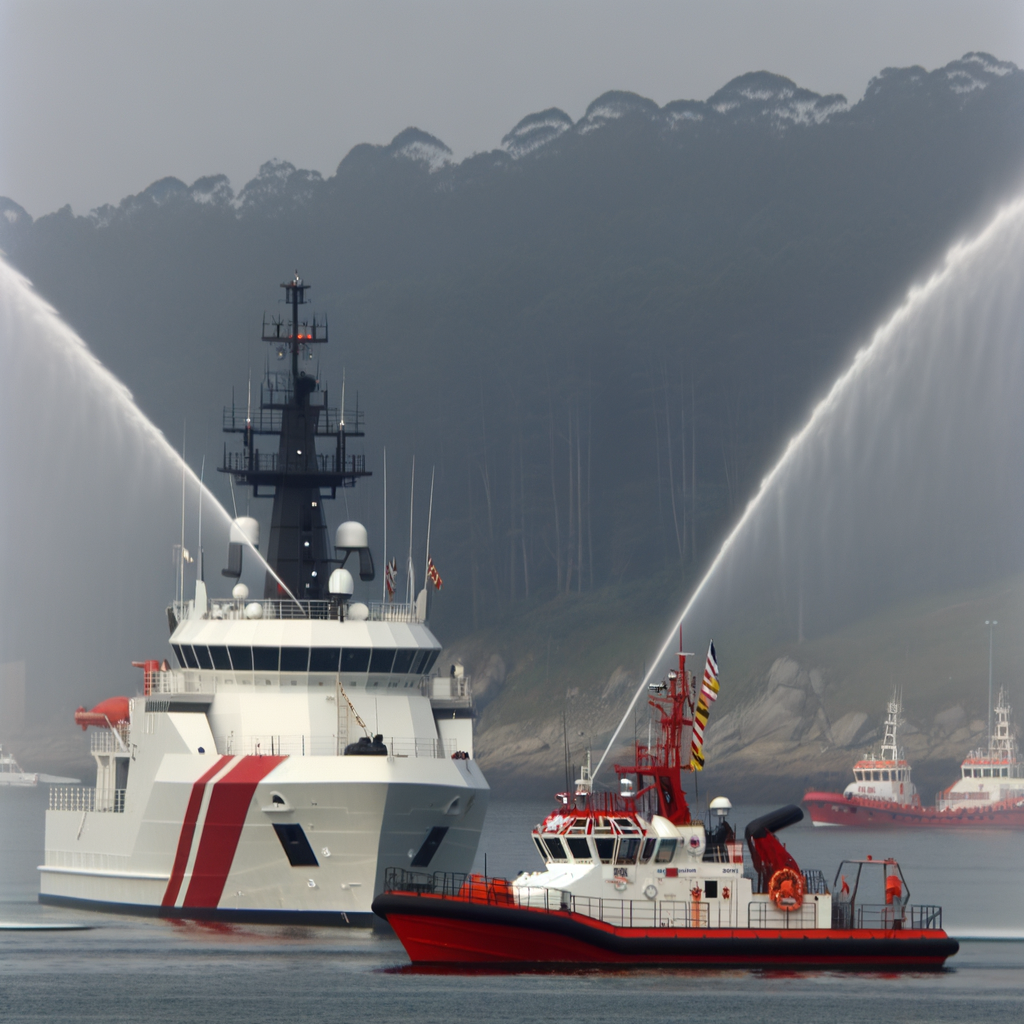
Each year on August 4, the United States Coast Guard celebrates its birthday—marking over two centuries of service to the nation. As one of the five military branches, the Coast Guard often flies under the radar compared to its larger counterparts. Yet its legacy is filled with remarkable achievements, from maritime defense to lifesaving missions. With the Coast Guard’s 235th birthday approaching in 2025, it’s the perfect time to explore some lesser-known but fascinating aspects of its history. For those interested in U.S. military history, maritime security, or simply learning more about the nation’s coastal defenders, these stories offer a deeper appreciation of the Coast Guard’s enduring role.

One of the most surprising facts is that the Coast Guard is actually older than the U.S. Navy. Its origins trace back to 1790 when President George Washington established the Revenue Cutter Service to enforce customs laws and tariffs. At that time, it was the only maritime defense force in the United States. Although the Navy celebrates its roots in the Continental Navy formed in 1775, that force was disbanded after the Revolutionary War and not reestablished until 1798. Over time, the Coast Guard evolved through several mergers, including with the U.S. Life-Saving Service in 1915 and the Lighthouse Service in 1939. By 1946, it also absorbed the Bureau of Marine Inspection and Navigation, further expanding its capabilities.

Despite the lighthearted nickname “Puddle Pirates,” the Coast Guard is more than capable of blue-water operations. Its Legend-class National Security Cutters are advanced vessels designed for open-ocean missions. These cutters are equipped with high-end military technology, including Phalanx close-in weapons systems, electronic warfare capabilities, and 57-millimeter guns similar to those found on Littoral Combat Ships. Currently, nine of the planned eleven cutters have been completed and are actively deployed in regions such as the Bering Sea, the Pacific Ocean, and the Arctic Ocean. This operational scope underscores the Coast Guard’s role not just as a coastal force, but as a global maritime presence.
Another compelling aspect of the Coast Guard’s mission is its specialized tactical units. While most people are familiar with elite military teams like the Navy SEALs or Army Green Berets, fewer know about the Coast Guard’s Maritime Safety and Security Teams (MSST) and Maritime Security Response Teams (MSRT). These units are trained for high-stakes operations, including counterterrorism, active shooter scenarios, and the boarding of hostile vessels. MSRT teams, in particular, are equipped to handle chemical, biological, radiological, and nuclear threats. They also specialize in close-quarters combat and hostage rescue at sea. These teams highlight the Coast Guard’s multifaceted role in national security and maritime law enforcement.
One of the most heroic moments in Coast Guard history is embodied by Signalman First Class Douglas Munro. During the 1942 campaign at Guadalcanal in World War II, Munro volunteered to support a Navy landing operation involving U.S. Marines. When one group of Marines came under heavy enemy fire, he led an evacuation effort. Munro positioned his boat between the Marines and incoming Japanese fire, shielding them as they boarded evacuation vessels. He even helped free a grounded boat before being fatally wounded by machine gun fire. For his extraordinary bravery, Munro was posthumously awarded the Medal of Honor—the only Coast Guardsman to receive this distinction. His medal is now displayed at the National Museum of the Marine Corps, serving as a lasting tribute to his sacrifice.
One of the more unexpected pieces of Coast Guard history involves a ship with origins in Nazi Germany. The USCGC Eagle, now the flagship training vessel for Coast Guard cadets, was originally launched in 1936 as the SSS Horst Wessel. It was christened by Adolf Hitler and served as a training ship for the German Kriegsmarine. After World War II, the ship was captured by the British and eventually transferred to the United States. A joint crew of American and German sailors sailed it across the Atlantic, and it has since become an integral part of officer training. Today, the Eagle teaches practical seamanship and leadership to future Coast Guard officers, transforming a once-symbolic vessel of tyranny into a beacon of service and education.
I found the story of the USCGC Eagle particularly striking. The transformation of a ship once associated with a dark chapter in history into a tool for developing future leaders speaks volumes about resilience and purpose. It’s a powerful reminder of how history can be repurposed for good.
The Coast Guard’s 235 years of service reflect a unique blend of military readiness, humanitarian aid, and law enforcement. Whether patrolling the high seas, conducting daring rescues, or training aboard a vessel with a complex past, Coast Guard members continue to uphold a proud and often underappreciated tradition. Their legacy is not only embedded in U.S. maritime history but also in every life they’ve saved and every mission they’ve completed. As the branch marks another milestone, it’s worth taking a moment to recognize the depth and diversity of its contributions.