
Microplastics Found in Human Blood and Organs But No Federal Law Limits Their Spread
Matthew Russell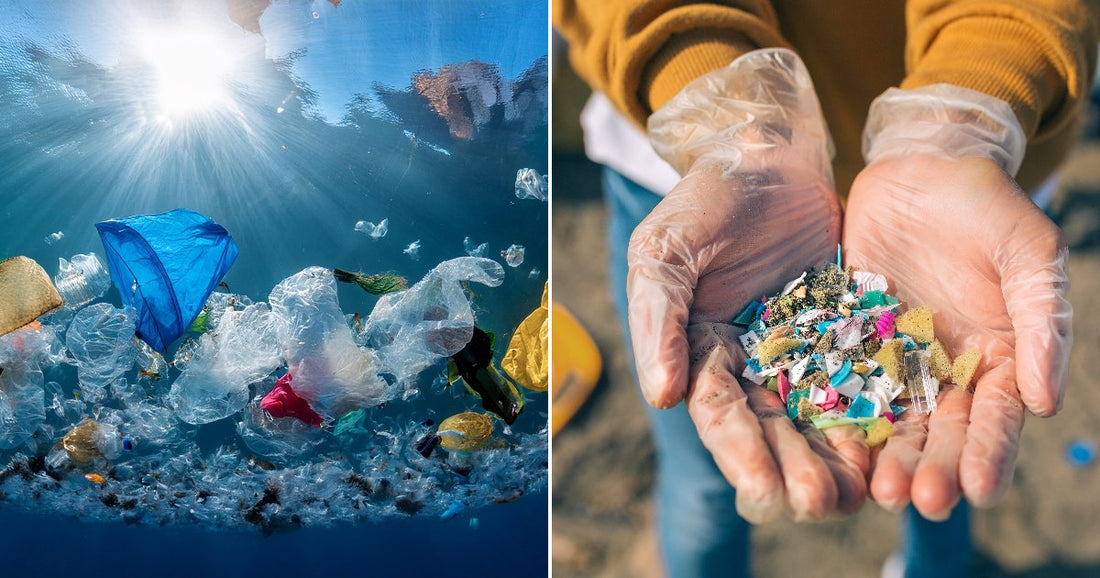
Microplastics have been found in human blood, breast milk, lung tissue, and placentas. They turn up in the deepest ocean trenches and in freshwater supplies across the country. Despite the breadth of that contamination, the United States has no binding federal standard limiting microplastic discharge into waterways — and no requirement that federal agencies systematically track how much is there.

What the Science Has Established
Research has moved well past the question of whether microplastics are present. Scientists now document their biological effects. According to the MIT Science Policy Review, microplastics carry chemical additives and adsorb environmental contaminants, introducing toxic compounds into the bodies of fish, wildlife, and humans who consume them. Cardiovascular stress, endocrine disruption, and inflammatory responses have all been linked to microplastic exposure. The particles enter aquatic food webs at the base and move upward.
Industrial discharge and stormwater runoff are among the leading delivery mechanisms into U.S. waterways, alongside synthetic textile washing and the breakdown of larger plastic debris. Once in a water system, the particles are essentially impossible to fully remove.

The Regulatory Gap at the Federal Level
The EPA has authority to monitor unregulated drinking water contaminants through its Unregulated Contaminant Monitoring Rule, known as the UCMR. The program is one of the clearest pathways toward eventual federal standards. But as reported by the Jenner & Block Environmental Law & Litigation Blog, the EPA declined to include microplastics in the proposed fifth cycle of the rule, citing methodological standardization as an obstacle. That decision left monitoring — and any path to regulation — on hold.
The agency has taken some early steps. The Yale Journal on Regulation notes that both EPA and HHS have signaled interest in developing a more coherent federal approach, though concrete regulatory action has not followed. Meanwhile, Chemical Processing documents how states and international bodies have begun filling the vacuum with their own microplastics rules — a patchwork that reflects the absence of uniform national standards rather than the presence of them.

Legislation and Congressional Pressure
Congress has begun to push back on the regulatory stall. Verdant Law reports that legislation has been introduced that would specifically require the EPA to include microplastics in UCMR 6 monitoring, forcing the agency's hand on data collection. Separately, three members of Congress sent a formal letter to the Government Accountability Office requesting a review of the EPA's microplastics activity — a move that, according to the office of Congresswoman Janelle Bynum, reflects concern that the agency has not acted with sufficient urgency given what the science shows.

Why Monitoring Is the Essential First Step
Without consistent, mandatory data collection across U.S. waterways, binding discharge limits are difficult to establish and impossible to enforce. NOAA monitors ocean health across a range of indicators, but microplastic concentrations are not tracked on a systematic, publicly reported basis. The result is a contamination problem that grows without a reliable national record of its scope.
Federal action on microplastics depends on two things happening together: the EPA adding microplastics to its monitoring framework and establishing discharge standards, and NOAA building a public record of marine concentrations over time. Neither is in place today.
Sign the petition to urge the EPA and NOAA to close that gap — with mandatory monitoring, binding standards, and transparent public reporting on microplastic pollution in U.S. waters.
Click below to make a difference.