
Lost Galápagos Giants Reclaim Their Island and Revive a Fragile Sea
Matthew Russell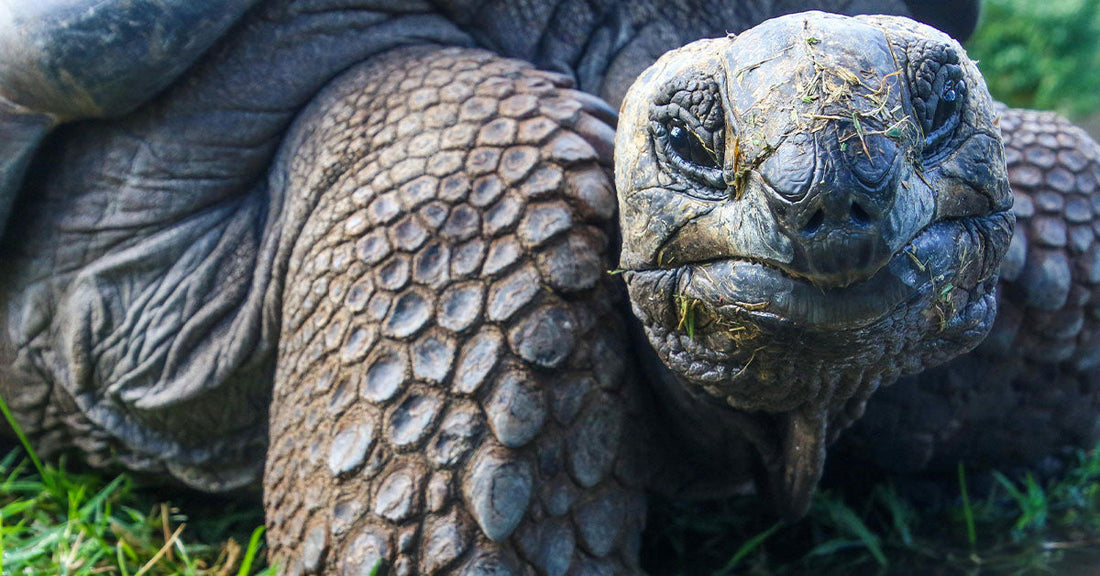
On a warm February morning, 158 young giant tortoises began a slow march across Floreana Island in the Galápagos.
Their species had vanished here in the mid-1800s, driven to extinction by overharvesting and invasive animals. Now, conservationists are trying to reverse that loss. The release marks the first time in nearly two centuries that tortoises have roamed this island, according to Oceanographic Magazine.
The juveniles, aged between eight and 13, were bred through a selective program designed to revive the genetic lineage of the extinct Floreana tortoise. As The Guardian reports, scientists identified tortoises with partial Floreana ancestry on Wolf Volcano and launched a breeding initiative to rebuild the population.

Giant tortoises have returned to Floreana Island after nearly two centuries.
Breeding Back an Extinct Lineage
The tortoises released this year are hybrids, carrying between 40% and 80% of the original species’ genetics, according to coverage from KSL News, citing park authorities.
The long-term goal is ambitious. Conservation managers intend to release up to 700 tortoises over time to rebuild a self-sustaining population.
NASA scientists have also contributed tools to the effort. Satellite data has been used to assess vegetation patterns and habitat suitability, helping determine where tortoises can thrive, NASA Science explains.
This is restoration guided by genetics and data, not guesswork.

The original Floreana tortoise species was driven to extinction in the 1800s.
Why Tortoises Matter Beyond Land
Giant tortoises are considered ecosystem engineers. They disperse seeds across wide distances. They trample dense brush. They open pathways that allow native plants to regenerate.
Similar rewilding efforts elsewhere in the archipelago have shown measurable results. On Española Island, tortoise reintroduction helped restore vegetation structure and support other native species, as detailed by the Charles Darwin Foundation.
Floreana’s project also connects land recovery to ocean health. Oceanographic Magazine notes that restoring tortoises supports the return of native seabirds. Those birds transport marine nutrients onto land and influence surrounding coastal ecosystems.
Healthy islands feed healthy seas.

Scientists located tortoises with partial Floreana ancestry on Wolf Volcano.
A Model for Island Restoration
The tortoises released this year were raised at a breeding center on Santa Cruz Island before being transported to Floreana. Their progress will be monitored closely.
The work reflects decades of collaboration between Ecuador’s government, park managers, and international conservation groups. As The Guardian reports, officials see this as one of the most significant restoration milestones in the archipelago’s recent history.
For now, the tortoises move slowly across volcanic soil once emptied of their kind.
Each step reshapes the island.
And with it, perhaps, the waters beyond.