🚨Urgent: Rush Aid to People & Pets in Nepal's Devastating Floods! Help Now!
A Photographer Captured the Terrifying View From Inside a Hammerhead’s Mouth
Matthew Russell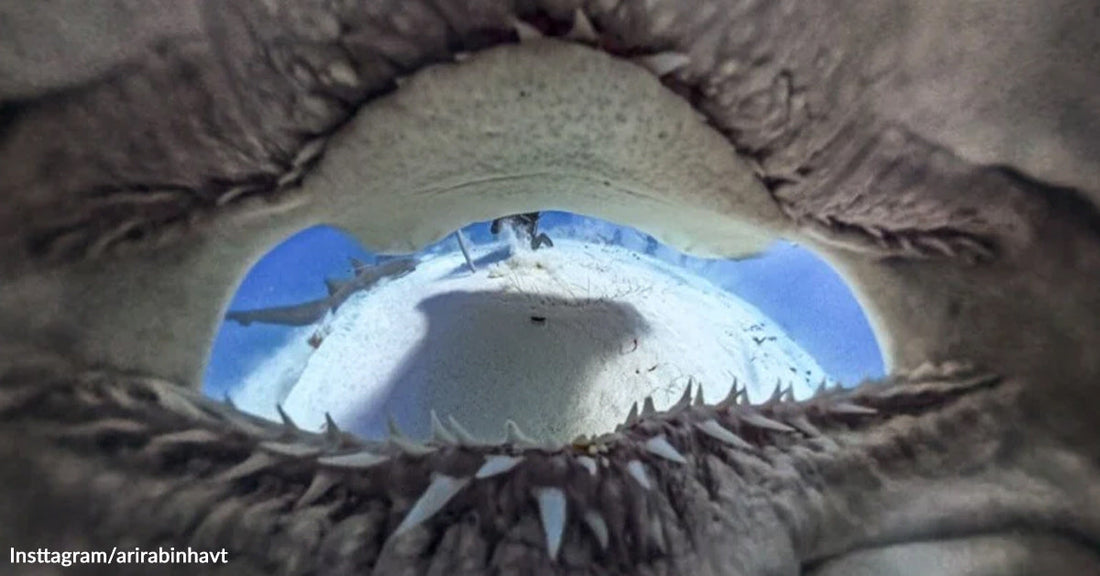
Ari Rabin-Havt wanted a shark image that did not look at a hammerhead, but looked out from one. Off Bimini, he set an Insta360 X5 on a spike in the sand, placed it along a known pass route, and let the shark decide. The frame caught rows of teeth, open blue water, and the shadow of the animal’s hammer-shaped head on the seafloor, PetaPixel reports.

The camera sat on the seafloor in the shark’s path.
Bimini Gives Divers a Rare Stage
The setting mattered. Bimini’s winter hammerhead dives unfold in clear, shallow water, often 6 to 12 meters deep. Great hammerheads usually live alone, so several animals on one dive can feel unusual, Oceanographic Magazine reports. Shark researchers have watched the same local site for years. The Bimini Shark Lab says the provisioning area sits in about 8 meters of water, less than a kilometer from South Bimini, Bimini Shark Lab reports.

Instagram/arirabinhavt
A hammerhead shark turned a camera into an impossible point of view.
The Mouth Is Not Just a Threat
That is part of what makes Rabin-Havt’s image work. The shark was not framed as a monster lunging at a person. It was shown as an animal that tests the world with its senses. Hammerheads carry electric-field detectors across that broad head. Research summarized by SICB found the cephalofoil can sweep a wider area for hidden prey than a conventional shark head.

The shark’s cephalofoil cast a shadow across the sand.
Tourism Brings Access and Pressure
The same access that made the image possible also raises questions. A Frontiers in Marine Science study at Bimini identified 28 individual great hammerheads at a provisioned dive site and found that some sharks could meet much of their daily energy demand from bait offered during dives. The study called for sustainable protocols that protect ecotourism value without altering the sharks’ ecological role.
A Rare View of a Vulnerable Predator
The great hammerhead is not only iconic. It is at risk. A 2025 review in Reviews in Fish Biology and Fisheries notes that the species is listed as Critically Endangered by the IUCN Red List and that gaps remain in knowledge of its habitat use, especially in early life stages. Bimini Shark Lab has also reported concern after several familiar sharks stopped returning after seasonal movements into U.S. waters and beyond.
That gives the photo a sharper edge. It is startling, but not only because of the teeth. It asks viewers to look from inside the mouth of an animal most people fear, then remember how little of its life remains visible to us.