Foreign Fisheries That Entangle Whales Could Soon Regain Access to U.S. Markets
Matthew Russell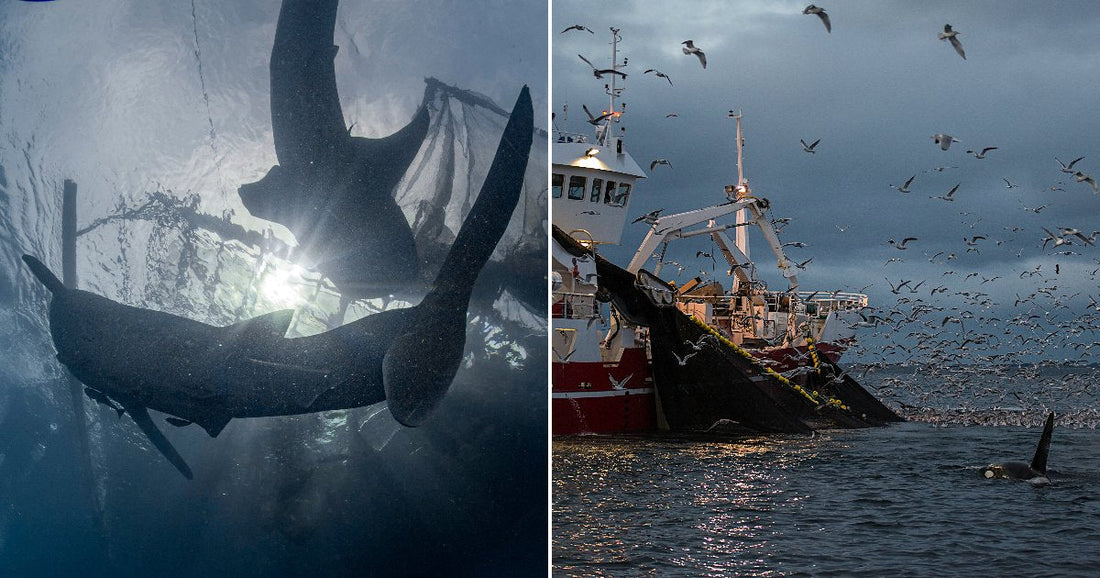
When whales and dolphins wash ashore entangled in fishing gear, the cause is often traced back to bycatch — the accidental capture of marine mammals in commercial fishing nets.
The United States has some of the strongest protections against this in the world. Foreign fisheries selling seafood to American consumers, however, have long operated under far weaker standards. A federal rule designed to fix that is now under threat.

What the Law Actually Requires
The Marine Mammal Protection Act has, since 1972, prohibited the harassment, hunting, and killing of marine mammals in U.S. waters. A lesser-known provision extends that logic to imports: any country exporting fish or fish products to the United States is required to demonstrate that its fisheries meet standards comparable to those American fishermen follow. As Inside Climate News has reported, enforcement of this provision has been a long time coming. NOAA finalized implementing regulations and began issuing comparability findings — essentially pass/fail evaluations for foreign fisheries — only in recent years.
For fisheries that fail, the consequence is straightforward: their seafood cannot enter the U.S. market. NRDC called the rule a critical tool for protecting species like the North Atlantic right whale, the vaquita porpoise, and the Māui dolphin — all critically endangered largely because of entanglement in fishing gear.

Early Results, Already Under Pressure
The comparability finding process is barely off the ground. Sustainable Fisheries UW examined the program's first year and found that while some countries moved to improve their practices in anticipation of the rule, others received comparability findings that conservation groups argue were granted too easily. SeafoodSource reported that multiple organizations formally challenged findings for several foreign fisheries, arguing that NOAA approved them despite insufficient evidence that marine mammal bycatch was being adequately controlled.
The legal pressure has been building too. Environmental groups went to court earlier this year, pushing the government to enforce the law more rigorously rather than find workarounds for trading partners, according to Inside Climate News.

NOAA's Proposed Rollback
In late July 2026, NOAA opened a public comment process on potentially revising the very regulations that make this import standard work. The agency published both an Advance Notice of Proposed Rulemaking and an entry in the Federal Register signaling it may weaken how comparability findings are evaluated and applied. The current implementing framework, already years in the making, could be substantially altered before it has had a real chance to protect a single population of dolphins or whales.
Weakening these standards would mean that seafood caught using methods that injure or kill whales and dolphins could return to American grocery stores and restaurant menus — with no label, no warning, and no accountability.

What's at Stake for Marine Life
Bycatch is one of the leading causes of marine mammal decline worldwide. Some populations cannot absorb even a handful of additional deaths per year without moving closer to extinction. The import rule was designed with exactly that reality in mind — to prevent American consumer demand from indirectly funding the depletion of ocean wildlife abroad.
Public comments to NOAA carry real weight in rulemaking processes. Agencies are required to read and respond to them. A strong showing of opposition to a rollback creates a formal record that decision-makers cannot ignore.
Click below to make a difference.