
🚨Urgent: Rush Aid to People & Pets in Nepal's Devastating Floods! Help Now!
'Jimothy,' Seattle’s Strangest Raccoon Becomes a Viral Neighborhood Celebrity
Matthew Russell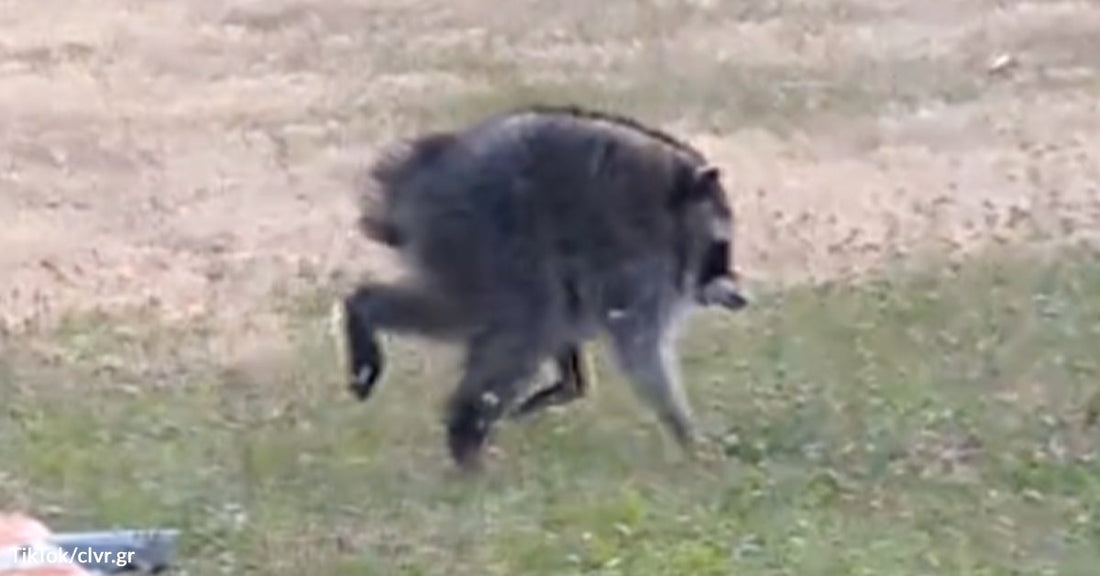
A small raccoon with a compressed body, closely spaced legs, and a striking silhouette has become Seattle’s newest neighborhood celebrity.
Residents call him Jimothy.
The raccoon has raced across lawns, climbed trees, squeezed through balcony railings, and stopped at backyard water bowls. Each new appearance has added to the mystery surrounding an animal that looks unlike almost any raccoon his human neighbors have seen.

TikTok/clvr.grl
Jimothy the Raccoon Captures Seattle’s Attention
Jimothy first drew widespread notice after footage showed him running through a yard in Seattle’s Ballard neighborhood. The animal’s front and rear legs sit unusually close together, which makes his torso appear short and rounded, KIRO 7 News reports.
Residents later shared images of him on a deck, in a tree, and beside a dog bowl. His elusive appearances inspired comparisons to Bigfoot and other legendary creatures. Online admirers responded with concern rather than fear and called for the raccoon’s protection.
His fame spread far beyond Ballard. Clips collected hundreds of thousands of reactions, while Seattle social media groups began treating Jimothy as an unofficial neighborhood mascot, according to the New York Post.
A Rare Spinal Condition May Explain His Shape
Jimothy has not received an official medical diagnosis. A veterinarian who reviewed the footage told KIRO 7 that his appearance was consistent with congenital spine shortening, a condition that can occur in mammals.
Other observers have described the possible disorder as short spine syndrome. The rare abnormality reduces the length of the backbone and can place the shoulders and hips much closer together. Despite that unusual anatomy, Jimothy moves quickly and climbs with confidence, Outdoors.com reports.

TikTok/clvr.grl
Seattle’s Urban Raccoons Know How to Adapt
Jimothy’s survival skills fit a species known for flexibility. Raccoons thrive across Washington and often find food, shelter, and travel routes in developed neighborhoods. Their sharp claws and rotating hind feet also make them exceptional climbers, according to the Washington Department of Fish and Wildlife.
Seattle has studied that relationship through the Woodland Park Zoo and Seattle University’s Urban Carnivore Project. Cameras and public sightings help researchers track how raccoons and other animals navigate areas filled with homes, roads, parks, and people.
Wildlife Officials Say Jimothy Should Remain Free
State wildlife officials said Jimothy appears able to move and feed himself. They advised residents to leave him alone.
That means no attempts to catch, touch, or feed him. The Seattle Animal Shelter directs residents to licensed rehabilitators when a wild animal is clearly sick or injured.
For now, Jimothy continues to cross yards on his own terms. Seattle can admire him without turning a capable wild animal into a pet or roadside attraction.