
Mississippi Kites Turn Southern Skies into Dazzling Air Shows
Matthew Russell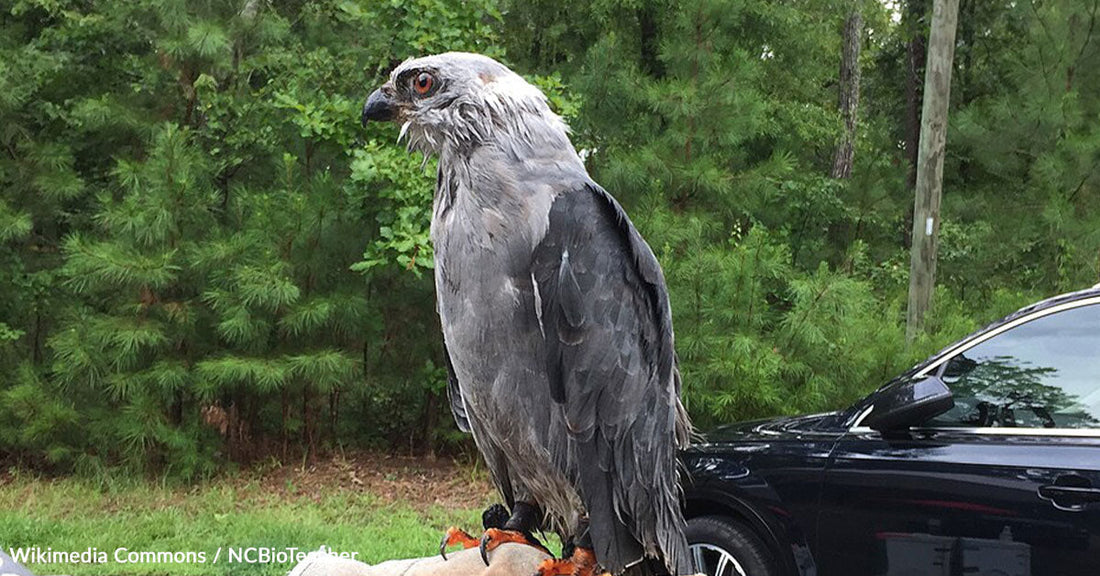
On a hot summer day in Alabama’s Black Belt, the air above open fields can feel like an aerial performance. Sleek gray shapes slice the sky, pivoting sharply, diving without hesitation. These are Mississippi Kites — small raptors with the aerial prowess of a fighter jet. “It’s like going to an air show with the Blue Angels,” Joe Watts of Alabama Audubon said, describing how dozens can fill the sky at once.
They’re just over a foot long and weigh about half a pound, yet command attention. Adults have pale gray bodies, darker wings, and vivid red eyes. Their hooked beaks and sharp talons are built for catching prey midair, most often insects like dragonflies, cicadas, and grasshoppers. Once caught, the meal rarely waits — these birds eat on the wing, steering with tail feathers through tight turns, AL.com reports.

Photo: Wikimedia Commons / H2O-C, License: Public Domain

Mississippi Kites are small raptors known for exceptional aerial agility.
Masters of Flight and Stealth
The toy kite took its name from the bird’s smooth glides and buoyant swoops, explained KXAN. Mississippi Kites are lightweight, long-winged raptors that can vanish into a blue sky, reappearing in a flash of movement. In summer, they often circle above hay fields, diving for insects stirred by farm equipment. Some are so agile they’ve been known to pass through tractor cabs unharmed.
Breeding and Nesting
Their core breeding range stretches from the southern Great Plains to the Carolinas and Gulf Coast. Partners in Flight estimates a global breeding population of about 260,000 individuals, with the highest densities in the Mississippi River valley and southeastern Coastal Plain, Birdful notes.
In Alabama, they nest in forests and occasionally suburban areas. Nests, often in tall trees, sometimes incorporate wasp nests to deter predators. Young kites are brown and white until their first molt. By late summer, they gather in large groups to feed heavily before migrating over 4,000 miles to South America.

Photo: Wikimedia Commons / NCBioTeacher, License: Public Domain

Adults have pale gray bodies, dark wingtips, and red eyes.
Population and Migration
While never abundant, numbers have risen in many southeastern states since the 1970s due to legal protections, pesticide bans, and adaptation to human-altered landscapes, according to Birdful. Migration can produce spectacular scenes: up to 900,000 pass through Veracruz, Mexico, in a single season.

Photo: Wikimedia Commons / National Gallery of Art, License: Public Domain

They weigh about half a pound but can outmaneuver larger birds.
Role in the Ecosystem
Almost entirely insectivorous, they also take small vertebrates and, like their swallow-tailed kite cousins, sometimes harvest wasp nests for larvae, Clarion Ledger reports. This makes them effective for natural pest control in agricultural areas.
Listed as Least Concern by the IUCN, the Mississippi Kite’s future is stable in much of its range. Local declines from habitat loss, pesticides, and nest disturbance remain threats. Preserving tall trees near open hunting areas and protecting nest sites are key to ensuring these raptors remain a fixture of southern skies.