Millions of Animals Travel Under a Law Written Before the Automobile
Matthew Russell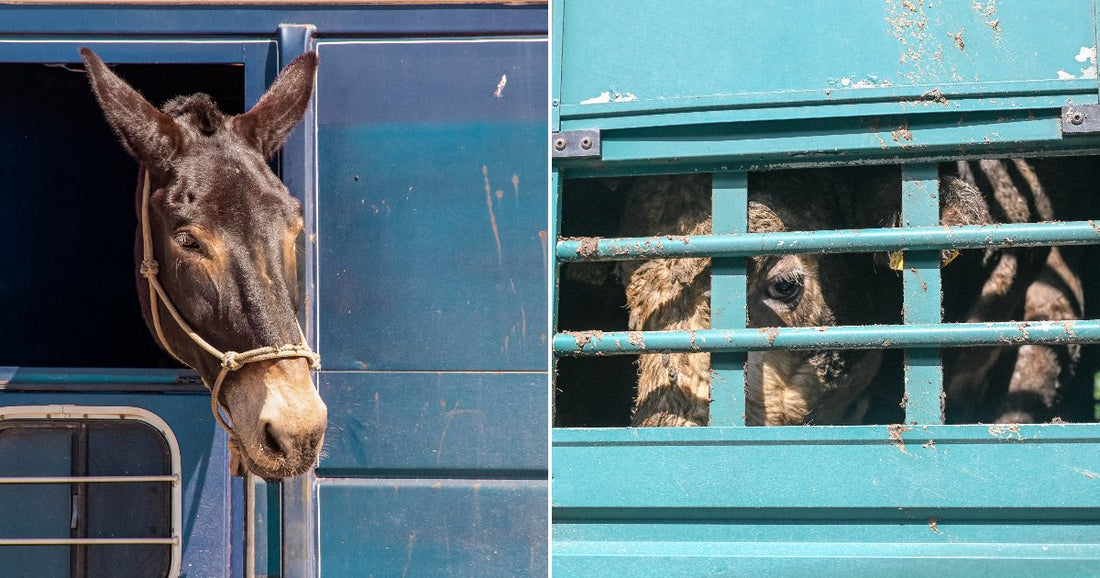
The Twenty-Eight Hour Law has been on the books since 1873. It requires that livestock transported across state lines be unloaded, fed, watered, and rested for at least five consecutive hours after every 28 hours of continuous travel. The law was written when animals moved by rail. Today, tens of millions of cattle, pigs, sheep, and horses travel by truck — and the statute governing their welfare has barely changed.
A June 2026 report from the U.S. Government Accountability Office laid out, in detail, how thoroughly the law has failed to keep pace with modern livestock transport. The findings are striking not because they are new, but because federal investigators put them in writing with unmistakable clarity.

Enforcement Is Essentially a Dead Letter
Three federal agencies share jurisdiction over the Twenty-Eight Hour Law — the USDA, the Department of Transportation, and the Department of Justice — but their responsibilities have never been formally defined. The result, as the GAO found, is that enforcement falls through the gaps. No agency has a clear mandate to inspect vehicles, investigate violations, or pursue penalties. The Animal Welfare Institute has documented how this ambiguity produces a system where violations go undetected and unaddressed.
The penalty structure compounds the problem. Fines under the law cap out at $500 per violation — a figure set in 1994 and never adjusted. For large commercial shipping operations, that number isn't a deterrent; it's a rounding error. As Agri-Pulse reported, the GAO specifically flagged the inadequacy of current penalties as a barrier to meaningful compliance.

The Law Doesn't Address Basic Welfare Conditions
Beyond the enforcement vacuum, the Twenty-Eight Hour Law says nothing about the physical condition of the animals being loaded, the sanitation of the vehicles transporting them, or what constitutes adequate food and water during rest stops. Animals that are injured, ill, or unfit for transport have no explicit legal protection from being loaded onto a truck. Filthy, poorly maintained vehicles are not prohibited. The Library of Congress Law Library noted in a comparative report that other countries have moved well beyond these baseline standards.
The American Veterinary Medical Association covered the GAO's call for Congress to address these gaps directly — not through regulatory guidance, but through legislation that updates the law itself.

Farm Animals Remain Outside Most Modern Protections
Farm animals are largely excluded from the Animal Welfare Act, which means the Twenty-Eight Hour Law is, in practice, one of the few federal statutes that applies to them at all. As Tucson.com reported, recent federal animal welfare initiatives have focused on companion animals and wildlife, leaving livestock in a regulatory gap that the Twenty-Eight Hour Law — even updated — may only partially close. The Animal Welfare Institute has long advocated for transport standards that address fitness for travel, vehicle conditions, and enforceable rest requirements, and the GAO report validated those recommendations point by point.

Congress Has the Recommendations. Now Comes the Hard Part.
The GAO identified a clear path forward: clarify which agencies are responsible for enforcement, raise penalties to a level that creates real accountability, and add explicit welfare standards covering animal fitness and vehicle sanitation. Those recommendations now sit with Congress. The Senate Committee on Agriculture, Nutrition, and Forestry is the body positioned to act on them.
Millions of animals are transported across state lines every year. The law meant to protect them dates to the era of the steam locomotive. That gap is a policy choice — and policy choices can be changed.
Click below to make a difference.