
MrBeast’s Global Animal Rescue Sparks Uproar Over Ethics Behind the Camera
Matthew Russell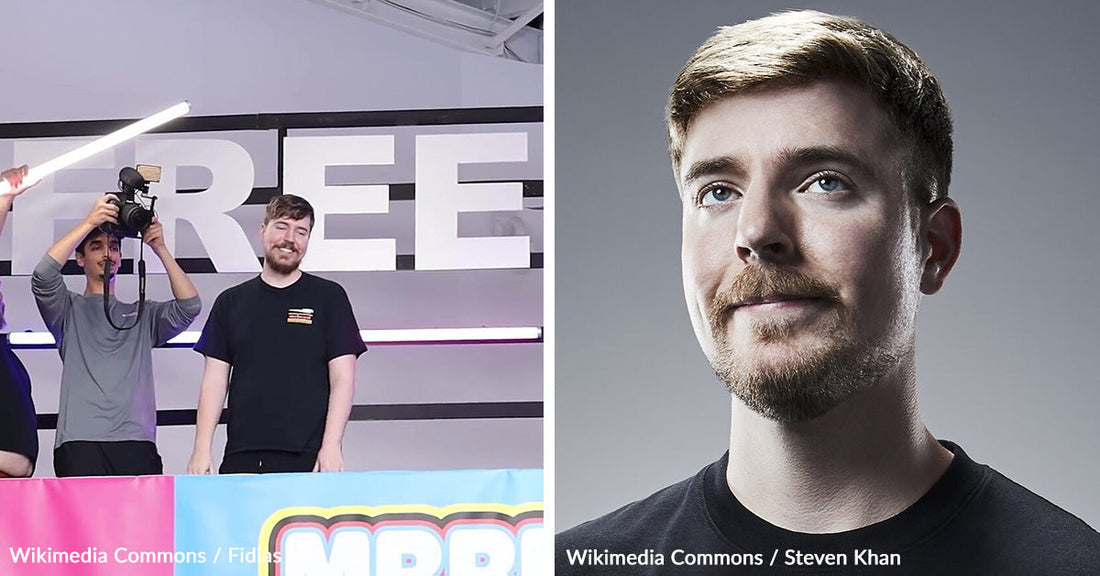
When YouTuber Jimmy Donaldson, better known as MrBeast, released his latest video, he called it his “most ambitious project yet.” Traveling across continents, he and his team rescued more than 1,000 animals — from lions and rhinos to dogs and turtles — in a whirlwind of veterinary missions, relocations, and sanctuary partnerships, Hindustan Times reports.
The 17-minute video, titled *“I Saved 1,000 Animals From Dying,”* begins in Africa, where MrBeast assists veterinarians performing a root canal on a lion suffering from a severe infection.
“If we don’t fix this, he could literally die,” he says, as the lion lies sedated on an operating table.
From there, the team tranquilizes and relocates overcrowded rhinos and uses air rifles to vaccinate giraffes from a helicopter — “sniping giraffes to save their lives,” he jokes in the video.

Photo: Wikimedia Commons / 小Lin说, License: CC BY 3.0

MrBeast’s new video claims to have saved more than 1,000 animals worldwide.
From War Zones to Shelters
The rescue operation stretches far beyond Africa. In Ukraine, MrBeast’s team helps evacuate zoo animals trapped in war-damaged enclosures, flying them to safety in South Africa. In the U.S., they assist more than a hundred shelter dogs in finding homes, buy miniature horses from slaughter auctions, and rehabilitate injured wildlife such as birds, deer, and turtles.
He also stops by Alveus Sanctuary in Texas, run by streamer Maya Higa, to rebuild after flooding and donates $50,000 toward its animal care programs.
“We saved 1,000 animals, but our work isn’t done yet,” MrBeast says in closing — a line that has quickly become a rallying cry among fans who flooded social media with praise for his philanthropy.

Photo: Wikimedia Commons / Fidias, License: CC BY 3.0

he YouTuber’s rescue efforts include lions, rhinos, giraffes, dogs, and turtles.
Critics Question Animal Welfare in His Content
Yet not everyone is celebrating. Some animal welfare organizations argue that MrBeast’s involvement with wild animals blurs the line between advocacy and entertainment. Earlier this year, global animal welfare group FOUR PAWS criticized a separate video in which MrBeast featured elephants painting and cheetahs racing against cars — challenges they described as “bizarre” and “unnatural.”
“When do you see a wild elephant painting with a brush? Never,” said Vanessa Amoroso, who leads the organization’s ‘Animals Abused in Entertainment and Work’ initiative. “Creators like MrBeast have the power to drive real and positive change, but they must use that reach responsibly — promoting compassion instead of clicks.”
FOUR PAWS emphasized that legitimate sanctuaries never allow physical interaction between visitors and animals, warning that such content can normalize harmful practices.

Photo: Wikimedia Commons / Steven Khan, License: CC BY 4.0
.jpg)
MrBeast's team once performed a root canal on a lion suffering from an infection.
PETA Weighs In
The debate resurfaced months later when MrBeast teased a hypothetical “100 Men vs. a Gorilla” video — a viral internet joke that prompted backlash from PETA.
The organization urged the YouTuber to “leave animals out of your content,” responding to his tweet with, “Maybe try 100 reasons to leave animals out of your content instead.”
While MrBeast’s animal rescue project drew applause for its scope and funding, animal rights advocates remain wary of his pattern of featuring exotic species in high-production videos. They argue that even well-intentioned content risks reducing sentient beings to entertainment props.
The Divide Between Good Intentions and Ethical Boundaries
MrBeast’s global rescue mission undeniably funneled attention — and money — toward animal welfare. But his critics say that the same platform capable of mobilizing millions could also perpetuate exploitative portrayals if used carelessly.
For some, his viral animal videos represent a powerful call to action. For others, they mark the thin line between compassion and commodification.