
New Zealand Races To Save Endangered Species By Killing Millions Of Other Animals
Matthew Russell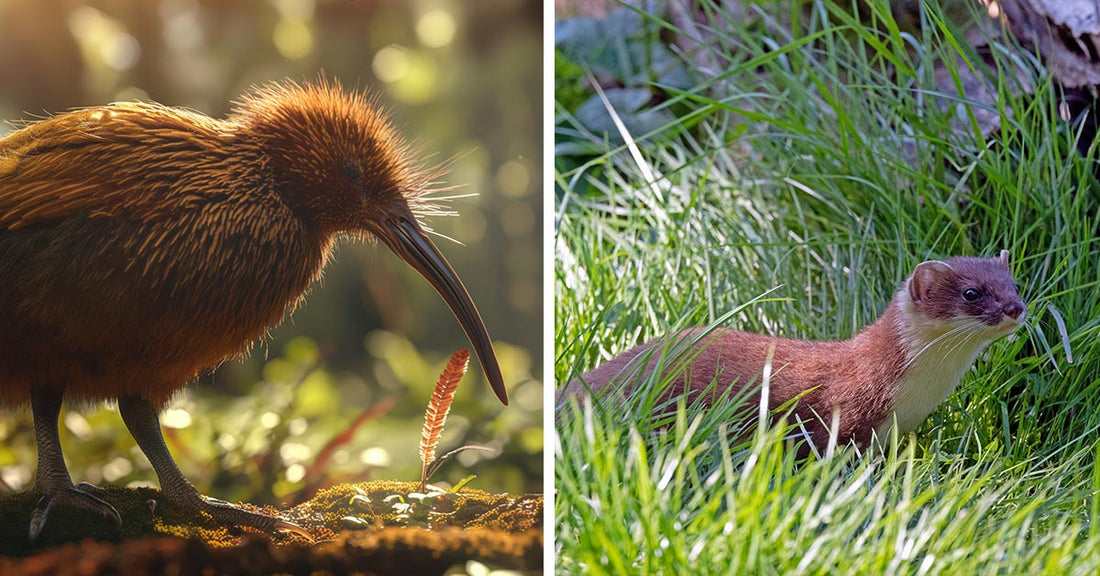
New Zealand’s forests fall silent without the calls of its native birds. The kiwi, takahē, and tūī are icons of the country, yet their survival hangs in the balance. Over the past century, more than 60 bird species have vanished, and experts warn that four out of five remaining native birds are now at risk.
The threat comes not from natural predators, but from invasive mammals brought by humans over the last 700 years. Rats, stoats, ferrets, weasels, and possums now kill an estimated 25 million birds each year, pushing populations toward collapse, NPR reports.

Invasive mammals kill millions of New Zealand’s birds annually.
The Predator Free 2050 Vision
In 2016, New Zealand launched an ambitious plan: eliminate these invasive predators by 2050. Former Prime Minister John Key called it “the most ambitious conservation project attempted anywhere in the world,” likening it to a national moonshot.
The campaign’s scale is vast. With a land area of 100,000 square miles, the eradication effort spans mountains, wetlands, farmland, and cities. Estimates put the cost at more than $6 billion, according to National Geographic.
Successes already exist. More than 300 offshore islands have been cleared of predators. These islands now serve as sanctuaries for endangered creatures like the kakapo, the world’s only flightless parrot. But removing predators from the mainland, where reinvasion is constant, is a far greater challenge.

Kiwi chicks rarely survive where stoats are active.
Communities on the Front Lines
The government may be leading Predator Free 2050, but ordinary citizens are carrying much of the work. In Dunedin, student groups like Town Belt Kaitiaki trap rats and possums alongside planting trees to restore habitat.
“Though it is a bit gross sometimes, it’s actually quite an ethical thing because it’s easy if you kill off something that’s causing a problem, instead of letting them kill off everything else,” 13-year-old volunteer Mila McKenzie told NPR.
Backyard trappers are also crucial. James McCarthy of Whakatāne checks traps daily and has already killed more than 100 invasive animals around his neighborhood.
“What we noticed here was that the birds started coming back,” he told NPR.
Across the country, thousands of citizens are involved in similar efforts.

Predator Free 2050 aims to eliminate key invasive species nationwide.
Technology and Ethics
Traditional traps and poisons are being supplemented with new innovations. Self-resetting traps can kill multiple predators in one night without frequent human servicing. Artificial intelligence cameras are being tested to identify species before triggering traps. A rat-specific toxin called norbormide could reduce collateral damage, targeting only rodents. These breakthroughs may accelerate progress toward 2050, according to National Geographic.
Yet the mission raises ethical questions. Jane Goodall has criticized the program for using poisons that cause “intense suffering and agonizing deaths.” Ngaio Beausoleil of Massey University argues that the nation has “an ethical obligation to do the best you can” for predators while still protecting prey species. Others stress that the predators’ presence itself is a human-made injustice, and that inaction would mean continued slaughter of native birds.

Ethical debates focus on welfare of predators and prey.
A Nation Determined
The effort combines science, politics, and community action. Māori-led projects like Tu Mai Taonga frame the mission as an act of guardianship, restoring balance to the natural world and honoring native species as ancestors.
“They were here before us,” project leader Marilyn Davies-Stephens told National Geographic.
For now, Predator Free 2050 is a long shot. But the stakes are clear. Without intervention, most of New Zealand’s native birds may disappear within generations.
As Brent Beaven of the Department of Conservation told NPR: “If we don’t take action, we are killing our native wildlife by omission.”