Be A Hero & Support Those Who Served This Veterans Day Give Today!
Federal Law Lets Online Puppy Mill Breeders Hide From Inspectors
Matthew Russell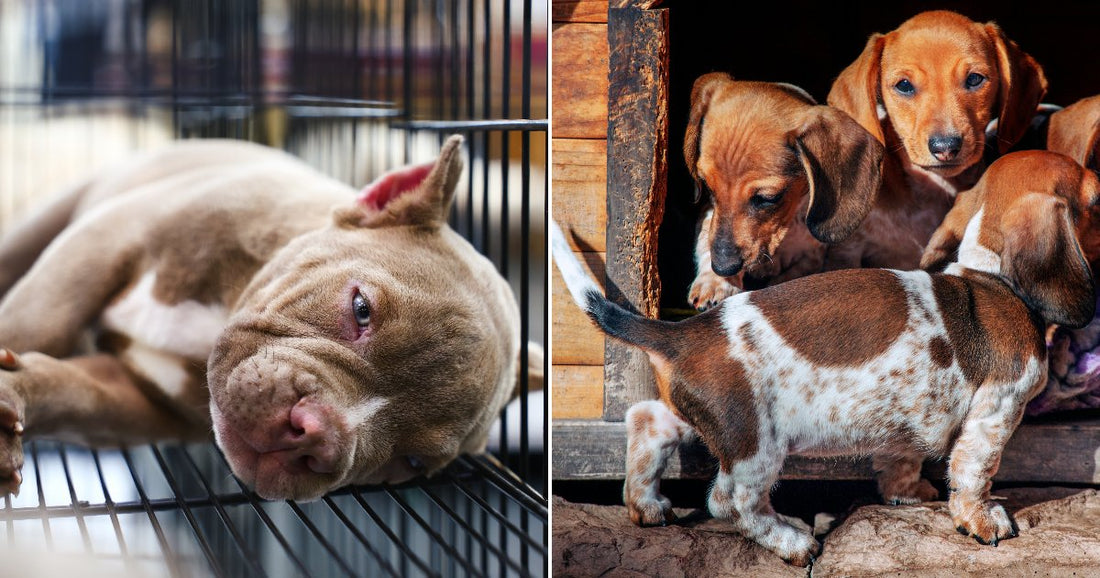
An estimated 10,000 puppy mills operate across the United States, producing roughly 2.6 million dogs for sale every year, according to Spots.com. Many of those dogs are born in overcrowded, filthy conditions — bred for profit with little regard for their health or wellbeing. And a large share of their sellers are operating entirely outside the reach of federal law.
That's not an accident. It's a loophole.

The Legal Gap That Lets Puppy Mills Hide Online
The Animal Welfare Act requires commercial dog breeders to obtain a USDA license and submit to federal inspection — but only if they sell through brokers, pet stores, or other middlemen. Breeders who sell directly to buyers, including through websites and social media, are exempt. This "retail pet store" exemption, as the Congressional Research Service explains, has effectively shielded a vast segment of the commercial breeding industry from any federal oversight.
The result: a breeder can run hundreds of dogs in deplorable conditions and remain completely invisible to USDA inspectors, as long as they sell directly to consumers — including online. The internet didn't create puppy mills, but it gave them a legal escape route.

What Inspectors Find When They Do Get Inside
Among the breeders who are licensed and inspected, the conditions documented are alarming. An ASPCA analysis of USDA inspection records found chronic, recurring violations at facilities across the country — animals with untreated injuries, inadequate veterinary care, and housing that failed to meet even the minimum standards the law requires. Many of those facilities had been cited for the same problems repeatedly, year after year, with little consequence.
In early 2026, the USDA, DOJ, DHS, and HHS announced a coordinated crackdown on the worst repeat offenders, as detailed in a USDA press release. The effort signals growing recognition that enforcement gaps are serious. But it also highlights the limits of acting only against facilities already in the system — the unlicensed breeders selling online never face inspection at all.

Momentum Is Building — But the Loophole Remains
There are signs of progress. By late 2026, the USDA had opened a public comment period on updated dog welfare regulations, a process covered by the American Veterinary Medical Association. The agency also announced broader animal welfare initiatives in September 2026, per a USDA announcement. Humane World for Animals notes that public awareness of puppy mills has grown considerably over the past decade. But awareness hasn't closed the loophole. As the ASPCA put it bluntly, unregulated online sellers continue to operate with impunity while the federal exemption stands.

The Fix Is Straightforward
Closing the direct-to-consumer exemption doesn't require new legislation — it requires USDA APHIS to update its regulatory definition and bring online and direct sellers under the same licensing and inspection framework that applies to other commercial breeders. Every breeder above a minimum size threshold would have to meet federal humane care standards and open their doors to inspectors. No special treatment for a website.
Dogs in commercial breeding facilities deserve the same baseline protections whether their breeder sells through a pet store or a smartphone. Right now, they don't have them. That can change.
Click below to make a difference.