Shark Nets Rip Safety From The Sea And Leave Humpbacks Gasping For Survival
Matthew Russell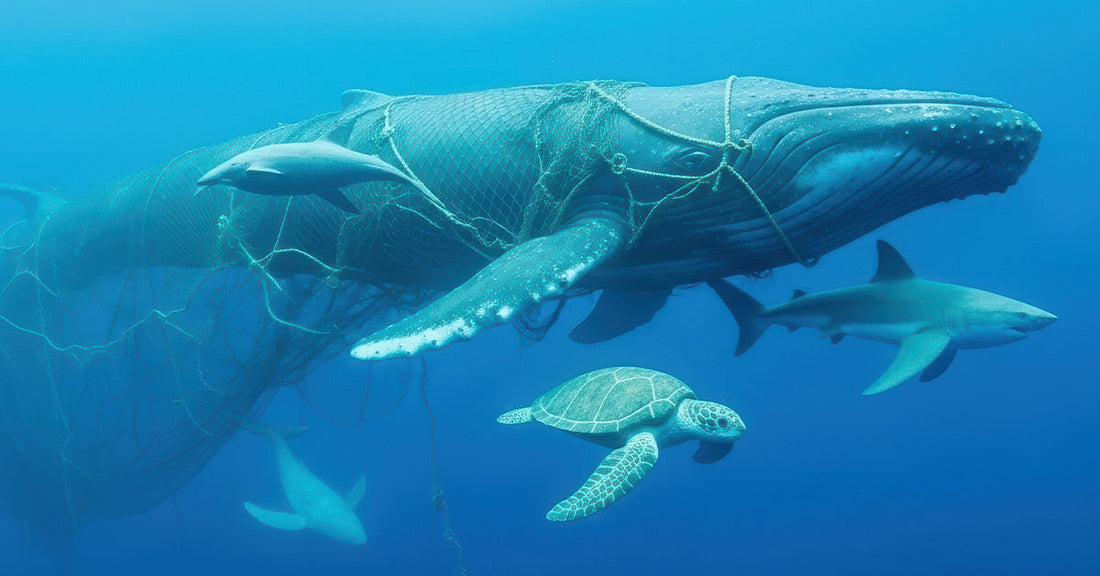
Humpback mothers guiding calves along Queensland’s coast face a hazard they cannot see until it’s too late: shark nets. Recent entanglements off Rainbow Beach and Noosa show how quickly a routine migration turns into a rescue drama, with exhausted whales dragging heavy gear for kilometres while crews race daylight and swell to cut them free, The Guardian reports. In one case, a net was hauled roughly 100km into Hervey Bay—meant to be a refuge for whales—before help arrived.

Shark nets are capture devices, not protective barriers.
More Whales, Closer to Shore—And Into Nets
It’s “peak whale” season on the east coast of Australia. A recovering humpback population and shifts in the east Australian current bring whales inshore, increasing their chances of hitting nets, marine scientists told The Guardian. Researchers have linked entanglement spikes to days when the current’s inner edge hugs the coastline, funneling migrating whales through netted “pinch points,” especially on the Sunshine Coast.
Nets Don’t Form Barriers—and Don’t Stop Bites
Shark nets are not walls. They’re fishing meshes roughly 150 meters long, set about 500 meters offshore, designed to ensnare large animals—not exclude them, Humane World reports.
The nets are also short relative to beach length and do not reach the surface, meaning sharks and whales can pass around or over them; even proponents acknowledge their limited footprint, according to the Miami Herald. Data analyses cited by that report indicate nets may not reduce the likelihood of bites, even if they provide a perception of safety.

Queensland operates 27 nets and hundreds of drumlines.
Collateral Damage: Calves, Turtles, Dolphins
Mothers and calves are frequent victims. This season alone, multiple mother-calf pairs were filmed entangled, with rescuers working in dangerous conditions to prevent drownings, the Miami Herald reports. The toll extends far beyond whales: Queensland’s 2024 catch included 1,641 animals in nets and on lethal drumlines, while New South Wales recorded 223 more; well over half were non-shark species, including whales, dolphins, turtles, and rays, with more than 1,100 animals killed, according to Humane World.

Humpback mothers and calves are frequent entanglement victims.
Queensland’s Program—and the Cost of Status Quo
Queensland operates 27 nets and hundreds of drumlines across its beaches, Medianet reports.
Entanglements continue to climb, with 12 whales affected so far this in 2025, a 50% increase over average—with stress, injury, and the risk of drowning lasting long after release, according to scientists interviewed by The Guardian. Officials urge the public not to attempt rescues; well-meaning interference can worsen tangles and put lives at risk.
Proven Alternatives Exist
Non-lethal options—enclosures and barriers for swimmers, targeted drone and acoustic surveillance, and education—offer safety without mass bycatch, Humane World reports. Marine ecologists say the only certain way to prevent whale entanglement is to remove the nets. Until policy catches up, humpbacks will keep meeting mesh on their way home.
Click below to make a difference.