
Giant Bird Follows Chicago Woman Home After Street Encounter
Matthew Russell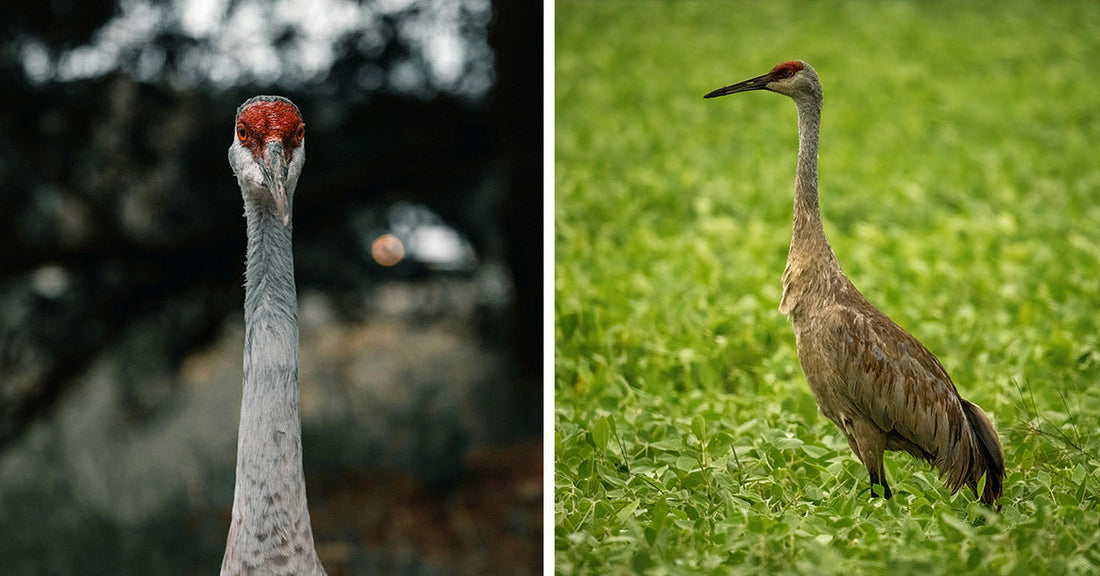
Neighbors in Chicago’s northwest suburbs heard a cry that sounded prehistoric. Then they saw the source: a towering sandhill crane in the road. Worried he’d be hit, local resident Judie Schwager stepped outside and motioned him away from traffic, she told The Dodo.
The crane responded—and kept responding.
“He actually walked toward me,” she told The Dodo. “He followed me into my yard and all the way home.”
The late-August encounter was captured on Schwager’s home security camera.
Schwager kept calm. She moved slowly. The bird shadowed her, towering almost to her shoulder with a long, pointed bill just behind her.

A sandhill crane followed a woman home in suburban Chicago.
Why A Crane Might Follow
Sandhill cranes stand three to four feet tall with wingspans up to seven feet, and they live decades. They eat grains, tubers, insects, and small animals, adapting to what the season offers, according to the Rowe Sanctuary’s Audubon fact sheet. These birds are ancient migrants, built for distance and speed—often cruising 200 to 300 miles a day on tailwinds.
But this crane’s bold approach raised a red flag for local experts.
“What I saw was a bird that looks very comfortable around people,” Janice Culver, a naturalist with Crabtree Nature Center, told The Dodo. “It definitely tells us that someone is feeding the bird.”
She warned that handouts can change migration behavior and increase the risk of vehicle strikes or conflicts with pets and people.

The woman first saw the bird standing in the street.
Chicago Is Crane Country
Cranes regularly move through Chicagoland in fall, with some breeding in the region’s wetlands before heading to wintering grounds in the Southeast. The Eastern Migratory Population—about 81,000 birds—uses this flyway, and nearby hotspots like Jasper-Pulaski in Indiana can host thousands at peak counts, according to the Chicago Bird Alliance.
The group also explains how to tell cranes from herons in flight: cranes keep their necks straight; herons tuck them into an S-curve.
That context helps make sense of a lone, street-side crane. It may have been moving between feeding areas or separated from a flock. Given their size, slow stride, and social nature, a habituated crane can seem fearless, but that confidence is fragile in a city of cars and dogs, Chicago Bird Alliance reports.

Feeding by humans can cause cranes to lose natural caution.
How It Ended
Schwager steered the bird out of the street and let him be. From her window, she saw him snap up locusts and then lift off. No chase. No crowd. Just a safe exit, according to The Dodo.
If a crane crosses your path, experts recommend distance, no food, and space to fly. Chicago is lucky to be on their route. Keeping them wild keeps them moving.