
The Last Pet Chimpanzee in America Lives Alone While The Endangered Species Act Is Ignored
Matthew Russell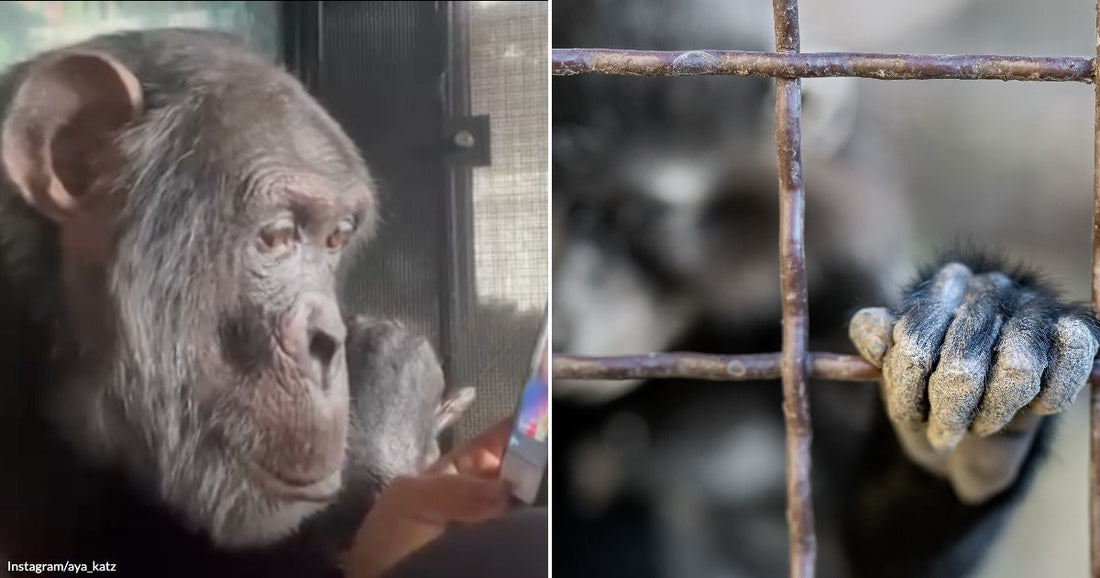
Somewhere in Missouri, a chimpanzee named Bow lives alone. No other chimps. No social structure. Just a single great ape, held in private custody, isolated from his own kind in a way that experts say is deeply harmful — and that federal law does not permit.
Bow is believed to be the last chimpanzee still kept as a private pet in the United States. The era of "pet chimps" effectively ended when Congress amended the Endangered Species Act to prohibit the private ownership of chimpanzees without a federal permit. Bow's situation persists in defiance of that legal framework, according to the Animal Legal Defense Fund, which has been working to transfer him to an accredited sanctuary.

Instagram/aya_katz
What the Law Requires — and What Isn't Happening
Chimpanzees are listed as endangered under the Endangered Species Act, which means keeping one in private hands requires a valid permit from the U.S. Fish & Wildlife Service. The Animal Welfare Act separately mandates that primates be housed with members of their own species unless a veterinarian certifies that social housing is contraindicated for medical reasons. Both laws have mechanisms for enforcement. Neither appears to have been applied to Bow's case.
The Animal Legal Defense Fund has documented years of advocacy, legal pressure, and formal complaints urging the USDA's Animal and Plant Health Inspection Service (APHIS) and the U.S. Fish & Wildlife Service to act. As of late 2026, Bow remains where he is.

Instagram/aya_katz
The Science of Chimpanzee Isolation
Chimpanzees are among the most socially complex animals on Earth. In the wild, they live in large communities defined by intricate relationships, cooperation, and communication. Solitary confinement isn't just an inconvenience for a chimp — it is a form of deprivation that produces measurable psychological harm. Chimpanzee Sanctuary Northwest has noted that chimps denied social contact exhibit signs of chronic stress, depression, and behavioral abnormality.
This is why accredited sanctuaries operate on the principle that no chimp lives alone. Facilities like those accredited by the Global Federation of Animal Sanctuaries provide social groups, space, and species-appropriate enrichment — conditions that a private home simply cannot replicate.

A Pattern That Goes Beyond One Chimp
Bow's situation is not an anomaly in a vacuum. PETA raised similar alarms about privately held chimpanzees being used for social media content, warning of the public safety risks and welfare violations involved. One Green Planet reported on public backlash over footage of privately kept chimps being treated as companions — a practice that normalizes dangerous and illegal conditions. Heartlander News covered the broader context of how Bow became a focal point in the national conversation about what happens when enforcement of wildlife law falls short.
Federal agencies hold the authority to act. USDA APHIS can enforce Animal Welfare Act violations. The U.S. Fish & Wildlife Service can act on ESA permit violations. Confiscation and transfer to an accredited sanctuary are established remedies under both statutes.

Instagram/aya_katz
Bow Deserves a Different Life
There is a place for Bow — a sanctuary where he could live among other chimpanzees, where his behavioral and social needs would be met, and where the law would no longer be an obstacle but a foundation. The Secretary of Agriculture and the Director of the U.S. Fish & Wildlife Service have the jurisdiction and the legal obligation to make that happen. Advocates, legal organizations, and concerned citizens are calling on them to use it.
Click below to make a difference.